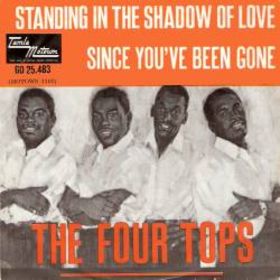
The Four Tops – “Standing in the Shadows of Love,” Pop # 6, R&B 2
By Joel Francis
Holland-Dozier-Holland had so much fun and success with the arrangement of “Reach Out (I’ll Be There)” they decided to do it again as “Standing in the Shadows of Love.” Unlike most sequels, this one was just as good and just as fun.
Despite the upbeat arrangement and dance rhythms, this song is as bleak as they come. Check the opening lyrics: “Standing in the shadows of love/getting ready for the heartache to come,” or “You’ve taken away all my reasons for living/when you pushed aside all the love I’ve been giving.” This stuff makes the Cure’s “A Letter to Elise” look like a nursery rhyme.
Levi Stubbs dumps a lifetime of anguish into his vocals. Fortunately, the Funk Brothers take away a lot of the pain. Check out the instrumental version of “Shadows’ from the original master tapes on the second disc of the “Standing in the Shadows of Motown” deluxe edition. The performance there is so strong and tight, the number practically stands on its own. The combination of the Funk Brothers and Four Tops on this song is so propulsive, it’s baffling to realize the song never hit No. 1.
The Jackson 5 put their spin on the song in 1971, but the lads lacked the gravitas to give a convincing performance. Barry White, a man with considerably more weight and emotion in his delivery, added an extended instrumental opening to his 1973 version. The song was turned into a dance number in the ‘80s by France Joli and attempted by Hall and Oates on their 2004 album.
When Aerosmith released this single “The Other Side” in 1990, Holland-Dozier-Holland thought the song bore enough similarity to “Shadows” that they threatened with lawsuit. Aerosmith caved, giving HDH a shared credit with Steven Tyler and song doctor Jim Vallance.
Above: Elvis Costello, Bruce Springsteen, Dave Grohl and Little Steven Van Zant do “London Calling” at the Grammys for Joe Strummer.
By Joel Francis
I remember getting the call from my brother-in-law like it happened yesterday. I was sitting in my apartment, it was the night before Christmas Eve, 2002 His words slowly trickled out: “Joe Strummer is dead.” The next day I loaded my CD changer with nothing but Clash and Mescelaros music and played it on shuffle for the entire day. Every Christmas Eve since then has been Clash-mas Eve, with at least a couple hours devoted to celebrating the art of Joe Strummer. To borrow a line from The Hold Steady’s “Constructive Summer,” let’s “raise a toast to St. Joe Strummer” and revisit five of his greatest moments.
“Letsagetabitarockin'” by the 101ers, from “Elgin Avenue Breakdown Revisited” The 101ers drew more on the bluesy rock of the Rolling Stones and classic American rock and roll than they did on the jagged precursors of punk rock. Formed in 1974, Joe Strummer knew his band was done in 1976 after hearing just five seconds of the Sex Pistols. When the 101ers lone single, “Keys to Your Heart” came out later that year, the group was already over. Having seen the light, Strummer jumped ship to join the Clash, but the 101ers remained a curious footnote of Strummer’s pre-punk powers. In 1981, the group’s few studio and live recordings were cobbled together for release. “Letsagetabitarockin'” kicks off that album with a shot high-octane rockabilly recorded in 1975 that would become the Stray Cats stock in trade several years later. Stylistically, it’s not much of a leap from this to the music Strummer was making in the Clash. The change in attitude and approach, however, is huge.
“1977” by the Clash, from “Super Black Market Clash” Strummer eviscerates his former life as a pub rocker and skewers rock’s sacred cows with his cry of “no Elvis, Beatles or the Rolling Stones” on the chorus of “1977.” An early calling card for the band, it appeared on the b-side of their first single and helped establish them as the new guard of rock and roll. Written by Strummer and Clash guitarist Mick Jones, the two packed a lot into their 99 seconds. In addition to denouncing the previous generation’s music, they draw on the Rastafarian prediction of July 7, 1977 bringing chaos and tip a hat to George Orwell’s novel “1984” by counting up to that year before ending abruptly.
“Brand New Cadillac” by the Clash, from “London Calling” “Letsagetabitarockin'” and “Brand New Cadillac” are both rockabilly songs, but the similarity pretty much ends there. Strummer not only changed his surrounding musicians, his voice has transformed. His singing has the edge of a switchblade knife and you can hear his sneer as he angrily spits likes like “Jesus Christ, where’d you get that Cadillac?” That line wasn’t in the 1958 version of “Brand New Cadillac” written and recorded by Vince Taylor and his Playboys. Taylor’s version was menacing in its own right back then, but he sounds less inclined to track his woman down. Strummer, on the other hand, is ready to do more than slash her tires.
“Magnificent Seven” by the Clash, from “Sandinista!” Rap music wasn’t much older than punk when the Clash cut this track in 1981. Strummer throws stream-of-conscious lyrics over a bass loop composed not by Clash bass player Paul Simonon, but Norman Watt-Roy from the Blockheads. The arrangement over the loop is strongly influenced by reggae and dub, two of the cornerstones of the Clash’s sound. The result, though, was unlike anything recorded up to that time. Preceding Blondie’s “Rapture” by six months, this was white rock’s first attempt to write a rap song. Strummer delivers his story about a good working boy with his typical swagger, but throws a curveball in the third verse – the work isn’t to make ends meet, but to buy all the junk he sees advertised on TV. Emboldened by his anti-consumerist diatribe, Strummer tosses Ghandi, Karl Marx and Richard Nixon into the final verse before musing who’s better known, Plato the Greek or Rin Tin Tin.
“Straight To Hell (live)” by the Clash, from “From Here To Eternity: Live” Recorded live at The Orpheum in Boston on the Combat Rock tour, the band stretches this reading of “Straight To Hell” more than three minutes longer than its LP run time. Given more space, the song becomes even more moody. Strummer wallows in the beat as he damns those who mistreat immigrants by closing steel mills or burning their communities. The deliberately slow tempo shows how much the Clash have grown since their rapid-fire debut just five years earlier. The arrangement again echoes strongly of reggae and dub elements and was borrowed by M.I.A. for her hit “Paper Planes.” The defining moment comes at the end when Strummer yells at the crowd to “sing in tune, you bastards.” For a man who always wore his emotions on his sleeve, it doesn’t get more heartfelt than this.
When Scribner’s Monthly asked for Christmas poem submissions in 1872, Christina Rossette wrote “In the Bleak Midwinter.” For unknown reasons, however, the poem was never sent in and remained unread until it was published after her death in 1904. Two years later, composter Gustav Holst, best known for his symphony “The Planets,” set the words to music.
Rossette’s words paint a picture of the stark, unlikely setting in which Christ was born in which “Earth stood hard as iron, water like a stone.” It’s not difficult to imagine the isolation of a land where “snow had fallen, snow on snow, snow on snow.”
Holst’s melody is subtle. There are no big crescendos or explosive choruses. Instead, the song builds gradually, like the falling snow, settling cozily on the contemplative lyrics.
In the second and third verses, Christ is born in a manger and worshipped by the animals. The final verse is the best-known. It’s lyrics are as touching as they are humble.
What can I give him, Poor as I am? If I were a shepherd I would bring a lamb, If I were a wise man I would do my part, Yet what can I give Him – Give my heart.
“In the Bleak Midwinter” never entered the top-tier Christmas pantheon like “Joy to the World” and “Silent Night.” Unlike those hymns, one can go an entire holiday season without hearing this song. It’s nice to be able to seek refuge in a song as lovely as this rather than having it incessantly pumped through speakers at the mall.
(Above: Paul Desmond and the Modern Jazz Quartet put their spin on “Greensleeves.”)
By Joel Francis
The melody for “Greensleeves” dates to 16th century England. It is been rumored that King Henry VIII for his lover Anne Boyeln – the subject of the recent “The Other Boyeln Girl” novel and film. According to historians, however, the best case scenario is that ol’ Hank just stuck his words on an existing melody.
Double entendres were common in the love songs of the Renaissance. At the time, the color “green” was a charged term. It implied the color that a woman’s clothes would turn if she made love outside. Lady Greensleeves, the subject of the song, was said to be a prostitute, or at least a promiscuous woman.
As with the words, no one knows who wrote the melody. It was likely developed by English minstrels and troubadours as they traveled the countryside. The tune was first published in a 1580 broadside entitled “A New Northern Dittye of the Lady Greene Sleeves.” Four years later, it turned in A Handful of Pleasant Delights as “A New Courtly Sonnet of the Lady Green Sleeves.”
Nearly 300 years later, Englishman William Dix penned new lyrics to the familiar, lilting melody. At age 29, Dix was confined to several months of bed-rest after a nasty bout with a near-fatal illness. Manager of maritime insurance company by day, Dix used the opportunity to write several hymns. The new words became “What Child Is This?” and draw on the nativity story from the Gospel of Luke.
It’s hard to believe such a cherished song grew from such bawdy beginnings. Over the last 60 years, it has been performed by everyone from singers Odetta and Olivia Newton-John to rockers Jethro Tull and Jeff Beck. John Coltrane made it a jazz standard and organist Garth Hudson of The Band played it over the closing credits of Martin Scorsese’s film “The Last Waltz.”
The Miracles – “You’ve Really Got A Hold On Me” Pop #8, R&B #1
Another stone classic from the pen of Smokey Robinson. Counting his songs for Mary Wells, this is Robinson’s fourth No. 1 hit (his first song with Wells stalled at No. 2 on the R&B charts). The song was famously covered by the Beatles It continues to be popular today. Cyndi Lauper covered it in 2003 and it popped up earlier this year on actress Zooey Deschanel’s delightful album with M. Ward, “She and Him.”
It’s no surprise so many artists have been drawn to this song. The melody and backing vocal lines are strong and supportive enough that the lead singer doesn’t need a great voice to pull it off (check out Cher’s version with then-husband Gregg Allman for proof). On the other hand, good vocalists have plenty to make their own. British invasion bands loved it for the snakey guitar line that could cover missing piano and horn parts.
The Miracles have the whole package, though: Robinson’s great singing, the full complement of Motown’s Funk Brothers musician’s stable and Barry Gordy’s impeccable production. The crescendo peaks with Robinson playing off the Miracles and pleading with his woman to “hold me (please)/hold me (squeeze)/hoooold me.” This certainly wasn’t the first time backing vocalists had been used so effectively, but it is a great demonstration of the subtle creativity Robinson employed in arranging the song. It’s no wonder the Beatles were so anxious to pay tribute to their idol when they finally reached American shores a little over a year after this song was released. — By Joel Francis
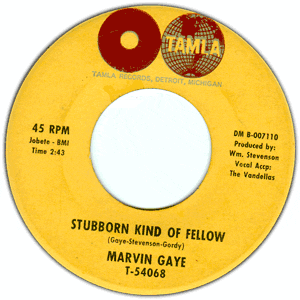
Marvin Gaye – “Stubborn Kind of Fellow,” Pop #46, R&B #8
Aside from Smokey Robinson, no one completely dominates Motown’s landscape like Marvin Gaye. Gaye’s debut album was the second record released by the label – right behind the Miracles first platter. Gaye and Robinson’s songwriting credits littered the charts until the Holland, Dozier, Holland and Whitfield, Strong teams took over. Gaye was famously married to Barry Gordy’s sister, Anna, while Robinson named his first son in honor of the label’s founder. The impact and legacy of these two men is intertwined and it is impossible to imagine the Motown empire with them.
Gaye’s initially fancied himself a Frank Sinatra-styled singer. His vocals were always smooth, but the lounge vocals have moved out front to the sidewalk. The opening drum roll and “say yeah, yeah, yeah” vocal hook immediately draw in the listener. It’s a great opening, not only for Gaye’s first major Motown solo hit, but for his amazing catalog. — By Joel Francis
Mary Wells – “You Beat Me To the Punch,” Pop #9, R&B #1
If the Contours’ “Do You Love Me” was Motown at its most raw, “You Beat Me to the Punch” was really where the “Motown sound” started to be defined. The vibes in the background smooth all the rough edges while the bongos add an extra bounce to the melody. Backing vocals from the Love-Tones add to Mary Wells’ delivery without distracting from it and foreshadowed the relationship this song’s writer, Smokey Robinson, would have on record with The Miracles.
Wells sounded insecure in her debut single, “The One who Really Loves You,” (although the pedestrian songwriting doesn’t give her much to work with), but she nails the surprise and thrill of new love here. Smitten from the first time she saw her man, the shy girl is delighted to learn her feelings are reciprocated.
This is an underrated gem in Wells’ too-small Motown catalog. –By Joel Francis
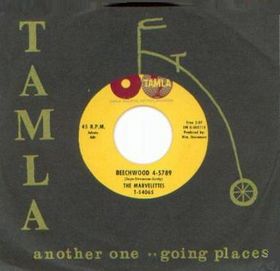
The Marvelettes – “Beechwood 4-5789” Pop #17, R&B #7
The Marvelletes’ follow-up single wasn’t as successful as “Please Mr. Postman.” Berry Gordy hoped to cash in on the telephone song trend that included Glenn Miller’s earlier big-band hit “Pennsylvania 6-500” and Wilson Pickett’s “634-5789,” but the chorus wasn’t as strong or memorable as either of those songs or the Tommy Tutone’s ‘80s hit “Jenny (867-5309).”
Gladys Horton’s earnest lead vocals sound more desperate than inviting. Although she’s trying to sound casual, it’s clear that Horton’s request for the boy of her dreams to call her up for a date, “any old time” is her frustrated, final attempt at being noticed. While the dream date may never have phone, this number did become the most popular in America until Jenny arrived on the scene in the ‘80s.
The song was written by Marvin Gaye, Berry Gordy and musical director William “Mickey” Stevenson, who was memorialized in The Miracles’ song “Mickey’s Monkey.” Like “Please Mr. Postman,” “Beechwood 4-5789” was also covered by The Carpenters. Time has preserved the superior renderings of both of these songs. — By Joel Francis
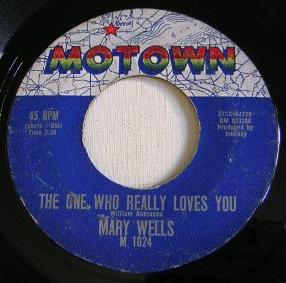
Mary Wells – “The One Who Really Loves You,” Pop # 8, R&B # 2
Mary Wells was billed as “Motown’s First Female star” but she got off to a slow start with this song. Penned by the usually reliable Smokey Robinson, “The One Who Really Loves You” suffers from overly simplistic lyrics and a melody that doesn’t try much harder. Wells’ vocals are frequently flat as she basically just calls out her smitten rivals – like Silly Lily – and points out their flaws. After listening to the song a half-dozen times, I think the singer may be exaggerating the threat of Ginnie and Minnie to steal her man, but I’ve also never been a lovelorn teenage girl. Then again, neither has Smokey Robinson.
Thankfully, while this song doesn’t work, it didn’t take long for the Robinson-Wells collaborations to click. Special note should also be made of Eddie “Bongo” Brown’s lilting percussion, supposedly inspired by the island rhythms of Harry Belafonte. — By Joel Francis
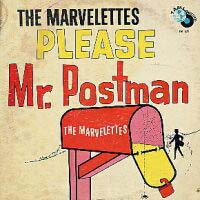
The Marvelettes – “Please Mr. Postman” Pop #1, R&B #1
It took six songwriters, but Motown finally, swept the top of the charts with this song. The Marvelettes were a group of high school who entered a 1961 school talent contest for the chance to audition for Motown. While this original performance is certainly memorable, the group definitely isn’t, which is probably why both the Beatles and the Carpenters were successful with their covers.
For the Beatles, the song was a tribute to American Motown music free of specific artistic association (it wasn’t “The Beatles doing Smokey,” like their cover of “You Really Got A Hold On Me”). For the Carpenters, it was a chance to revisit the schoolgirl longing and nostalgia the song represented. (By the way, this entry contains way more than I ever thought I’d write on the Carpenters. Let us promise never to speak of them again.) — by Joel Francis




 joelfrancis.com