Concert review: Toots and the Maytals

toots-and-the-maytals

The Kansas City Star

By Joel Francis

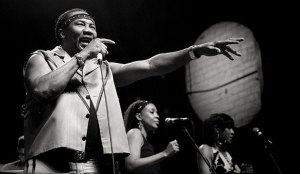
Toots and the Maytals rocked the Folly Theatre with a righteous rain of reggae in what has to be the first-ever Easter Saturday sunset service.

Toots Hibbert, his five-piece band and two female singers testified for two hours with the union of gospel and soul converted into groundbreaking reggae that had the near-capacity crowd dancing in the aisles, clapping on command and reveling in the spirit.

They didn’t waste any time getting to the good stuff. The opener, “Pressure Drop,” steamrolled right into classics like “Time Tough,” “Sweet and Dandy” and “Pump and Pride.”

Hibbert worked the crowd with the fervor of an evangelist with his energetic delivery and call and responses. The show was the fourth installment of “Cypress Avenue Live at the Folly,” and was its most successful to date.

The entire evening was a delight, but the highlights were a cover of “Country Roads Take Me Home,” and “54-46 Was My Number,” the final song of the night. The gospel moments, like the intro to “Country Roads Take Me Home” and the spiritual medley near the end of the main set had everyone singing, dancing and testifying.

The only blemish on an otherwise inspired evening was that Hibbert’s voice was difficult to hear all night. Shouts of “turn it up” resonated from the balcony, there was little the sound engineer could do to make Hibbert hold his microphone above chest level.

That his mic captured as much as it did is a testament to Hibbert’s powerful delivery. Before the show, one person mused how the show would work at the Folly, a space with limited room for dancing. He thought the Maytals were better suited for a venue like the Uptown.

He may have been right, but the staid surroundings didn’t stop anyone from having a great time. If they didn’t make it up in time for Easter services, one might understand: They’d already been taken to church.

Set list: Pressure Drop; Time Tough; Sweet and Dandy; Reggae Got Soul; Pump and Pride; Never Get Weary Yet; Bam Bam; Peeping Tom; Broadway Jungle; Country Roads (Take Me Home); Funky Kingston; True Love Is Hard To Find; Treat Me Good; Medley: It Was Written Down/Shining Light/Amen; Monkey Man. Encores: Love Gonna Walk Out On Me; Roots, Rock Reggae (jam); 54-46 Was My Number.

Jazz Sets Make Great (Late) Stocking Stuffers

By Joel Francis
The Kansas City Star’s Back To Rockville blog

Two excellent jazz collections slipped into the bins quietly during the holiday rush last year.

“If You Got To Ask, You Ain’t Got It,” is three comprehensive discs of pure fun from Fats Waller. The set is comprised of 66 cuts from 1926 to 1943 than find the jolly, indomitable pianist in solo, quintet and big band settings. The included 100-page book contains an excellent biography that puts the songs into context, and a history of Fats’ various recording groups and sidemen.

But the true feast is the music, and what a feast it is. One disc focuses on Fats’ work out of the Tin Pan Alley songbook and includes his joyful interpretations of “Dinah,” “Two Sleepy People” and “‘Tain’t Nobody’s Business.” These songs have been, and continue to be, performed as a rite of passage for jazz musicians, and with good reason. It’s a fair bet, though, that no one has infused such glee and humor into their readings. One or two verses from any of these songs are guaranteed to chase the blues away and bring a smile to the listeners’ face.

The second disc finds Fats in instrumental, and often solo, mode and was the most revelatory to me. Fats’ organ work on “St. Louis Blues” blurs the lines between classical and jazz, and gospel chording obvious on several other songs point to the path Ray Charles would later take. In fact, one could easily look at this set as one of the many birth places of soul music.

Many of Fats’ most recognizable tunes – “Honeysuckle Rose,” “All That Meat and No Potatoes” and “Ain’t Misbehavin’” – can be found on the disc titled “Fats Waller Sings and Plays Fats Waller.” At 22 tracks, the disc just dips its toe in the water of Fats’ songwriting (the accompanying book says he wrote more than 400 songs), but like everything else here it’s all top-shelf.

To the uninitiated – which I’ll confess included me – “If You Got To Ask” is a great entry point to the world of Fats Waller. Longtime fans will no doubt enjoy having a great cross-section of the man’s works in one place.

Most of my familiarity with Fats’ came from Louis Armstrong’s 1955 tribute album “Satch Plays Fats.” Two songs from that album are found on Time Life’s “The Wonderful World of Louis Armstrong” collection. Armstrong has been collected and compiled literally hundreds of times, but what sets this entry apart is its DVD.

With performances spanning four decades, it is a true delight to see Satchmo perform hits like “When the Saints Go Marching In,” “Sleepy Time Down South” and “Mack the Knife.” Those songs are all present alongside 37 other well-known tracks like “What A Wonderful World,” “Blueberry Hill” and “Do You Know What It Means to Miss New Orleans?” on the two CDs that round out the set. There’s nothing from the Hot Five or Hot Seven ensembles here, but it’s just as well: true Satchmo fans will need at least one disc devoted exclusively to this period. The rest of his career, and material from the Verve, Decca, Columbia and RCA labels are all here, though.

If you’ve already got a decent, multi-disc Armstrong collection, it may not be worth your money to pick this one up, but fans looking for that first Armstrong purchase would do well to steer toward this collection if only for the DVD.

Perhaps the most attractive aspect of both these collections, aside from the music, is the price. Both may be found online for about $30, and while it may be too late to request them as stocking stuffers, there’s nothing wrong with treating yourself.

Hip Flop

By Joel Francis

Two of this year’s most anticipated hip hop releases were also its biggest disappointments.

In August, OutKast released “Idlewild,” the soundtrack to their first film and the follow-up to 2004’s Grammy-winning smash release “Speakerboxx/The Love Below.” Like all OutKast projects “Idlewild” is bursting with a million ideas. Unfortunately, few of them are seen all the way through. Tracks like “The Train” and “Morris Brown” fire on all cylinders and are a delight to the ears, but they are also the exception. At 78 minutes in length, the album is littered with songs like “Chronomentrophobia” that hint at something bigger but end before jelling. The worst offender of all is the aptly titled “Bad Note,” a 9-minute dirge that goes absolutely nowhere. Some judicious editing and persistence could have saved this project. Instead we’re left with an album that’s ripe for cherry picking.

If “Idlewild” fails because it has too many ideas, then the exact opposite problem plagues Jay-Z’s “Kingdom Come.”

Jay-Z announced his retirement from rap three years ago and has spent that time releasing two albums with R. Kelly and guesting on numerous albums. Instead of returning from his so-called sabbatical refreshed, Hova offers us absolutely nothing new. The Jigga-man used to justify his thug, but now he’s justifying his age (37) and rehashing the same tired rhymes about his wealth, his game and his momma.

Unfortunately, Jay-Z’s not the only one phoning it in. His lyrical lethargy is unfortunately compounded by production is even less inspired. Two cuts recycle the samples that gave us MC Hammer’s “U Can’t Touch This” and Wreckx-N-Effect’s “Rump Shaker” over 15 years ago. Unfortunately, these tracks shine in comparison with the limp and lazy beats provided by the usually-reliable Just Blaze and Dr. Dre. Put it this way: when the best and most original beat on the album is provided by Coldplay’s Chris Martin, you know you’re in trouble.

I don’t want to hear Jigga sleepily tell me how “30’s the new 20” any more than I want to hear OutKast’s Andre 3000 ape Cab Calloway’s schtick. While it’s regrettable that two of the most reliable and original acts in hip hop have misfired so greatly, it’s comforting to know we only have to wait until next summer for redemption.

Concert Review: Wakarusa Music Festival (2006)

flaming-lips.jpg

The Kansas City Star’s Back To Rockville blog

By Joel Francis

Flaming Lips
Bubbles, confetti, lights, super heroes, Santa Claus, space aliens, streamers, balloons and smoke.
We’re only halfway through the Flaming Lips first song and it already feels like the greatest party ever thrown.
The Lips closed down the main stages at Wakarusa on Saturday night by bombarding their audience with happiness for 90 minutes. The props might have seemed like a gimmick if the songs and their performances weren’t equally incredible. Thankfully, they were.
Lips singer Wayne Coyne played the role of merry prankster, shooting confetti, singing with puppets, asking to be pelted with glo-light sticks and rolling over the crowd in a giant bubble.
The heat of the day was gone and a cool breeze had settled in from a storm that was still a few hours off. Maybe Coyne himself put it best: “I don’t want to exaggerate, but this might be the most perfect moment of the whole festival.”

Setlist: Race For the Prize, Bohemian Rhapsody, Free Radicals, Yoshimi Battles the Pink Robots (part one), Yoshimi Battles the Pink Robots (part two), Vein of Stars, The Yeah Yeah Yeah Song, The W.A.N.D. , She Don’t Use Jelly, Do You Realize, (encore:) A Spoonful Weighs a Ton

Les Claypool
The undeniable highlight of Les Claypool’s 80 minute set was when heavy metal guitarist Buckethead and funk keyboard legend Bernie Worrell jumped onstage about an hour into the set.
If that pairing sounds eclectic, consider that Claypool’s five-piece band comprised a xylophone, sitar, saxophone, bass and drums. Under the leadership of Claypool’s dexterous bass playing the ensemble was a simultaneous homage to Ravi Shankar, Ornette Coleman and the Violent Femmes’ Brian Ritchie.
The songs averaged 10 minutes in length and there were several head-scratching moments, including a brief sitar/xylophone duet, but most seemed to work.
Other high points included “David Makalster,” “One Better” and the bluegrass inflected “Iowan Gal,” which Claypool performed alone on a bass affixed to a banjo head.

Bernie Worrell and the Woo Warriors
Bernie Worrell is the consummate sideman. A major architect of George Clinton’s P-Funk sound and hired gun in the Talking Heads’ live masterpiece “Stop Making Sense,” he somehow managed to sound like a sideman in his own band.
From behind his elevated rack of six keyboards at extreme stage right, Worrell pounded out everything from Atari noises to “London Bridge Is Falling Down” while his lead guitarist sang the majority of songs and worked the crowd. The six-piece band laid the funk on heavy for just over an hour and even managed to make “She’ll Be Comin’ ‘Round the Mountain” sound cool.
P-Funk was only represented sonically, while the Talking Heads “Burning Down the House” closed the set.

Cracker
Twenty minutes after dismissing Camper Van Beethoven, David Lowery was back onstage with a new outfit and guitarist, keyboard player and fresh catalog.
Cracker is heavier and wants to be played on the radio more than CVB, but it also hasn’t changed its sound much in the past 14 years. Earlier gems like “Eurotrash Girl” and “Low” sounded great alongside later works like “One Fine Day,” “Brides of Neptune” and even material debuted from Cracker’s just-released seventh studio.
The oppressive mid-day heat thinned out some of the crowd, but for every person who left, another one, intrigued by the sounds from afar, took his or her place.

Keep Reading:

Wakarusa Music Festival (2008)

Wakarusa Music Festival (2007)

Wakarusa Music Festival (2005)

Concert Review: Dinosaur Jr April 13 at Liberty Hall

Dinosaur Jr

By Joel Francis
The Kansas City Star

There’s just no pleasing some people.
Faced with the opportunity to see the original lineup of Dinosaur Jr perform for the first time in 18 years, some morons would rather throw trash onstage and heckle the band.
Fifty minutes into the band’s set and partway into the song “Sludgefeast,” singer and guitarist J Mascis angrily knocked his mic stand over and threw his guitar to the ground while he walked offstage. The rest of the band – bass player Lou Barlow and drummer Murph – followed, leaving the audience to piece together what happened: someone hit Mascis’ mic stand while he was singing, and the microphone hit him in the mouth.
Mascis confirmed that when the trio returned a few minutes later.
“Sorry about that. I just didn’t want to lose my teeth,” he said as the band assaulted the song “Kracked,” which led into “Freak Scene,” which merged into “Chunks.”
The trio had been playing well before impromptu break in the show; when they returned to the stage, they played even louder, more aggressively and, well, better.
They soon left again. Most of the fans used this time to coax them back out for an encore; but someone started throwing trash onstage. He was escorted out.
After two rushed numbers, including a cover of “Just Like Heaven,” Dinosar Jr left for good. They had been onstage for 75 minutes.
The evening started more promisingly. After nearly two decades of fighting and bitterness, all seemed forgiven and forgotten when Barlow and Mascis traded stanzas on the opening number, “Gargoyle.”_The band and its material, which drew almost exclusively from its first three albums, sounded astonishingly fresh, especially when they stretched out on “Forget the Swan” and “Bulbs of Passion.”
The unlikelihood of this reunion was not lost on the crowd, many of whom were too young to have seen the band the first time around. The show wasn’t sold out, but almost everyone seemed delighted and appreciative of anything played for them – almost everyone. It’s a shame a couple jerks had to interrupt the evening for everyone.

Setlist: Gargoyle, Tarpit, No Bones, the Wagon, Forget the Swan, Bulbs of Passion, the Lung, Little Furry Things, Lose, In A Jar, Sludgefeast (aborted), Kracked, Freak Scene, Chunks. Encore: Just Like Heaven (The Cure cover), Mountain Man

Keep Reading:

Out of the Tar Pit Back Onto the Stage

Dinosaur Jr Sets High Bar For Reunion Albums

Review: Son Volt with the North Mississippi All-Stars and Split Lip Rayfield

Oct. 8 in Westport

Kansas City Star

By Joel Francis

Four months ago, Son Volt took the main stage at the Wakarusa Music Festival at Clinton Lake early on Friday afternoon. The sun was hot and the oversized crowd seemed more interested in talking to each other than paying attention to the music.
Saturday night’s show in the parking lot across the street from the Beaumont Club in Westport couldn’t have been more different. The sun was down and the temperature hovered around 40 degrees. The crowd of more than 1,500 people hung on every word of lead singer and songwriter Jay Farrar.
The Wakarusa show was one of the revamped Son Volt’s first shows together (only Farrar remains from the band’s original ’90s incarnation).
The band’s album “Okemah and the Melody of Riot” has also been on store shelves for a couple months now, giving the fans a chance to become familiar with the new material. Some in the crowd were even requesting the newer songs, which is always a good sign.
Farrar and his four-piece band played 10 of the album’s 12 songs, half of those coming as the show’s opening five numbers. But after that fifth song, Farrar announced “something from a long time ago.” The band launched into “Medicine Hat,” knowingly nodding at the material the most people came to hear. From there it was a sprinkling of more “Okemah” material alongside classic Son Volt songs from “Trace,” “Straightaways” and “Wide Swing Tremolo.”
If “Medicine Hat” hinted at the band’s best era, the new song “Medication” was the fulcrum on which the show’s momentum rest.
“Medication,” a Indian-influenced drone and one of “Okemah”’s stand-out cuts, ended with Farrar ferociously banging his fists against the body of his guitar as the rest of the band jammed. The song abruptly collided with “Route” from “Trace” and was the best one-two punch of the 90 minute set.
The steadily dropping temperature thinned the crowd considerably as the evening progressed. By the end of the night, the crowd’s brave remainders were either toasted or frosty, but all were rewarded.

Review: Wakarusa Music Festival (2005)

Wilco

June 17-19, Clinton Lake, Lawrence (Kan.)

Kansas City Star

By Joel Francis

Son Volt – Friday afternoon, Sun Down Stage
Jay Farrar’s revamped Son Volt made their regional debut on Friday afternoon to a collective yawn. Maybe it was the early hour of the show – 3 p.m. – but more people were greeting each other than grooving to the music. Son Volt Version 2.0 leaned heavily on classic material from “Trace” and “Straightaways” in its hourlong set, but were not as country-leaning as the previous incarnation. Uncle Tupelo was no where to be found._The new lineup is rawer and plays up Farrar’s classic rock influences – a sound closer to Joe Walsh than Joe Ely.

Matisyahu – Friday afternoon, Campground Stage
Matisyahu’s novelty – a Hasidic Jew playing reggae music – may have drawn people to his tent, but his music made them stay.
Dressed in a white dress shirt and glasses and sporting a full black beard, he may have looked like a rabbi, but he sounded like Toots Hibbert. Matisyahu’s groove spread quicker than a flu bug in day care, and though the tent was too crowded to give the music the motion it deserved, no one seemed to mind, least of all Matisyahu, who had to rest a hand on his head to keep his yarmulke from flying off as he jumped up and down. After proving his reggae credibility, Matisyahu dismissed the band and began an a capella beatboxing, incorporating dub, hip-hop and techno rhythms culminating in a call-and-response with the drummer.

Ozomatli – Friday evening, Sun Up Stage
Ozomatli isn’t afraid to toss a rap into a Spanish melody. In fact, it doesn’t seem to be afraid of anything musically. The10-piece band blended Spanish, rock, African, Middle Eastern and hip hop into the most contagious and diverse groove of the day. The 75-minute set drew heavily from Ozomatli’s latest album, last year’s “Street Signs,” but the band worked in a new song, a rap driven by a Middle Eastern flute. The crowd thinned considerably when the String Cheese Incident took the adjacent stage, but there were enough hands raised in the air and bodies shaking to show that these folks weren’t just killing time.

Junior Brown – Saturday evening, Revival Tent
Junior Brown took a mostly full and enthusiastic Revival Tent crowd honky tonkin’ early Saturday evening. Wearing an immaculate three-piece suit and backed by a three-piece band, including his wife Tanya Rae, Brown kept the stage banter to a minimum and kept his music plowing along like the Orange Blossom Special. His deep voice was cribbed in the same fertile tone as Johnny Cash’s and he deftly switched from traditional country melodies to a Spanish language song and even a surf guitar medley.
The highlights were all of Brown’s tasteful guitar solos, performed on his trademark “guit-steel,” a double-neck six-string and pedal steel guitar, and his drummer of 31 years, who was able to do more with his simple snare and cymbal set than most can from an entire trap kit.

Neko Case – Saturday night, Sun Down Stage
Despite having a large crowd assembled in anticipation of headliner Wilco, Neko Case did not go out of her way to win any new converts Saturday night. Case’s hourlong restrained set never moved above mid-tempo and failed to engage the patient crowd. Taken individually, each song was quite good, but together they became a long, lonesome lullaby. Like a mournful train whistle crying out late in the night, Case and her four-piece band wallowed in love gone wrong. The material was well-done, but best suited for an intimate club and Case looked a little overwhelmed by the crowd, which was polite in spite of the pacing problems and the fact that few of her subtleties transferred effectively to the lawn.

Wilco – Saturday night, Sun Down Stage
Jeff Tweedy, Wilco’s frontman and songwriter, had the sold-out crowd eating out of his hand from the opening strains of the first number, “A Shot in the Arm.” The 90-minute show only got better from there. Wilco’s expanded six-piece line-up, including two keyboards and two guitars, fought like siblings in the sonic mélange. It shouldn’t have worked, but it did, creating the perfect atmosphere for each song. “Handshake Drugs” and “Kidsmoke (Spiders)” had thick walls of distortion that would have made Sonic Youth proud, while the folksier romps through the “Mermaid Ave.” material were warm and happy. If the audience participation bits failed, it was only because Wilco’s material isn’t really suited for it. Besides, Tweedy already had them at hello.

Proto-Kaw – Sunday afternoon, Sun Down Stage
Proto-Kaw will inevitably be compared to songwriter Kerry Livgren’s other band, Kansas, but the call-and-response in the opening number between Livgren’s guitar John Bolton’s flute should put those differences to rest. Formed in the early ‘70s, the band folded after failing to land a record contract and Livgren’s leap to a rival band and classic rock history. The septet belatedly reconvened when their archival demos were released to critical acclaim in 2002 and have since recorded an all-new album together. Proto-Kaw drew from both of those sources in their hour-long set that was enjoyed by the meager and decidedly older crowd that braved the mid-day sun for a set of progressive rock that somehow managed to replace arena-ready anthems with splashes of jazz and funk.

Jazz Mandolin Project – Sunday afternoon, Revival Tent
The Jazz Mandolin Project has more in common soncially with its good friends in Phish than it does the Preservation Hall Jazz Band, of which bandleader Jamie Masefield was once a member. Anyone expecting soothing acoustic jazz may have been pleased by the first number, but the songs grew more experimental and danceable as the set progressed. The quartet – mandolin, drums, upright bass and trumpet – is what the Flecktones would sound like if they were a jam band. The crowd was enthralled by the improvisation, but the bass and drums were sometimes so propulsive and funky one lost track of the mandolin. The 70-minute set culminated with the feel-good and danceable “Oh Yeah,” the best song of the night.

Old Crow Medicine Show – Sunday evening, Revival Tent
If, as the old saying goes, you can’t play sad music on a banjo, then Old Crow Medicine Show is the happiest band in the world. With half of the sextet on the jubilant drumhead five-string, the Crows threw a mighty hoedown as the sun set over the Wakarusa Music and Camping Festival.
The Revival Tent was about half full at the start of the set, but by the end the tent was so full that people were dancing outside. The clappin’ and stompin’ were nonstop throughout the 70-minute set, which included classics like “CC Rider,” “Poor Man,” “Take ‘Em Away,” a cover of “Bluegrass Bob” Marley’s “Soul Rebel” and plenty of down-home stage banter.

Keep Reading:

Wakarusa Music Festival (2006)

Wakarusa Music Festival (2007)

Wakarusa Music Festival (2008)

Concert Review: George Clinton, May 6, 2005 at the Beaumont Club

George Clinton

Kansas City Star

By Joel Francis

The list of 64-year-olds who can get away with rainbow-colored hair is a short one. Here’s an even shorter list: people soon to qualify for Social Security who can bring the heavy funk.
First on that list: George Clinton, who brought his band Parliament-Funkadelic before a near-capacity crown at the Beaumont Club on Friday night.
The show started with a keyboard solo from longtime Clinton cohort and fellow legend Bernie Worrell. From the beginning, the band show why many of Clinton’s tunes had so much influence but such little chart success. Songs like “One Nation Under a Groove” and “Bop Gun” got big cheers of recognition from the crowd and most ran well over 10 minutes.
Clinton didn’t appear onstage until an hour into the set, his multicolored locks covered by an all-white Philadelphia Phillies cap.
He slowly crept onstage, but as the set progressed he gained energy and his voice grew stronger. By the end of the back-to-back 20 minute jams of “Aqua Boogie” and “Flashlight,” he appeared invincible.
Throughout the show, the floor in front of the stage was a sea of hands, waving high in the air. Many of those bore a black “X” – too young to drink – a sign that Clinton and his troupe of two dozen performers are still attracting a younger crowd.
They weren’t disappointed. During the 3 _-hour set, Clinton and company interspersed their own hits with favorites from the backing singers, including a rap from Clinton’s granddaughter and covers of James Brown’s “Big Payback” and Genesis’ “That’s All.”
When “Atomic Dog” started up three hours into the show, it seemed like the perfect closer. Instead, Clinton followed that by launching into “Whole Lotta Shakin’ Goin’ On” and a Little Richard medley. It was a perfect twist: After demonstrating why his music continues to influence the hip-hop generation, Clinton turned to the music that influenced him.
It could have ended there, but it didn’t. As Clinton and most of the band left the stage, a few stuck around and kept jamming. When they put down their instruments, roadies immediately started tearing down the stage, but the band members stayed out front, leading the audience in chanting, “We want the funk.”
By that point, anyone who didn’t have it already was never going to get it.

Keep Reading:

Concert review: George Clinton (2007)

Feature: George Clinton is bringing the funk

Concert Review: George Clinton heats up cold night

Review: George Clinton and the P-Funk All-Stars (2009)

Bob Dylan: All Along the Watchtower

By Joel Francis

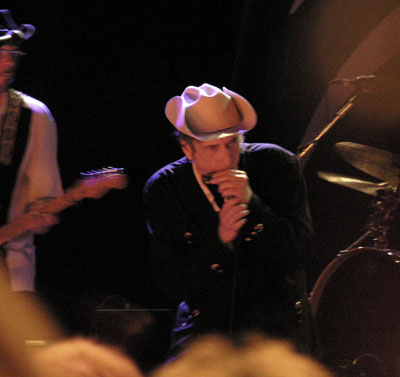
Twenty-plus years after eschewing his “Christian phase,” Bob Dylan assumed the mantle of Old Testament prophet at his joint concert with Willie Nelson at the T-Bones minor league baseball park in Kansas City, Kan.

Dylan cried out warnings of the apocalypse with a voice burdened by so much wisdom and sorrow it frequently broke and scraped under its own weight. There was no alternative but to drench it in echo: This is the way Moses’ voice must have sounded booming down from the mountains, falling like a harsh rain on the sinners’ ears. Then again, if Moses were accompanied by Larry Campbell on steel pedal the way Dylan was, the idolaters likely would have started casting a new statue. Like Isaiah foretelling the destruction of the temple, Dylan’s echo-laden, sparse and mournful arrangement of “All Along the Watchtower,” driven by Campbell’s pedal steel, warns that the future isn’t as bright as many concert-goers would like to believe.

In this new arrangement, the joker and the thief watch in relative safety. From their vantage-point, the riders are no longer approaching, but inside the city walls, raping, ransacking and causing unimaginable destruction. Campbell’s playing suggests that the wind has been howling for some time now._“Look at it,” the thief says in dismay, not wanting to believe his eyes. “We tried to warn them, but no one wanted to listen. Now they’re paying the price.”

A tear trickles down the joker’s cheek as he sees more riders on the horizon. He has lied to the thief, and he knows it: There is no kind of way outta here. The only exit from this horrific scenario is to end the song and turn on the house lights, which is exactly what Dylan does, but only after another of Campbell’s solos. The crowd cheers rapturously, never knowing how close they came to oblivion._But then again, seldom are the prophets’ words heeded in time.

Too Close To Ground at Willie Nelson Concert

By Joel Francis

I’d love to discuss tonight’s Willie Nelson concert, but what I really want to tell you about is the crowd at the Willie Nelson show. You see, the good folks in Marshall, Mo. decided to host Willie and throw a concert in their city park. Now normally when a park contains a large hill, as the Indian Foothills Park does, one would place the stage at the bottom of the hill. Not the folks in Marshall, no sir. They put that stage right in the middle of the hill and made all of us watch it at a 15 degree angle.
Knowing what I do about angles and intoxication, I knew I would be in for some laughs, but I had no idea how big. The fun started before the show when the two white trash couples decided to punctuate their beers with some weed. The foursome passed a very small roach around for about 20 minutes before a Gatorade bottle was produced, which contained, I am very sure, not Gatorade. After a few swigs of whatever magic potion this bottle contained everyone seemed to be feeling a lot better. Coincidentally this is when Willie took the stage. So as the man in the Alan Jackson t-shirt put down the not-Gatorade and proceeded to line dance to the opening strains of “Whiskey River” he drew the ire of the crowd behind him. They needn’t of worried; it was the only time he was on his feet for the rest of the night.
You see, there was something in this wonderful concoction of weed and magic juice that when combined with the aforementioned 15 degree slope made it impossible to maintain a center of gravity. Not that our inebriated, high friend didn’t try. After tumbling too the ground he’d gingerly right himself by clinging to the lighting scaffolding. He’d tepidly place himself in his camping chair, but damn if that slope didn’t get him every time. Why if he could stay in that chair for more than 30 seconds without tumbling out and hitting his head on his scaffolding his wife was impressed.
The recumbent wife was not only not impressed – she was a little upset, too. Once, after her husband managed to place himself in his chair – and this was not an easy process for him – she started yelling at him. Expecting praise for completing such a difficult task, he started yelling back. Eventually the yelling got so intense that her chair toppled onto his, knocking both of them clean onto the ground. The Three Stooges would have been proud. Charlie Chaplain would have sued.
After much of the falling-down-bracing-on-the-scaffolding-sitting-in-the-chair-falling-down shenanigans (and they didn’t always happen in this order), the man decided all might be better if he just laid down for the remainder of the evening. This is pretty much what he did, except when the pesky police got involved. It seemed they didn’t believe a man could just lie unconscious of his own volution at a Willie Nelson concert. After shining a light in his eyes and lightly slapping his face, the boys in blue decided the best course of action would be to place him safely in his chair. I was silently praying they would, because I knew he would inevitably topple out and likely hit his head. Willie was churning through the hits – “Crazy,” “Night Life,” “Always on My Mind,” “All of Me” – but there was no way he could compete with this.
Of course as we all expected, the man in the Alan Jackson t-shirt promptly tumbled to the ground, nearly taking an officer with him. I would have felt guilty at laughing at all this had I not witnessed these people gleefully bringing themselves to this state. Using his classic deductive police logic, one of the officers inquired of the other white trash couple if they may have any idea what could have happened to this stupefied stranger. Despite supplying the marijuana and not-Gatorade, they had no ideas. Unfortunately they also had no balance. As the shirtless, white trash supplier leaned in to spill his guts to the officer (the guilty are very willing to be helpful, up until the point they know they have implicated themselves), he started to fall, nearly taking yet another officer with him. Luckily our public servant remained upright, but the man did not fare so well, falling not only down, but over the milk crate that was doubling as his seat. Our topless sage wisely decided this was the safest position for him and remained doubled over the crate for the duration of the evening. Meanwhile, the unconscious blot was left upright in his chair by the police, who decided since he couldn’t hurt anyone, let alone move, they would leave him be. On cue, once their backs were turned, the man rolled out of the chair and sprawled on the ground leaving passers-by to fend for themselves to maneuver around his carcass.
You might think this would be the end. You might think that, but you would be wrong. You see, there were a couple thousand people at this concert, hundreds of gallons of alcohol consumed and still that pesky 15 degree incline.
A few yards past all this excitement, a woman in her late 50s was gleefully imbibing and dancing to the strains of “Seven Spanish Angels,” and “Angel Flying Too Close to the Ground” that were now filling the air. To say this woman was of generous girth would be an understatement, but this did not prevent her from flailing around like Greta Garbo. Fortunately this also did not prevent gravity from taking her on several sideways caterwauls. After several near-falls, the plump peasant managed to rapidly meet the earth, taking her husband with her. I only wish I could have seen it with both eyes, for my gaze was fixed up Sir Willie performing “Always on My Mind,” “On the Road Again” or some obscure number, and I only caught the tumble peripherally. My concert compatriot, Alan, though, saw the whole thing, the lucky so-and-so.
After that, my fantasy became that some poor bastard would stumble over the unconscious guy and be clumsily propelled into the fat woman, whereupon the two of them would topple over and take down a whole crowd. Think of it as human bowling.
It never happened, though. Last I saw them, the woman had – with the help of many friends – tepidly placed herself in a camping chair (it appeared to be more sturdy and did not spill its contents, unfortunately). The wife of the senseless man suddenly reappeared (she was gone for quite a while and I didn’t think to ask her what had taken so long), and loving place his head in her lap and gently ran her fingers through his hair as she spoke to him softly. I couldn’t make out what she was saying, but she was probably reminisce about the times they had growing up together and what bears mom and dad could be.
Prior to this, the most fun I had experienced with a concert crowd was when we went to the Foo Fighters/Red Hot Chili Peppers show at Blandstone. It was just a couple days after Ozzfest had been through town and the turf back on the lawn was pretty torn up so to save the ground, the crew laid down mesh tarps. Unfortunately they got kicked up, revealing the slick underside, wet with the ground’s moisture. Understandably, no one wanted to stand on this slippery surface so it created what appeared to be a path in the swarm of people on the lawn. Many a sap unwittingly charged onto this lubricated runway, only to have their feet and head exchange places. I nearly fell down myself laughing at these poor souls.
That night had nothing on this, though. Why for the modest price of $25, I not only got two hours of Willie’s serenades, but so much slapstick tomfoolery that Buster Keaton would have blushed. Oh there was a lot more that happened that night – like the music itself, or the time I and a host of others were tricked into believe that we had met Willie himself – but that is another story altogether.