(Above: Tom Waits makes it rain on the Rock and Roll Hall of Fame.)
By Joel Francis
With a mighty thump of his foot, Tom Waits took the stage of the Fox Theater in St. Louis kicking up a white cloud of dust. Surrounded by old instruments, antique bric-a-brac and dangling Victrola horns, the stage looked more like Fred Sanford’s back yard than one of Missouri’s most historic theaters.
Opening with “Lucinda,” Waits voice recalls a phrase coined by another Lucinda: car wheels on a gravel road. For the next two hours he lorded over the sold-out crowd with a persona equal parts junkyard dealer, carnival barker and vaudeville performer.
“Way Down in the Hole,” the song used as the theme to HBO’s “The Wire,” was next up. For “Heigh Ho,” a song Waits appropriated from the Seven Dwarfs for a late-‘80s Disney compilation, Waits bellowed into a megaphone on a stage bathed in a blood-red light. The setting and arrangement transformed the children’s song from a work chantey into a foreboding descent into purgatory.
For all his theatricality, though, Waits knew when to let a song speak for itself. A gorgeous reading of “Falling Down” struck the balance between dramatic and unvarnished early. Waits later picked up an acoustic guitar to deliver “Day After Tomorrow” for a rapturous crowd that wasn’t afraid to shush someone talking too loudly.
On his 2006 rarities collection, “Orphans,” Waits classified his songs three ways: brawlers, bawlers and bastards. The bawlers got the most work, but well-placed brawlers like “Get Behind the Mule” and the spoken-word vignette “What Is He Building?” kept the pace varied.
Waits didn’t talk much until he got behind the piano for a few songs. Once on the bench he was transformed into the non-sequitor spouting beatnik introduced on his second album, 1975’s “Nighthawks at the Diner.” Waits joked about some of the obscure laws he encountered playing the night before in Tulsa, Okla. and his adventure buying Henry Ford’s dying breath on eBay.
The piano set was far too short. After the beautiful “Lost in the Harbor” Waits returned to his podium for “Make It Rain.” A torrent of glitter fell on the singer halfway through, which made him sparkle for the rest of the night.
Waits stole the spotlight, but was ably assisted by his five-piece band. Guitarist Omar Torrez added an amazing flamenco intro to “All the World is Green,” which was driven by Vincent Henry’s clarinet. Keyboardist Patrick Warren added depth and texture to “Hang Down Your Head.” Drummer Casey Waits pounded his way through his dad’s warped rhythms while bass player Seth Ford-Young pinned everything together.
The two-hour evening ended with Waits behind the piano, leading an audience sing-along through “Innocent When You Dream.” After a 30-year absence from the area, Hollywood couldn’t have scripted a better return.
Setlist: Lucinda, Way Down in the Hole, Falling Down, Black Market Baby, All the World Is Green, Heigh Ho, Get Behind the Mule, Day After Tomorrow, Cemetery Polka, Hang Down Your Head, Lucky Day, Johnsburg, IL, Lost in the Harbour, Make It Rain, Lie To Me, On The Other Side Of The World, Singapore, Dirt In The Ground, What’s He Building?, 16 Shells, Rain Dogs (encores:) Goin’ Out West, Anywhere I Lay My Head, Innocent When You Dream
Mary Wells – “You Beat Me To the Punch,” Pop #9, R&B #1
If the Contours’ “Do You Love Me” was Motown at its most raw, “You Beat Me to the Punch” was really where the “Motown sound” started to be defined. The vibes in the background smooth all the rough edges while the bongos add an extra bounce to the melody. Backing vocals from the Love-Tones add to Mary Wells’ delivery without distracting from it and foreshadowed the relationship this song’s writer, Smokey Robinson, would have on record with The Miracles.
Wells sounded insecure in her debut single, “The One who Really Loves You,” (although the pedestrian songwriting doesn’t give her much to work with), but she nails the surprise and thrill of new love here. Smitten from the first time she saw her man, the shy girl is delighted to learn her feelings are reciprocated.
This is an underrated gem in Wells’ too-small Motown catalog. –By Joel Francis
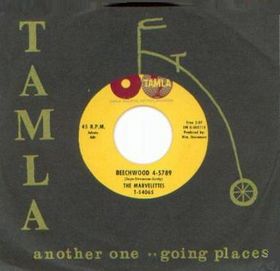
The Marvelettes – “Beechwood 4-5789” Pop #17, R&B #7
The Marvelletes’ follow-up single wasn’t as successful as “Please Mr. Postman.” Berry Gordy hoped to cash in on the telephone song trend that included Glenn Miller’s earlier big-band hit “Pennsylvania 6-500” and Wilson Pickett’s “634-5789,” but the chorus wasn’t as strong or memorable as either of those songs or the Tommy Tutone’s ‘80s hit “Jenny (867-5309).”
Gladys Horton’s earnest lead vocals sound more desperate than inviting. Although she’s trying to sound casual, it’s clear that Horton’s request for the boy of her dreams to call her up for a date, “any old time” is her frustrated, final attempt at being noticed. While the dream date may never have phone, this number did become the most popular in America until Jenny arrived on the scene in the ‘80s.
The song was written by Marvin Gaye, Berry Gordy and musical director William “Mickey” Stevenson, who was memorialized in The Miracles’ song “Mickey’s Monkey.” Like “Please Mr. Postman,” “Beechwood 4-5789” was also covered by The Carpenters. Time has preserved the superior renderings of both of these songs. — By Joel Francis
Above: The Flaming Lips “Race for the Prize” at Wakarusa 2008.
By Joel Francis
The Kansas City Star
Arrested Development – Friday afternoon, Revival Tent
The sound of Arrested Development warming up was funky enough to send a crowd scrambling to the Revival Tent and its ankle-deep mud, but the group had trouble keeping them there.
The group’s Afrocentric rap harks back to De La Soul’s daisy age and capped a three-act run of hip hop in the Revival Tent, including Blackalicous and Del tha Funky Homosapien. Their low-key approach had difficulty translating to the half-populated tent, but part of the problem could have been the 15-plus years since the band last hit the area.
Flanked by two vocalists and backed by a guitarist, DJ and rhythm section, MC Speech warmed the crowd up on a couple newer numbers before heating the crowd up with “Fishin’ 4 Religion” and a spirited gospel arrangement of “Tennessee.”
Fans who weathered the bass solo were treated to a karaoke romp through “Billie Jean” and a full-band cover of “Redemption Song.”
Although the set’s energy lagged at times, the greatest hits still sounded, well, great. “Mr. Wendall” is still as fun and timely as it was nearly 20 years ago. The closing one-two of “Mama’s Always Onstage” and “People Everyday” had a sea of smiling faces hoping it wouldn’t be another half-generation until the next show.
Flaming Lips – Friday night, Sun Down Stage
The Flaming Lips performed nearly the same show at their Wakarusa debut two years ago. Damn if it didn’t work just as well the second time.
Flanked by a horde of Teletubbies, the band took the stage as front man Wayne Coyne rolled over the crowd in a giant hamster ball. “Race for the Prize” kicked off the night as confetti, streamers and smoke snowed over the crowd.
It would be easy to get lost in the spectacle of a Flaming Lips concert and forget about the band onstage if the music wasn’t so good. “The Yeah Yeah Yeah Song” rocked so hard that Coyne himself called it “glorious.” The group funneled their anger and passion for a better America after the November elections into a devastating version of “The W.A.N.D.” that was prefaced by an anti-war airing of “Taps.”
The quartet also got some help from their fans. Coyne encouraged the crowd to get naked during their cover of “The Song Remains the Same” and a half dozen women jumped onstage and took him up on the offer. Spontaneous fireworks from the back of the lawn punctuated the trippy “Pompeii am Gotterdamerung” and heightened the atmosphere of “Vein of Stars.”
The night ended with “Do You Realize.” A million pieces of yellow and orange confetti falling from the sky created a nice cinematic moment that made the song sound even more majestic than usual.
Set List: Race for the Prize/Free Radicals/The Song Remains the Same/Fight Test/Mountain Side/Vein of Stars/Yoshimi Battles the Pink Robots (pt. 1)/Pompeii am Gotterdamerung/The Yeah Yeah Yeah Song/Taps->The WAND/She Don’t Use Jelly/(encore:) Do You Realize
“Christmas On Mars” – Friday night, the Flaming Lips tent
The chance to catch a band-hosted screening of the Flaming Lips’ seven-years-in-the-making movie “Christmas on Mars” overpowered the need for sleep for many Wakarusa campers.
Shortly after the Lips’ spectacular set on the Sun Down Stage, 200 fans lucky enough to snag a free ticket earlier in the evening were ushered into the band’s large “Eat Your Own Spaceship” tent. Inside, it felt a lot like summer camp. Everyone sat on long wooded benches and roadies handed out popcorn.
After a short personal introduction from lead Lip Wayne Coyne and a longer recorded interview, the film finally started around 1 a.m.
The movie follows the descent of paranoia and psychosis on a crew of astronauts in their Martian space station on Christmas Eve. Multi-instrumentalist Steven Drozd plays the main astronaut while Coyne portrays an emerald-hued, antennae-sporting Martian who swallows an asteroid, is detained by the space crew and then forced into the role of Santa Claus.
The results are pretty much what you’d expect from a group with no acting or screenwriting background, paying for their production as they go. Fans started sneaking out almost as soon as the rock-show volume movie started. When I finally succumbed an hour into the movie a herd of fans were seated on the ground outside the tent for the next showing. Live and learn.
Ozomatli – Saturday afternoon, Sun Down Stage
Listening to Ozomatli is like flipping through a National Geographic. The L.A.-based band deftly mixes traditional South American music with African rhythms, hip hop, rock and a splash of Indian raga.
Opening with consecutive songs in Spanish could be an obstacle for some bands, but Ozomatli’s groove needs no translation. Although a moderate crowd had gathered on the lawn in anticipation of the set, each song saw more arms raised as the multitude grew.
The septet kept the energy high for all of its 90-minute set, from the Indian-influenced improvisation on “Believe” to the straight hip hop of “City of Angels” and vibrant African rhythms of “Como Ves.”
Ozomatli is not only proficient with different styles of music, but its members all play more than one instrument. This broadens their palate even further. The clarinet solo introducing gave “Cumbia de los Muertos” a Yiddish flavor, while the horns on “Magnolia Soul” added a New Orleans feel.
The appearance of Tre Hardson, aka Slimkid3 of the Pharcyde, who has been touring with the band since last winter, was an unexpected treat. He led the band through a great cover of “Passing Me By” that drew big cheers from the crowd.
Porter Batiste Stolze – Saturday afternoon, Sun Up Stage
Porter Batiste Stolze was more than 30 minutes into their set when Ozomatli wrapped up. I entered just in time to hear the band roll into a faithful cover of “Like A Rolling Stone” with a sidestepping backbeat that definitely gave the drummer some.
In front of me a father and son stood with their arms on each other’s shoulders, belting out every word with absolute delight. Proud mom looked on, her face radiant.
The Dylan cover gave way to the booty-shaking, Bo Diddley beat of “Not Fade Away,” which, in turn, fed into “Little Liza Jane.” No matter how many gnarled honky tonk guitar licks Brian Stolze threw at his band mates, George Porter, Jr.’s bass kept things funky while drummer Russell Batiste, Jr. shuffled the beat like a Vegas card dealer.
The New Orleans-based trio honed their chops together as in-demand session musicians, and worked Art Neville as three-fourths the Funky Meters until 2005. PBS’ three-part harmonies and musical sensibilities sounds like The Band filtered through Kool and the Gang and given a late-night run on Bourbon Street. They touched on nearly every style of American music in the half hour I heard, and could groove on them all.
Jennie Arnau – Sunday morning, Sun Up Stage
From a distance, Jennie Arnau sounds a lot like Kathleen Edwards. Both have mournful country vocals supported by muscular rock hooks. Up close, however, Arnau’s alt-country sound is less plaintive than Edwards and owes as much to Fleetwood Mac as it does to Emmylou Harris.
Backed by a four-piece band, the blonde South Carolinian performed four songs from her latest album, “Mt. Pleasant,” and one song from each of her last three.
While Arnau’s “Float On” is not a Modest Mouse cover, its buoyant melody should please fans of Edwards, Neko Case and Caitlin Cary. Set closer “You’re Not Alone” is the type of song that Sheryl Crow should be doing. It ended the show on a strong note.
While late morning, closing day festival gigs are never coveted, the two dozen folks who showed up for Arnau’s set seemed genuinely appreciative of the music and pleased by the 45 minute performance that held nothing back. Hopefully Arnau will be invited back at a better time slot and in front of the bigger audience she deserves.
Ivan Neville’s Dumpstaphunk – Sunday afternoon, Sun Down Stage
Dumpstaphunk know how to ride a groove and aren’t afraid to hop on at a moment’s notice with several hundred hip-shaking hitchhikers in tow.
Opening with the aptly titled instrumental “Stinky,” the band quickly drew a dancing crowd to the lawn in front of the stage. By the time their hour-long set reached its midpoint the congregation had easily doubled.
With staccato riffs from his Hammond organ, Ivan Neville led the quintet through songs like “Shake It Off” and “Ugly Truth” that sounded like a streamlined, less bizarre P-Funk.
While vocal responsibilities shifted, they were always soulful. Between songs, Tony Hall would sometimes abandon fellow guitarist and Ivan’s cousin Ian Neville, and drop one string and several octaves to add another bass guitar and even more bottom to the sound.
Dumpstaphunk aired their views on the handling of their native New Orleans in “Meanwhile.” Easily the most fun Hurricane Katrina protest song to date, the band’s philosophy was summarized with the chorus “might as well have a good time/it might be the last time.”
Although, many of its members have worked with Ivan Neville’s father Aaron and the Neville Brothers, Dumpstaphunk is firmly rooted on The Meters side of the family tree.
(Above: Radiohead perform “Paranoid Android” in St. Louis.)
By Joel Francis The Daily Record
Radiohead is more a like sect than a band. Its fans are the most passionate and devoted outside of the jam scene. Theirs are a holy grail of concerts: They tour frequently enough to be accessible, but not often enough to be taken for granted.
It was not surprising to find the lawn at the Verizon Wireless Amphitheater in St. Louis dotted with Royals and Jayhawks apparel from devoted fans who trekked across the state or farther to catch their band in its first area performance in five years.
The evening started with the subdued intro of “All I Need,” which slipped into the more energetic “Jigsaw Falling Into Place.” Both tracks were from their latest album “In Rainbows,” which they would play in its entirety, though not in order.
The unquestionable high point for me was a transcendent reading of “Fake Plastic Trees”; then again, everything from “The Bends” and “OK Computer” albums drew strong response. The performance of “Myxomatosis,” off “Hail to the Thief” was also particularly inspired. The congregation hung on every note: There was little talking in the crowd; and the beer lines were short.
In concert, Radiohead is an altered beast from its studio counterpart. On record, the band strives for (and gets close to) perfection. There’s no trace of this fussiness on stage, where the songs are more raw, visceral and immediate. Guitarist Jonny Greenwood ripped into the opening riff or “Airbag” with punk energy. Similarly, the guitar line to “15 Step” was slinkier and sexier than it comes across on album.
Radiohead’s influences also shine brighter on stage. A stripped-down reading of “Everything In Its Right Place” showed hints of Stevie Wonder on the electric piano. “Bangers + Mash,” a cut from the “In Rainbows” disc-box bonus CD, found frontman Thom Yorke on a second, smaller drum kit and sounded like a lost Rage Against the Machine B-side.
“Idioteque” sounded straight out of the Manchester club scene and prompted an inspired dance from Yorke. “Faust Arp” found Yorke and Greenwood alone on stage duetting at the same mic like John and Paul over a melody that split the difference between “Blackbird” and “Julia.”
The stage was dressed simply with dozens of descending LED pool noodles and a video board spotlighting the band members. The luminescent stalactites rippled and shimmered with light either splashed across them or projected through them. It was a pretty cool effect, but one the band thought would not transfer over the venue’s cameras. It wasn’t the greatest to be stuck on the lawn and learn that, at the band’s request, the amphitheater video screens would not be used, but it was nice to be able to view their presentation in its entirety.
By the end of the night I was feeling euphoria and exhaustion. Euphoric from the energy of what I’d just witnessed, but exhausted from its sustained intensity. I could have either guzzled an energy drink and stayed up writing all night a la Kerouac or “Tarantula”-era Dylan or slipped right into slumber. I chose the latter.
Set list: All I Need, Jigsaw Falling Into Place, Airbag, 15 Step, Nude, Kid A, Weird Fishes/Arpeggi, The Gloaming, You and Whose Army?, Idioteque, Faust Arp, Videotape, Everything in Its Right Place, Reckoner, Optimistic, Bangers + Mash, Bodysnatchers (Encore 1): Exit Music (for a film), Myxomatosis, My Iron Lung, There There, Fake Plastic Trees (Encore 2): Pyramid Song, House of Cards (/No Surprises), Paranoid Android
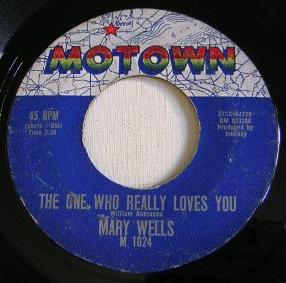
Mary Wells – “The One Who Really Loves You,” Pop # 8, R&B # 2
Mary Wells was billed as “Motown’s First Female star” but she got off to a slow start with this song. Penned by the usually reliable Smokey Robinson, “The One Who Really Loves You” suffers from overly simplistic lyrics and a melody that doesn’t try much harder. Wells’ vocals are frequently flat as she basically just calls out her smitten rivals – like Silly Lily – and points out their flaws. After listening to the song a half-dozen times, I think the singer may be exaggerating the threat of Ginnie and Minnie to steal her man, but I’ve also never been a lovelorn teenage girl. Then again, neither has Smokey Robinson.
Thankfully, while this song doesn’t work, it didn’t take long for the Robinson-Wells collaborations to click. Special note should also be made of Eddie “Bongo” Brown’s lilting percussion, supposedly inspired by the island rhythms of Harry Belafonte. — By Joel Francis
George Clinton’s show hasn’t changed much over the past several years, but that hasn’t stopped him from continuing to attract new fans.
Saturday night’s show at Crossroads KC marks the third time Clinton’s Parliament-Funkadelic have performed in Kansas City in the last four years, and each time the legion of hands branded with an “X” – signifying under 21 – is prevalent.
The forecast of a chilly evening – temperatures dipped into the 40s – and rain didn’t keep the lot behind Grinders from filling up over two-thirds with a crowd that cut through every demographic in the city.
The band opened with “Funkentelechy” followed by “Bop Gun.” Clinton wouldn’t emerge in his rainbow dreadlocked-glory for another half hour, but his crew of funksters were more than capable of keeping the music and spectacle rolling in his absence.
Parliament-Funkadelic shows may be closer to a three-ring circus than a traditional concert. Onstage at any moment are longtime band leader Garry “Diaper Man” Shider and backing singers dressed like roller girls and buffalo soldiers. Toss in characters like the Poo Poo Man, a pimp in zoot suit who lead the band through a James Brown tribute they’ve been doing since before Brown died, and Sir Nose, a dancer and agitator, and you’ve got a cross between Cecil B. DeMille’s cast of thousands and Ken Kesey’s Merry Pranksters.
Of course having a first-class catalog doesn’t hurt either, and Clinton’s stable is definitely up to the task. The philosophy is simple: if you have something to add to the song, go out and play it. If not, get off the stage and make room for someone who does. The result can be up to six guitars wailing away on the metal instrumental “Maggot Brain” or horns and keyboards leading a charge through “Tear the Roof off the Sucker” and “Up for the Down Stroke.”
Though the predicted rain never appeared, when the wind picked up around the two-hour mark the crowd thinned so quickly it was like watching time-lapse video. The hearty souls who stuck around for the final hour were treated to a devastating medley of “Standing on the Verge of Gettin’ It On,” “Pumpin’ It Up” and a cover of Chuck Brown’s go-go classic “Bustin’ Loose.”
The evening ended with Clinton and nearly all of his two dozen musicians onstage for “Flashlight” and a ferocious “Atomic Dog” with several audience members dancing up alongside the group. There were so many people onstage it was hard to differentiate the band from the audience. But maybe that was the point. We were “One Nation Under A Groove.”
Like a lot of bands who play The Record Bar, Carbon/Silicon is trying to promote their first album and make a name. But as the latecomers who were turned away at the door learned, few of those bands have a greater legacy than Mick Jones and Terry James. The former Clash and Gen-X axemen dashed onstage through a side door, ripped through ten songs from their debut album in about an hour, then hurriedly left, leaving the sold-out throng to revel in what they’d witnessed.
Jones may be a more than a few years removed from his commercial heyday, but he still has plenty of magic left to deliver. He is a bit leaner and more articulate these days, but can still craft a great melody and rip a sizzling solo.
While few in the crowd seemed familiar with the new material, it’s unlikely that anyone left without the catchy chorus of “The News” – “Good morning it’s the news/and all of it is good” – stuck in their head. The chords in “WTF” slashed in a similar progression to “Clash City Rockers” and tore with just as much fury.
James trotted out a left-field cover of “Reason to Believe” for his turn at the mic. A punk cover of a Rod Stewart hit shouldn’t have worked, and nearly didn’t, but the band’s enthusiasm for the tune kept the wheels from falling off.
After cracking several jokes about the empty Conestoga wagon in the southeast corner of the parking lot, Jones prefaced “Really the Blues” with an apology: “When we found out we were playing Kansas City, we knew we had to play the blues. This is our attempt.”
Jones and James have been leading Carbon/Silicon – named for the combination of organic (guitars) and synthetic (computers) used in their songwriting process – for six years now, nearly as long as Jones and Joe Strummer were partners in the Clash. Saturday night’s only nod to their former bands, though, was a tease of “Police On My Back” during the band introductions in the final number.
That was more than enough for the dedicated, though, who christened every guitar solo with a hearty yell and kept the Record Bar illuminated with constant camera flashes and cell phone captures.
The duo were backed by Big Audio Dynamite alum Leo Williams on bass and drummer Domonic Greensmith.
Setlist: The Magic Suitcase/I Loved You/War on Culture/Reason to Believe/Soylent Green/Acton Zulus/The News/Really the Blues/WTF/Why Do Men Fight?
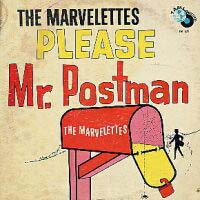
The Marvelettes – “Please Mr. Postman” Pop #1, R&B #1
It took six songwriters, but Motown finally, swept the top of the charts with this song. The Marvelettes were a group of high school who entered a 1961 school talent contest for the chance to audition for Motown. While this original performance is certainly memorable, the group definitely isn’t, which is probably why both the Beatles and the Carpenters were successful with their covers.
For the Beatles, the song was a tribute to American Motown music free of specific artistic association (it wasn’t “The Beatles doing Smokey,” like their cover of “You Really Got A Hold On Me”). For the Carpenters, it was a chance to revisit the schoolgirl longing and nostalgia the song represented. (By the way, this entry contains way more than I ever thought I’d write on the Carpenters. Let us promise never to speak of them again.) — by Joel Francis
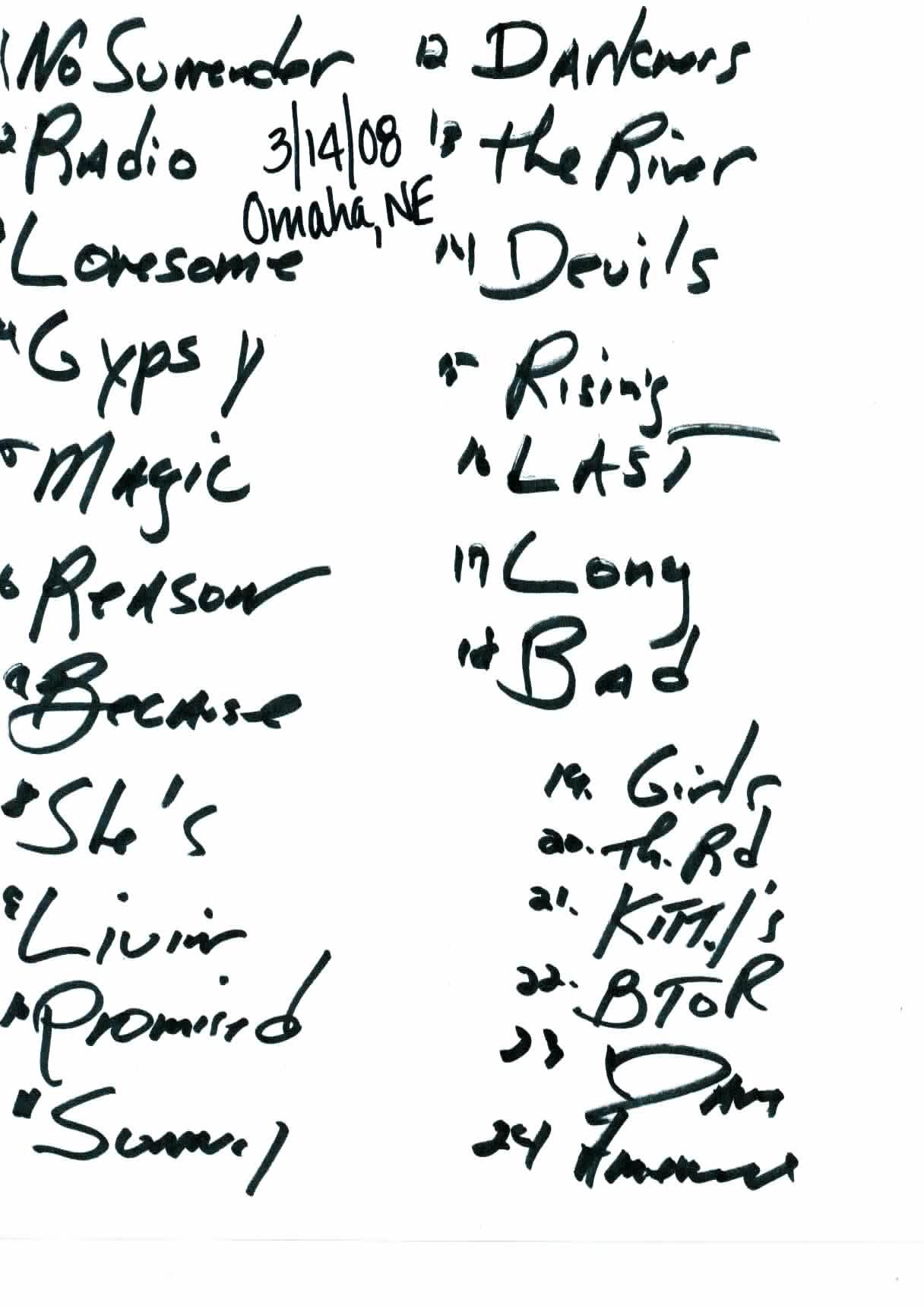
With the Big 12 tourney reigning in Kansas City, Bruce Springsteen and the E Street Band commandeered Omaha’s empty arena for nearly three hours of musical magic on Friday night.
Springsteen opened with “No Surrender” and kept his foot on the gas for the rest of the night. Although the band played three-quarters of last year’s album, “Magic,” they didn’t shy from their late-‘70s glory days. The new material meshed with the old well. In short, it all worked and it all kicked ass.
The ballads were just as affecting as the barnburners. Violinist Soozie Tyrell duetted with Springsteen for a beautiful reading of “Magic” accented by guitarist Nils Lofgren’s flamenco-like fills. Bass player Garry Tallent added a captivating countermelody to “The River,” which was haunted by Springsteen’s falsetto vocals. “Waitin’ On A Sunny Day” found the band armed with acoustic guitars and leading the audience in a campfire sing-along.
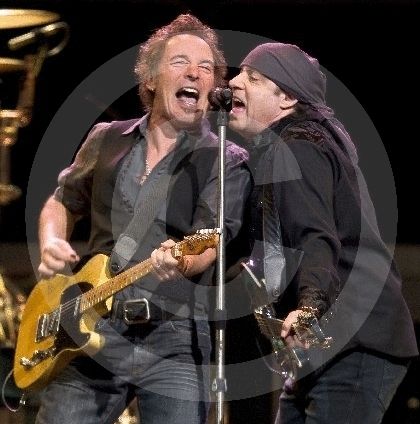
After a short sermon updated from his pro-John Kerry, “Vote For Change” tour, Springsteen dedicated “Living in a Future World” to his “Vote For Change” tourmate, local boy Conor Oberst. Oberst himself popped up nearly an hour later during the encore to lend his voice to “Thunder Road,” but was woefully unprepared to keep up with The Boss. Oberst nervously paced in circles around guitarist Little Steven Van Zandt, and flubbed most of his lines. Fortunately, everyone else in the arena had the lyrics down and picked up the slack.
There were several surprises tucked into the 25-song set, but none was bigger than “Jungleland.” Saxophonist Clarence Clemons looked shaky throughout the night – he frequently took breaks in a large easy chair positioned near the back of the stage – but he and pianist Roy Bittan delivered a riveting performance of arguably Springsteen’s greatest song. That was followed by a throwback romp through the “Detroit Medley” led by drummer Max Weinberg. Springsteen said they hadn’t performed this one in a while, and he proved his point by fumbling with some of the lyrics. Earlier in the night, the band reclaimed “Because the Night” from Patti Smith.
Two E-Street mainstays were M.I.A. Springsteen’s wife Patti Scialfa was at home tending to the family, and Danny Federici is receiving treatments for melanoma. His organ bench was ably filled by Seeger Sessions tour alum Charles Giordano.
For a man who named his sixth album after Omaha’s home state, Springsteen and the E Street Band haven’t been frequent visitors. Springsteen said this was their first visit in 30 years, and his only musical nod to “Nebraska” was a boogie version of “Reason to Believe” that sounded like it was arranged by John Lee Hooker and Canned Heat.
The house lights came up for “Thunder Road” and “Dancing in the Dark” before the night ended with “American Land,” a Irish-flavored original that brought St. Patrick’s Day a few days early.
Setlist:
No Surrender/Radio Nowhere/Lonesome Day/Adam Raised A Cain/Gypsy Biker/Magic/Reason to Believe/Because the Night/She’s the One/Living in a Future World/Promised Land/Waitin’ On A Sunny Day/The River/Devil’s Arcade/The Rising/Last To Die/Long Walk Home/Badlands//ENCORE: Girls In Their Summer Clothes/Thunder Road (with Conor Oberst)/Jungleland/Detroit Medley/Born to Run/Dancing in the Dark/American Land



 joelfrancis.com