Above: The Rev. Al Green brings “Love and Happiness.”
By Joel Francis
After barely over an hour onstage, Al Green said goodnight, grabbed a small black duffle bag and exited. The gesture was symbolic of the evening: the bags were packed and he was ready to go.
Saturday’s concert at the Midland Theater was the final stop on Green’s eight-month tour that took him across America and around Europe; he was anxious to get home.
“Two month is a long time,” he said. “Even a preacher can’t go that long.”
That might explain the truncated set – 77 minutes, with no encore – and why it always felt like Green had one foot off the stage.
For the most part, Green let his 13-piece band and the audience do most of the heavy lifting. After introducing the first couple lines, Green was all too happy to let the audience take over his songs. Beaming from ear to ear, he was content to scat guide vocals over the crowd’s singing and hand roses to women in the front rows.
Green Hovered like a cloud over the numbers, dipping in just long enough to let out a scream or prove the health of his pipes. When he fully immersed himself in a song, the result was even better than his allusions. During “Tired of Being Alone” Green dropped to his knees and uncurled a falsetto that raised goose bumps. He poured his heart into “Amazing Grace” and came alive during a medley of Motown and Stax numbers that inspired him as a boy.
It would be easy to assume Green was simply bored with his repertoire if he wasn’t so perpetually joyous. After overcoming some early monitor problems, Green chatted effusively to the crowd, healing the Kansas/Missouri divide, telling stories from the tour and preaching a little gospel. Since Green had tossed “Let’s Stay Together” out a half-hour into the night, he closed with his next-biggest song, “Love and Happiness.” At end the band vamped over the groove, stretching the number out as Green thanked his crowd again and again, but the effect didn’t work – it was still too soon for him to leave.
With the premium seats going for $70, the evening cost about a dollar per minute after service fees. While there are worse ways to spend a night out, there wasn’t enough of the man whose name was printed on the ticket to justify the price.
Setlist: I Can’t Stop; Let’s Get Married; Lay It Down; Stay With Me (By the Sea); Everything’s Gonna Be Alright; Amazing Grace/Nearer My God To Thee; Let’s Stay Together; Medley: How Can You Mend a Broken Heart / Here I Am (Come and Take Me) / I Can’t Help Myself (Sugar Pie Honey Bunch) / My Girl / Bring It On Home to Me /(Sittin’ On) The Dock of the Bay / You Are Everything); Tired of Being Alone; I’m Still In Love With You; Simply Beautiful; Love and Happiness
Above: Watching the Dirtbombs rip through “Ever Lovin’ Man” at The Bottleneck was one of the Top 10 shows of the year.
By Joel Francis
(Note: All concerts in Kansas City, Mo., unless otherwise stated.)
10. Dirtbombs, The Bottleneck, Lawrence, Kan., May 25
The Dirtbombs didn’t get started until midnight, but no one seemed to mind. With barely three dozen fans in the club, just showing up was a sign of devotion. For the next hour, singer/guitarist Mick Collins and his band plowed through solid cuts like “Ever Lovin’ Man” off their latest album, “We Have You Surrounded,” and soul covers like Sly and the Family Stone’s “Underdog” from their classic album, “Ultraglide in Black.” Collins hails from the Motor City and he embraces its every aspects, combining the soul of Motown with the soiled fuzz of the White Stripes and Stooges.
9. Carbon/Silicon, Record Bar, March 29
It isn’t often a member of the Clash comes to town, and even more rare they’d play a 200-person room like The Record Bar. With barely a nod to his old band, guitarist/songwriter/singer Mick Jones displayed the chops and charm that made him a legend. Read the full review.
8. Bruce Springsteen and the E Street Band, Qwest Center, Omaha, March 14
Bruce Springsteen closed his “Magic” tour with a three-hour performance at the Sprint Center. I didn’t make that one, but I did see his warm-up gig a few months earlier in Omaha. Springsteen and company treated the crowd to most of his latest album and liberally sprinkled classics like “Jungleland,” “She’s the One” “Thunder Road,” which featured a guest appearance from hometown boy Conor Oberst. Read the full review.
7. Rhett Miller, Largo, Los Angeles, April 11
The Old 97s had barely reconvened when Rhett Miller struck out alone for two nights on the tiny stage at Largo, Los Angeles’ legendary artist-friendly club. He dusted off several 97s favorites and debuted songs from the group’s upcoming album “Blame It On Gravity.” Miller also tromped through his solo catalog and treated the intimate crowd to his favorite covers. The appearance of pianist Jon Brion midway through the set was the cherry on the sundae. The two musicians renewed their musical friendship through songs like David Bowie’s “Queen Bitch” and Wilco’s “California Stars” that had the pair grinning like schoolboys. Miller announced he was recording the show for future release. Keep your fingers crossed this pops up.
6. Sharon Jones and the Dap-Kings, Granada Theater, Lawrence, Kan., Jan. 29
It was after 11 p.m. on an icy winter night when the Dap-Kings took the stage. Within minutes it felt like a hot 1966 summer afternoon. Clad in matching suits, their three-piece horn section complementing the three-piece rhythm section, the Dap-Kings – go-to performers for everyone from Amy Winehouse to Seattle’s Saturday Knights – settled into a solid soul groove. Moments later, the diminutive Sharon Jones skittered across the stage as if she were shot from a cannon. Like a perfect hybrid of James Brown and Tina Turner, Jones partied through songs from her three albums and taught the crowd a few new dance moves. The heat from the band must have pushed the overall mercury up, because when it was all over outside didn’t feel as cold.
5. Randy Newman, Folly Theater, Oct. 11
Randy Newman found a break from his day job scoring movies to make a quick run to the heartland and give his first Missouri show in a generation. Working primarily from this year’s “Harps and Angels” album, Newman’s solo set was stocked with more than two dozen catalog favorites peppered with hilarious asides, all performed in front of a sold-out, appreciative audience. Read the full review.
4. Robert Plant/Alison Krauss, Starlight Theater, Sept. 23
Jimmy Page and John Paul Jones may be beating down Robert Plant’s door to reconvene Led Zeppelin, but Plant would be better served sticking with Alison Krauss. With a muse mightier than his former bandmates can imagine, Plant and Krauss delivered two hours of spellbinding music with arguably the greatest backing band of all time. Read the full review.
3. Dave Brubeck, Folly Theater, Oct. 2
Dave Brubeck quit touring Europe a few years ago, so the 88-year-old jazz pianist’s occasional treks to Kansas City are even more prized. Most people know Brubeck from his groundbreaking quartet with Paul Desmond, but his new group is arguably as good. Randy Jones did more with the nine pieces in his drum kit than most drummers can do with triple the amount, while saxophone player Bobby Militello applied sheets of sound and originality to Desmond’s well-worn and much-beloved “Take Five.” The quartet encored with a brief, smirking reading of Braham’s “Lullabye.”
2. Radiohead, Verizon Wireless (formerly Riverfront) Ampitheater, St. Louis, May 14
Radiohead’s last concert in the area was on the “Hail To the Thief” tour and I have been kicking myself for five years for missing them. No longer. The band’s set burned with the intensity of a supernova, climaxing with “Fake Plastic Trees.” Early detours through the “Idiotheque” and all of “In Rainbows” made the evening both invigorating and draining – and just enough to hold me over until the next tour. Read the full review.
1. Tom Waits, Fox Theater, St. Louis, June 26
Hipsters, hippies, bikers and beatniks alike populated the sold-out congregation for Tom Waits first visit to St. Louis in a generation. He made it a night to remember, performing rarities like “Heigh Ho!” (for the only time on the tour), old favorites like “Rain Dogs” and new gems like “Day After Tomorrow.” Oh yeah, and advice on how to bid on eBay. Read the full review.
Above: Smithsonian patrons deserve a space to discover and learn more about American musicians like Big Bill Broonzy.
By Joel Francis
The Smithsonian National Museum of American History’s two-year, $85 million facelift is a lot like the plastic surgery aging stars get – it attracts a lot of interest at first and does a good job of hiding the wrinkles, but ultimately accentuates all the other flaws.
A visit to the renovated Washington, D.C. museum in the week after it re-opened to the public revealed Kool Herc’s turntable and Afrika Bambaataa’s pendant as the most prominent exhibits of 20th Century American music. There was no acknowledgement to the richness of the museum’s own music archives and label, Smithsonian Folkways.
The National Museum of American History needs a showcase dedicated to the legacy of Smithsonian Folkways recordings. A place for visitors to learn about its artists – not only better-known names like Pete Seeger, Guthrie and Leadbelly, but the anonymous rural musicians label founder Moses Asch sought to document.
Asch founded Folkways Records and Service Co. in 1948 to “suppor(t) cultural diversity and increase understanding among peoples through the documentation, preservation, and dissemination of sound,” Much like his contemporary and fellow musicologist Alan Lomax, Asch captured songs from primitive villages to New York City’s avant-garde, ancient Greek literature to Russian poetry.
The permanent space should include an interactive map where visitors can hear and learn about indigenous music styles in a given area, and see how those forms migrate and influence each other. They should also house several kiosks where listeners can listen to recordings while learning about the performers. Rotating exhibits of instruments, lyrics and other memorabilia would also enhance the space.
When the Smithsonian acquired Asch’s library after his death in 1987, they adopted his mission of document “the people’s music” as their own. They also guaranteed that all the label’s 2,000 releases would forever remain in print. One wouldn’t know this promise has been kept by visiting the museum’s gift stores.
In the old configuration, the main retail store on the bottom floor was a clearinghouse for the Smithsonian Folkways catalog. Nearly every title and artist was at the shopper’s fingertips. All that remains today is a few compilations of blues, bluegrass, train and labor songs and the essential Woody Guthrie box set. Patrons deserve better than this. They deserve a place to flip over the rocks of American roots music and discover what lies underneath.
Addressing this need would not correct all the problems of the renovated museum. The public would have been better served had the curators waited until all their exhibit space was completed before re-opening. More than a third of the building is still under construction and closed to the public. But the tapestry of American music the Smithsonian has preserved is too rich to be swept under the rug.
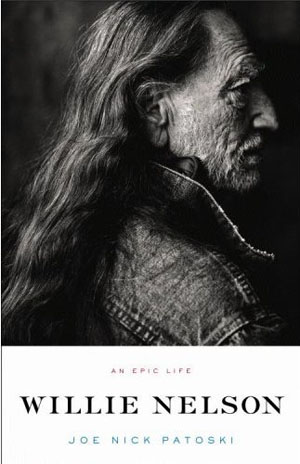
“Epic” is the key word in the title of Joe Nick Patoski’s 567-page biography on Willie Nelson. Drawn from dozens of interviews and scores of oral histories, books and articles, Patoski paints a comprehensive picture of his fellow Texan.
If Patoski skimps on Nelson’s childhood – less than 50 pages are devoted to his years as a minor – he makes up for it by piling chapter on top of chapter about Nelson’s early family life, struggles as a disc jockey and songwriter for hire and, finally, as a nascent country performer. Patoski also devotes an entire chapter on IRS struggles and puts in strong perspective how such horrible accounting could have transpired.
But while Patoski’s journalism skills and research is impeccable, he spends too much of his time telling and not enough showing. For example, there piles of anecdotes about Nelson’s generosity and his inability to say no. He sticks around for hours after concerts to sign autographs, and lavishly gifts his friends and family. When a credit card company asked him to put his face on their card, he said yes without thinking of the consequences. Manager Mark Rothbaum has to explain the implications.
“Well think about it: A third of all credit cards go into receivership, so a third of your fans will go bankrupt, and they will have to look at your picture on that card,” Rothbaum tells Nelson. “Every time they see your picture they will think, That prick is making money off of me.”
Nelson asked Rothbaum to get him out of the deal, but the reader is never given understanding of what compels Nelson to be so affable.
The person who shines best is Nelson’s longtime drummer Paul English. English doesn’t appear until a third of the way through, where he initially surfaces as a pimp who drills and robs pinball machines and operates backroom card games. When Nelson’s drummer failed to show up for a radio session, English is recruited. Even though he had never played drums before, but the experience went well enough English accepted Nelson’s invitation to walk away from the lucrative prostitution business and join the band on the road.
English’s skills with a gun and knife were handing in prying a reticent promoter away from the band’s money and bailing Nelson’s smart mouth out of fight. English was never shy about displaying the pistol he always carried, which was usually all it took to calm any disagreements. English’s black market background also came in handy procuring marijuana for the band.
Patoski’s meticulous exploration sheds light on Nelson’s long walk to fame, where record labels and producers try in vain to pigeonhole the artist, and Nelson’s inability to fit into their boxes, even when he gamely goes along. Later, as Nelson’s fame and wealth grows, he builds a studio on his Texas estate. Patoski conveys a laid-back atmosphere where music flows as freely as beer and songs are recorded as effortlessly as lighting a roach. That Nelson practically lived in his studio explains the prolificacy of his catalog (he released two albums in 2008), and the easygoing environment explains how his financial problems reached the boiling point.
The vision of Nelson unearthed in the book refuses to be worried about anything except his music, even when doing so compromised his family and friends. His nature reminds me of a line from the film “Walk the Line.” When Johnny Cash tells June Carter on the back of the tour bus that everything will work itself out, she replies “No, John. People work them out for you, and you think they work themselves out.”
That Nelson’s music has attracted rednecks and hipsters alike is less mystifying after this thorough examination of the man. The songs are merely an extension of the personality: Nelson is willing to meet anyone anywhere for a good time. The access Nelson provided for this thick tome can rest proudly alongside his albums as a testament to the man’s generosity.
It’s hard to listen to Raphael Saadiq’s new album, “The Way I See It,” without thinking it’s a lost Motown gem.
The record blasts off with “Sure Hope You Mean It,” a song that recalls the finer moments of Smokey Robinson and the Miracles. Later, Saadiq channels the Temptations on “Keep Marchin'” and “Staying In Love,” which features an effervescent call-and-response over a great rhythm.
The horns on “Big Easy,” courtesy of the Rebirth Brass Band, couple with an incessant guitar and snare drum to create a frantic atmosphere as Saadiq sings “somebody tell me what’s going on/I ain’t seen my baby in far too long.” Think Holland-Dozier-Holland lost in Mardi Gras and you’re almost there.
Saadiq strays from the Motor City to channel the Sound of Philadelphia for “Just One Kiss,” a duet with Joss Stone. Stone shows more restraint on this number than she did on the album Saadiq produced for her last year, “Introducing Joss Stone.” “Calling” starts with a Spanish introduction over flamenco guitar before sliding into a great doo-wop melody.
“Never Give You Up,” another Gamble-Huff-flavored moment, is the stand-out track. The arrangement pulls the listener in before Saadiq’s smooth voice kicks in, and the magnificent, swirling chorus seals the deal. That Stevie Wonder’s cameo after the third verse does not feel forced, speaks to the organic vibe Saadiq has not only created here, but sustained over most of the record.
The only misstep is the album-closing remix of “Oh Girl” featuring Jay-Z. While he offers some of his most soulful rapping to date – at points Jay-Z is nearly singing – the hip hop intrusion breaks the spell and rudely slams the album into the present.
Despite this, Saadiq’s third album is the best of his career. “The Way I See It” is more focused than his 2004 sophomore effort, “Ray Ray,” and tighter than his bloated (but otherwise excellent) debut “Instant Vintage.” From the sound of the guitar and the echo on drums to the mix and arrangement of the backing vocals, everything is spot-on. Even the timing is right – most songs are between two and three minutes.
Motown tributes are a dime a dozen. What elevates “The Way I See It” above the score of old school knock-offs is that it goes beyond the paint-by-numbers approach to inhabit and invigorate the true spirit of the music.
If Van Morrison’s 1968 release “Astral Weeks” is the album of a lifetime, then watching him perform it live in its entirety is the chance of a lifetime.
Kansas City’s own Irish troubadour Eddie Delahunt took advantage of that opportunity and booked a trip to see Van Morrison perform his seminal album on November 8, the last of two nights at the Hollywood Bowl in Los Angeles.
“It was historic,” Delahunt said. “I’ve seen Van before, and sometimes he can be grumpy with the material. This was the best I’d seen him. He played it straight and true. You could see he was real with it.”
Morrison opened the night by revisiting some of his bigger numbers, like “Gloria” and “Brown Eyed Girl” and lesser-known album cuts like “And the Healing Has Begun” and “Summertime in England.”
“‘Caravan’ was great, but there were no leg kicks like in ‘The Last Waltz,'” Delahunt said with a laugh, referring to Morrison’s performance in the 1978 Martin Scorsese film about The Band. “During ‘The Healing Game’ he did a little back-and-forth (call and response) with Richie Buckley on sax, trying to trip him up.”
Delahunt’s $250 terrace seats placed him dead center, about 40 yards from the stage. He said the high prices – tickets started at $350 – kept the crowd over 30 years old and the bowl under capacity.
“Van had the crowd in his hands for the first set,” Delahunt said. “Then they took a 15 minute break to rearrange the stage for ‘Astral Weeks’ and Van ran it straight through.”
For “Astral Weeks,” Morrison’s band, which was assembled in a semi-circle around him, was augmented by a three-piece string section and “Astral Weeks” album guitarist Jay Berliner. Original session bassist Richard Davis was also scheduled to join the group, but a last-minute family emergency kept him away.
Morrison shuffled the album’s order, slipping the closer “Slim Slow Slider” into the third spot and coupling the upbeat jazz numbers “Sweet Thing” and “The Way Young Lovers Do” into a powerful one-two punch.
“Everyone loved ‘Madame George,’ but ‘Cyprus Avenue’ was the best for me. He played it closest to the album and you could see he was enjoying it,” Delahunt said. “During a song like ‘Slim Slow Slider,’ he wasn’t just playing the harmonica, but humming into it.”
Morrison closed the evening with an one-song encore of “Listen To the Lion” and a twist on an old phrase.
“As Van said at the end,” Delahunt recalled, “‘You made a happy man very old.'”
Note: The performance was filmed for future release on DVD. Catch Eddie Delahunt in concert by checking out his concert calendar.
Above: Jack White and Alicia Keys do the latest James Bond song, “Another Way To Die.”
By Joel Francis
Duran Duran bass player John Taylor probably had the previous two James Bond themes in mind when he drunkenly approached producer Cubby Broccoli at a party and asked when they were going to get someone “decent” to do a Bond song.
It didn’t take long to learn the answer. Duran Duran’s “A View To A Kill” was a No. 1 hit, re-establishing Paul McCartney’s precedent of letting successful pop acts write and perform title songs hit. While the big synthesizers and processed drums haven’t aged well – few pop songs from the ’80s have – the chorus of “dance into the fire” remains as catchy as ever. The song also marked the last time original Duran Duran’s lineup recorded together for 16 years.
Encouraged by Duran Duran’s success, the Bonds producers handed the reigns to another pop act for 1987’s “The Living Daylights.” After being rejected by the Pet Shop Boys, who wanted to score the entire film, a-ha, the band best known for its 1985 No. 1 hit “Take On Me,” agreed to take on Bond. Sporting similar dated production as Duran Duran’s hit, but weaker songwriting and overly sensitive singing, “The Living Daylights” became another Bond footnote.
The lush orchestration associated with early Bond numbers was back for Gladys Knight’s “License to Kill” in 1989. Composer Michael Kamen did a good job incorporating the “Goldfinger” horn line into the main melody, but the lyrics and melody are bland. It’s a shame that Knight, who has one of the strongest soul voices of all time, wasn’t given stronger material. Bond’s further musical malaise is marked by the presence of Patti LaBelle’s end credits theme, “If You Asked Me To,” which was later covered by Celine Dion. Dion’s appearance marks the nadir of any expedition.
After a six-year hiatus and casting change, Bond returned in 1995’s “Golden Eye.” Written by U2’s Bono and The Edge, “Golden Eye” found the duo continuing in the same vein as their summer hit “Hold Me, Thrill Me, Kiss Me, Kill Me.” The arrangement wraps the duo’s discotheque infatuation around a haunting melody build on a horn line. Tina Turner masterfully teases Bono’s voyeuristic lyrics and was rewarded with a Top 10 hit in Europe. “Goldfinger” was the best Bond song in a generation and helped successfully jumpstart the franchise.
After the powerful, soulful voices of Knight and Tuner, Bond’s producers turned to another American female in 1997 for “Tomorrow Never Dies.” Sheryl Crow brought strong songwriting chops and chart-topping cache, but she lacked the voice to carry her melody. Her vocals fare well during the verses, but the chorus is too high for Crow’s register where her throat lacks the energy to carry the words and emotion. k.d. lang’s “Surrender,” written by the film’s composer David Arnold, fits firmly in the Bond mold of big strings and brassy horns and would have been a better opening number. Unfortunately, it was retitled and pushed to the closing credits once Crow signed on. Finally, pop-techno musician Moby was enlisted to remix Monty Norman’s “James Bond Theme.” The result was a rare update that successfully enhanced and modernized the original.
Arnold successfully married his large orchestration with light techno elements for “The World Is Not Enough.” Garbage singer Shirley Manson slithers through the lyrics with authority and the rest of the band maintains a tasteful balance between rock and orchestral while adding their stamp to the song.
Madonna was easily Bond’s biggest star pull since Paul McCartney when she signed up for “Die Another Day” in 2002. While the film may have been Bond-by-numbers, Madonna blew up the formula for her electronic theme song. Her manipulated vocals hide behind banks of synthesizers and strings and spout the memorable line “Sigmund Freud/analyze this.” Although the song spent 11 weeks at the top spot of the U.S. charts, it is unlike any other theme in the Bond cannon and, as a result, not without controversy. The Material Girl wouldn’t have it any other way.
Bond was rebooted once again in 2006 for “Casino Royale.” As the character became grittier, so did the music. Chris Cornell’s “You Know My Name” is easily the hardest number in the Bond cannon, cut from the same stone as Alice Cooper’s rejected “Man with the Golden Gun” that repulsed producers 30 years ago.
Confirming they were no longer afraid to rock out, White Stripes mastermind Jack White was enlisted to perform “Another Way To Die” for 2008’s “The Quantum of Solace.” Unsurprisingly, White’s song sounds like a heavily orchestrated White Stripes number given an urban twist courtesy of the piano and vocals of Alicia Keys. Stripped of the overproduction that plagues her solo releases, Keys shines under White’s watch. Her call and response with White’s dirty guitar licks halfway through the song channel “What I’d Say” through Jimmy Page’s amplifier. The number is the first Bond theme performed as a duet, but based on the openness Bond’s producers have shown in the past decade, it will likely not be the last.
Above: The “Christmas On Mars” trailer. You have been warned.
By Joel Francis
Blame the Flaming Lips for contributing to Christmas creep. Their long-awaited (holiday?) sci-fi flick lands on DVD next Thursday and will be shown on the big screen in select theaters around the country all month. If you live in Kansas City, Mo., you have two opportunities to see the film. Screenland will host viewings at 9 p.m. on Friday, Nov. 21 and at 8 p.m. on Saturday, Nov. 22. Below is a reprint of my review of a sneak peek screening at Wakarusa last summer.
“Christmas On Mars” – Friday night, the Flaming Lips tent
The chance to catch a band-hosted screening of the Flaming Lips’ seven-years-in-the-making movie “Christmas on Mars” overpowered the need for sleep for many Wakarusa campers.
Shortly after the Lips’ spectacular set on the Sun Down Stage, 200 fans lucky enough to snag a free ticket earlier in the evening were ushered into the band’s large “Eat Your Own Spaceship” tent. Inside, it felt a lot like summer camp. Everyone sat on long wooden benches and roadies handed out popcorn.
After a short personal introduction from lead Lip Wayne Coyne and a longer recorded interview, the film finally started around 1 a.m.
The movie follows the descent of paranoia and psychosis on a crew of astronauts in their Martian space station on Christmas Eve. Multi-instrumentalist Steven Drozd plays the main astronaut while Coyne portrays an emerald-hued, antennae-sporting Martian who swallows an asteroid, is detained by the space crew and then forced into the role of Santa Claus.
The results are pretty much what you’d expect from a group with no acting or screenwriting background, paying for their production as they go. Fans started sneaking out almost as soon as the rock-show volume movie started. When I finally succumbed an hour into the movie a herd of fans were seated on the ground outside the tent for the next showing. Live and learn.
(Above: Blondie’s superior, unused version of “For Your Eyes Only.”)
By Joel Francis
When Roger Moore replaced Sean Connery as James Bond, the producers retooled the series to include the grittiness of the recent Dirty Harry movies and “The French Connection.” In “Live and Let Die” Bond chases a corrupt Caribbean politician who deals heroin and happens to be black. They also snagged one of the biggest stars on the planet to write and perform the latest Bond theme – ex-Beatle Paul McCartney.
McCartney’s theme song reunited him with Beatles producer George Martin, who scored the film. Martin was the first person other than John Barry to score a Bond film.
Not only was McCartney’s song the first rock Bond theme, but it was the first one to be written and performed by the same person. The film’s producers had wanted a soul singer, but Martin prevailed and McCartney was allowed to sing. The song starts with a soft melody and understanding lyrics, before bursting into a whirlwind of strings and horns. The change in tempo and texture underscores the protagonist’s philosophical change, from “live and let live” to “live and let die.” The song is a staple of McCartney’s live shows and was performed at his Super Bowl halftime concert in 2005. The less said about Guns N’ Roses 1991 cover, the better.
Barry was back in the scoring saddle for “The Man With the Golden Gun.” He teamed with lyricist Don Black on the title song and the results were predictable. British singer Lulu made her name with the No. 1 hit “To Sir With Love,” the title song to Sidney Poitier’s 1967 film, but she’s given little to distinguish herself with here. Deep in the mix, a guitar spews crazy licks underneath a battalion of churning trombones, but Lulu’s vocals stay safely in the Bassey mold.
Proto-shock rocker Alice Cooper claimed his song “The Man With the Golden Gun” was written for the film but rejected by its producers. The song is an aggressive slab of hard rock completely out of step with anything the producers had used before, so its unsurprising Cooper’s version didn’t appear until it was included on the tastefully titled “Muscle of Love” album.
In 1977, Carly Simon became the second American (after Nancy Sinatra) to sing a Bond theme. “Nobody Does It Better” was the first Bond theme without the same name as its movie, in this case “The Spy Who Loved Me,” although songwriters Carole Bayer Sager and Marvin Hamlisch did work the title into the lyrics.
The song revitalized Simon’s career which had been in a five-year gradual decline since her 1972 hit “You’re So Vain.” It was No. 1 on the adult contemporary charts for seven consecutive weeks and was nominated for two Grammys.
Despite its soft rock arrangement, “Nobody Does It Better” works well as a Bond theme. Writing about the character instead of the film is a refreshing change. Simon’s vocals are nearly devoid of the sex most female Bond singers infused in their delivery. Simon’s approach is more of devotion than lust, which not only supports the arrangement, but makes the song more honest.
“Moonraker” paired Bassey and Barry for the final time. Bassey’s third turn on a Bond theme happened after Johnny Mathis declined the song at the last moment. Her delivery is much smoother than on “Diamonds Are Forever” and “Goldfinger,” but it compliments Barry’s lush orchestration. For the first time, Barry’s horns are pushed far to the background. His strings are suspended, weightless in space, and the arrangement is accentuated with a light touch of disco.
The formula of pairing the score composer with a lyricist and giving the song to a pop singer was very much intact as the Bond film franchise entered the ’80s (and its third decade) with “For Your Eyes Only.” Unfortunately, the results were not as memorable. Sheena Easton set a precedent when she became the first singer to perform the title song onscreen. The gauze of synthesizers and strings and forced melody have rightfully relegated the song to footnote status. The producers would have been better served accepting Blondie’s title submission, which appeared on their 1982 album, “The Hunter.”
For his 13th Bond film, Barry turned to Tim Rice, Andrew Lloyd Weber’s lyricist, for help. The result, “All Time High,” was sung by Rita Coolidge. Like Carly Simon’s “Nobody Does It Better,” “All Time High” spent multiple weeks at No. 1 on the Adult Contemporary chart and does not share the its film’s title (in this case “Octopussy“). Unlike Simon’s song, though, “All Time High” hit the all-time low in Bond songs.
(Above: Johnny Cash’s alternate version of “Thunderball.”)
By Joel Francis
After nearly 50 years of slugging spies and bedding beauties, the premier of a James Bond movie has become an cultural event. The opening credit sequences of these films are events among themselves. Even though some of the biggest names in rock have performed a Bond theme song, the producers have always treated the number as a throwback to the Broadway and pop numbers of the 1950s.
When Bond made his big screen debut in 1962’s “Dr. No,” Ray Charles’ “I Can’t Stop Loving You,” variants of “The Twist” and the Four Seasons topped the Billboard charts. The theme song for “Dr. No” was a bizarre calypso arrangement of “Three Blind Mice.” Thankfully, the nursery rhyme is preceded by Monty Norman’s immortal James Bond theme. Norman’s theme was reinterpreted in every Bond film thereafter. It’s still exciting to hear the surf guitar race into the explosion of horns. The song is over-the-top, suspenseful and dangerous, but the swinging drums winkingly confide in the viewer that everything is in good fun.
Bond was back the following year with “From Russia With Love.” This time, producers hired Broadway songsmith Lionel Bart, best known for his work on “Oliver!,” to write an original theme song. Bart’s lyrics, coupled with soundtrack composer John Barry’s music, are the embodiment of the bachelor pad/Playboy image. Singer Matt Monro made his name performing in the nightclubs, caberets and lounges Bond would have haunted offscreen. Their lounge music is the embodiment of the bachelor pad/Playboy image that reeks of wood paneling, shag carpeting, hi-fi stereos and rotating beds. In other words, it’s straight out of Bond’s world.
Three-time Bond songstress Shirley Bassey made her debut with “Goldfinger.” Although the film hit screens during the year of Beatlemania, there is no hint of rock and roll in the title song written by the musical theater team of Leslie Bricusse and Anthony Newley. Barry’s bombastic horns are matched only by Bassey’s brassy delivery. “Goldfinger” is not only one of the most memorable Bond songs of all time, but it’s also the first memorable Bond song.
Barry and Bricusse didn’t stray far from the template when they approached Tom Jones to sing “Thunderball.” Jones puts his pelvis in the delivery, but the arrangement is essentially “Goldfinger”-redux. While they may have been working with a formula, it’s a strong one – “Thunderball” works nearly as well as “Goldfinger.”
An alternate “Thunderball” song was given to Johnny Cash to perform, but rejeced by the film’s producers. It seems even at the peak of his pills phase, Cash was more man than Bond could handle.
Rock and roll finally appeared in the serpentine guitar lick that opens Nancy Sinatra’s performance of “You Only Live Twice.” Even with the guitar, Sinatra’s sexy vocals rest on a pillow of strings accentuated by a harp. The number was Barry and Bricusse’s third consecutive teaming, and constructed from fragments of 25 separate takes. Bassey must have felt left out, because she covered the song in 2007, following in the footsteps of Coldplay, Bjork and Robbie Williams (who sampled the original for “Millennium”).
“On Her Majesty’s Secret Service” is a misfit in the Bond cannon, musically and theatrically. The title sequence is a throwback to the orchestral opening of “Dr. No.” Barry’s instrumental theme is notable for its deep Moog synthesizer notes, chugging rock bass and the soaring trombone melody, later taken over on trumpet. Barry, who scored every Bond film to this point, composed a great alternate to Norman’s original Bond theme. During the mid-’90s electronic craze, the Propellerheads created a 10-minute remix of the song.
Barry teamed with Burt Bacharach’s lyricist Hal David to write the film’s love theme, “All The Time in the World.” Saturated by fingerpicked guitar and a saccharine string section, the song couldn’t be further from jazz, despite the vocals of Louis Armstrong. Satchmo is in full-on “What A Wonderful World” mode. Lesser singers would buckle under the weight of the arrangement, but Armstrong is able to emote the lyrics perfectly, even if someone else is playing the trumpet solo.
As the calendar flipped to the 1970s, Bassey was given her second stint on a Bond theme. “Diamonds Are Forever” is the sexiest Bond theme since Sinatra’s. Barry’s arrangement is full of the soft strings and horn punctuations that viewers had come to expect, but he tosses in an unexpected splash of funk at the halfway point. The wah wah guitar and subtle nod to Isaac Hayes’ Oscar-winning “Theme from Shaft” could be what drew Kanye West to the song when he sampled it for his 2005 hit “Diamonds of the Sierra Leone.”



 joelfrancis.com