Review: The Decemberists

(Above: “The Rake Song,” a standout cut from “The Hazards of Love.”)

By Joel Francis
The Kansas City Star

What you thought of Wednesday night’s concert by the Decemberists at the Uptown Theater is largely based on your opinion of the band’s latest release, “The Hazards of Love.”

The Portland-based lit-rockers played the album in its entirety during the first set of their 2-hour, 15-minute set. That meant fans who weren’t familiar with the record (or just wanted the old stuff) had to wait over an hour before the band gave them the goods.“The Hazards of Love” isn’t a standard catalog entry. It’s a full-on concept album that nearly buckles under its own weight. The story involves a woman in love with a changeling who lives in the forest and gets kidnapped by a jealous queen. Somehow an angry rake is also involved.

And while the Decemberists had hints of progressive rock in their music before, they have now embraced it completely. “Hazards” isn’t too far from the being the indie equivalent of “Tales of Topgraphic Oceans.” In other words, the evening needed a huge caveat before the first note was played.

But what a note it was. Organist Jenny Conlee took the stage alone pumping huge cords out of her B3 organ as her bandmates slowly joined her. The music shifted from acoustic numbers to heavy blues-based Black Sabbath riffs, country and canticles as different themes and characters were introduced.

To help with their production, the quintet enlisted Becky Stark of Lavender Diamond and Shara Worden of My Brightest Diamond to play the beau and queen. Both artists were committed to their roles. Stark wore an all-white, flowing princess dress and would sway back and forth and gently swing her arms when her character appeared in the plot. Worden, whose band opened for the Decemberists last time they were in town, succeeded in her efforts to look and sound sinister.

While delivering the unabridged “Hazards of Love” may not be the most palatable approach, in hindsight it is understandable. Each number was largely dependent on the songs around it. Only a few numbers might have stood alone.

“The Wanting Comes In Waves” has a great pop chorus that ultimately serves as the climax to the tale. “The Rake Song” found everyone on stage, save songwriter/frontman Colin Meloy and bass player Nate Query banging on small drum sets placed throughout the stage. The power of those four additional drummers brought the hammer of the gods to the song.

“Margaret in Captivity” was another highlight. Backlit by a huge white light, Stark looked ethereal as the band played an intriguing melody that unfortunately shared the same chord changes as Bon Jovi’s “Dead or Alive.”

Meloy’s “thank you” at the end of “Hazards” was his first acknowledgement of the audience. However, after the half-hour break, Meloy returned as his usual loquacious self.

The band came back sans Stark and Worden took their time delivering favorites from across their catalog, stopping to tell jokes, organizing sing-alongs, explaining their songs and goading the audience. Before they played “Oceanside” Meloy explained what an ocean is because “I know that many of you have never seen an ocean. It’s much bigger than your muddy Missouri (River).”

Nearly every song in the second hour was greeted with big applause and loud singing. The crowd especially got into “Dracula’s Daughter,” the unreleased number Meloy called his worst song ever. That flowed right into “O Valencia,” which got the biggest response of the night.

At the end of “Valencia,” Worden and Stark snuck back onstage as a single spotlight focused on Meloy playing a familiar Spanish-tinged solo on his acoustic guitar. Suddenly the stage lit up and the rest of the band hit the riff to Heart’s “Crazy On You.” Worden and Stark threw themselves into their new roles as Ann and Nancy Wilson, showing off some great rock and roll pipes.

The encore kicked off with Meloy delivering a solo acoustic reading of the love song “Red Right Ankle.” That was followed by “A Cautionary Song,” which found everyone but Meloy, Query and Conlee parading through the audience with drums, tambourines and other percussion. Somehow Meloy orchestrated that maneuver into a lighthearted restaging of “Lawrence of Arabia.”

Whatever. Anyone who sat through an hour of music involving a rake and bought a ticket for something the band called “A Short Fazed Hovel Tour” was definitely up for anything thrown at them.

Setlist: The “Hazards of Love” album. Intermission. Oceanside; July July!; Billy Liar; We Both Go Down Together; The Engine Driver; The Sporting Life; Dracula’s Daughter; O Valencia; Crazy On You; Encore: Red Right Ankle; A Cautionary Song
Piano Men: Dave Brubeck, Dr. John and the Jacksonville Jazz Festival

(Above: The Night Tripper gets “Qualified.”)

By Joel Francis
The Daily Record

While in Jacksonville, Fla. this past weekend for a wedding, I was able to sneak away from my duties as a groomsman long enough to check out the Jacksonville Jazz Festival. On Friday night I arrived in time to catch the last half of the Dave Brubeck Quartet’s performance witht St. John’s River City Band. The local big band was well-prepared and sounded great, but their charts didn’t add much to the two songs I heard. “Blue Rondo a la Turk” was perfect the way Brubeck, Paul Desmond and company recorded it 50 years ago. It was interesting to hear the arrangement augmented with a battery of brass, but they certainly didn’t add anything new to the number.

The River City Band’s contribution to set closer “Take Five” fared better, if only because the structure of Brubeck’s signature song is more elastic. Brubeck has been required to end every night with this number for decades, yet he keeps finding new ways to interpret this song and keep it fresh.

Brubeck, who was supported by sax man Bobby Militello, drummer Randy Jones and his son Chris Brubeck on electric bass, reportedly played for about an hour, but we were lucky to even get that much. During his set, the conductor of the St. John’s River City Band announced that Brubeck had been hospitalized in March and put extra time in rehab to be in shape by May and fulfill his date in Jacksonville.

Dr. John took the stage after a short break. Backed by a guitar/bass/drums trio dubbed the Lower 911, his set was considerably louder but no less spirited that Brubeck’s. Opening with “Iko Iko,” John strolled through his catalog, treating the audience to “Makin’ Whoopee,” “Tipitina,” “Junco Man,” “Accentuate the Positive,” “Right Place, Wrong Time,” and several songs off his latest album, “The City that Care Forgot,” an angry diatribe against the government’s treatment of his native New Orleans during Hurricane Katrina.

As evidenced in the song listing above, John pulled heavily from his early ‘70s stint on Atlantic. The highlight of these tunes was “Qualified,” a lesser-heard, energetic album cut off “In the Right Place.”

Because of the perpetual heavy rains that have peppered Jacksonville for the better part of May, Friday night’s shows were delayed and pushed indoors to the Times-Union building. The facility has two stages; the auditorium Brubeck and John shared was about the size of Yardley Hall at Johnson County Community College. Although the balcony was closed, the floor was packed, giving Brubeck a slightly larger audience than the one he played to in Kansas City last fall at the Folly Theater. John must have been pleased with the turnout, which was considerably larger than the crowds he usually plays to at the Beaumont Club.

The explanation for the crowd size lies in the Jacksonville Jazz Festival’s dirty little secret: it’s free. Although the festival featured names like Simone, Chris Botti, Stanley Clark, former Miles Davis drummer Jimmy Cobb, Roberta Flack and Bill Frissel scattered on four outdoor stages throughout downtown, the art, beverage and food vendors were the only people asking for money.

Their demographics don’t pefectly align, and Jacksonville’s metro population of 1.3 million makes it about a half a million people smaller than Kansas City. It is frustrating to see Kansas City unable to support and sustain paid events like the Rhythm and Ribs Festival and Spirt Festival while free shows like Jacksonville’s Jazz Festival flourish. What would it take to see a similar event take root and become an annual highlight in Kansas City? Perhaps we should pick some of Jacksonville’s brightest minds to find out.

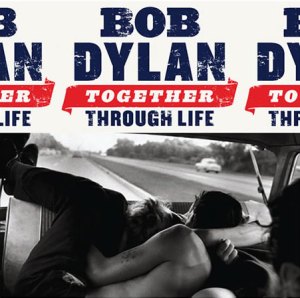
“Together Through Life” is a minor masterpiece

ttl

By Joel Francis

After delivering three “important” albums in the past dozen years, it’s nice to know Bob Dylan can make an album without making a statement.

“Together Through Life” feels like an afternoon drive through a dusty Texas border town with the windows rolled down. Much of that feel comes from the ubiquitous accordion played by David Hildago of Los Lobos. Lyricist Robert Hunter – who co-wrote all but one of “Life”’s tunes with Dylan and is best known  for writing “Casey Jones” and other songs with the Grateful Dead – deserves some credit for the record’s lack of ponderousness.

But lack of weight doesn’t equal a lightweight record in this case. The album is a cousin to “New Morning,” a solid, offering that is overshadowed by the albums surrounding it and filled with songs Dylan recorded because he wanted to, not because he had something to say.

Sonically, the album is cut from the same cloth that has defined Dylan’s previous ‘00’s offerings. It is a pastiche of Chess blues, Sun Records country and rock and pre-war pop. While there’s nothing as sunny as “Silvio,” a track Dylan and Hunter collaborated on 20 years ago, there’s also nothing as forgettable as “Ugliest Girl in the World,” the other fruit borne of that union.

Guitarist Mike Campbell from Tom Petty’s Heartbreakers adds light acoustic guitars and mandolin to most tracks, but drops a murky electric guitar reminiscent of Neil Young on “Forgetful Heart.”  Lyrically the song resembles the material for “Time Out Of Mind,” right down to the dark lyrics: “The door has closed, if indeed there ever was a door.”

While Dylan albums are rarely sunny endeavors, the gloom of “Forgetful Heart,” and the sarcasm of “It’s All Good” are broken by upbeat numbers like “Jolene” and “Shake Mama Shake” – both of which sound like they came from the Chess Studios at 2120 S. Michigan Avenue circa 1958. The tongue-in-cheek “My Wife’s Hometown” might be Dylan’s funniest number since his knock-knock joke in “Po’ Boy “ while “I Feel A Change Coming On” has a twilight optimism.

Fans have grown accustomed to waiting nearly five years between new offerings. “Together Through Life” is surprise arrival little more than two years after “Modern Life.” “Life”’s runtime of 10 tracks and 45 minutes and lack of “statement song” like “Highlands” or “Ain’t Talkin’” make a tempting case to write the album off as a lesser work. Although it will never measure among the first-tier cannon, those who dismiss it do so at their own folly.

Chris Cornell – “Scream”

cover-front-chris-cornell-scream-2009

By Joel Francis

In the two months since Chris Cornell’s latest album, “Scream,” appeared on store shelves it has been mocked by Trent Reznor, bashed by critics and ignored by fans.

There’s only one problem with this: the album isn’t all bad.

This is not to say that “Scream” is a masterpiece that will make fans forget “Superunknown;” it is a flawed album. But the biggest problem lies not with the album, but Cornell’s fans. The hard rockers who grew up with Cornell in Soundgarden and backed by Rage Against the Machine in Audioslave are unwilling to give his collaboration with hip hop producer Timbaland a chance.

Timbaland made his name in the ‘90s working with Missy Elliott and Jay-Z. He cemented his radio-/club-friendly reputation this decade through collaborations with Justin Timberlake, Pussycat Dolls. None of these names are likely to impress Cornell’s hard rockin’ fan base.

The album bubbles, shakes and bounces with a consistency that surpasses Timbaland’s 2007 vanity project “Shock Value” and harkens back to his glory days with Elliott. Thanks to inventive interludes, the songs flow from one to the next, never letting the energy or mood flag.

And for a dance album, Cornell’s songwriting is strong. It’s hard to imagine many club bangers – “Hey Ya” aside – working well stripped to acoustic guitar and vocals, but it’s not difficult to envision Cornell performing “Ground Zero,” “Time” or “Long Gone” unplugged.

If this had been a Madonna album the public couldn’t buy (or download) enough copies. When Lil Wayne straps on a guitar and he’s praised for expanding his sound and showing artistic growth. Why can’t rockers do the same?

“Scream” is far from perfect. Lyrics have never been Cornell’s strong suit and he comes embarrassingly short several times on this album. Next to the rhythm, the chorus is the most important element of a dance song, and Cornell flunks badly on “Part of Me.” “That bitch ain’t a part of me” repeated eight time with multi-tracked and auto-tuned vocals is the most egregious crime, but hardly the only offender. At other times, you can imagine Cornell and Timbaland standing in awe over a track they’ve created only to realize they need to add a melody and lyrics.

The dirty little secret is that Chris Cornell is the Roger Daltrey of his generation. Like Daltrey, he is one of the most powerful, dynamic and expressive voices in rock. Unfortunately, also like Daltrey, he’s only as good as the guitarists backing him. Supported by Kim Thayil in Soundgarden or Tom Morello in Audioslave, Cornell was great. Timbaland is obviously not a full-time replacement for Thayil or Morello, but he was a bold and inventive choice for foil on this project.

Although “Scream” is a pop album, it is not a naked bid for crossover success. Judging by the studied calculation of Cornell’s previous two solo albums, he knew the risks he was taking. Although “Scream” will be too rocky for the clubbers and too clubby for the rockers, it is an interesting leap that deserves a better fate and a second listen.

Review: George Clinton and the P-Funk All-Stars (2009)

(Above: Clinton. Letterman. Enough said.)

By Joel Francis
The Kansas City Star

For the third consecutive spring, George Clinton brought the Mothership Connection to Crossroads KC.

Unfortunately, Friday night’s two-and-a-half-hour set could never build momentum and was capsized by too many limp numbers. Although the repertoire hardly changed from previous years, the band’s setlist-free jams were a double-edged sword. Songs were either exciting or went nowhere.

Clinton’s P-Funk All-Stars are less a band than a troupe. At one point there were six guitarist stretched across the front of the stage. Everyone was in costume. There’s axeman with the rainbow-colored Afro, angels out of a Victoria’s Secrets ad, Diaper Man Gary Shider, another male guitarist in a wedding dress and veil, several backup singers in Mardi Gras masks and Sir Nose, the acrobatic agitator in a white fur coat.

In the middle of it all was Clinton himself, clad in a black jacket and pants, sporting his trademark Crayola-sponsored headpiece and a necklace that looked like it was borrowed from Flava Flav.

While the depth and diversity of the ensemble is a great strength –- musicians can cycle on and off stage leaving fresh fingers and never-ending jams -– it is also an Achilles heel. For a band so tight, the performances tend to sprawl. And while his democracy is to be commended, Clinton gives each of his performers often unnecessary time in the spotlight. I’d much rather have heard “Bop Gun” than watched Roller Girl dance and sing the next-to-closing number.

The night got off to a solid start with perennial opener “Funkentelechy” and the instrumental “Cosmic Slop.” The evening’s high point came early. The 15-minute version of “Flashlight” featured a pair of wicked horn solos and the band demonstrating why Clinton’s songs hold up so well over a generation later.

“Freak of the Week” initially seemed like a great follow-up, but despite incorporating parts of “Sentimental Journey” and a scat-vocal interlude, the song was stuck in a slow pace that never really got off the ground.

This set the pattern. The dynamic “Give Up The Funk (Tear The Roof Off The Sucker)” was part of an uber-medley with “Up For the Down Stroke” a sax solo and a tribute to James Brown. It was sandwiched by an unusually mellow “One Nation Under A Groove” and the turgid “Bounce 2 This,” which was little more than a bassline and repetition of its title.

At the start of the night, the two-thirds-full lawn was ready to dance and get down, but the crowd started thinning during “Maggot Brain,” the instrumental tour de force that appeared an hour into the set. By the end of “Bounce 2 This” the lawn was empty past the sound tent, save a few pockets of dedicated dancers.

The night ended on a high note with “Atomic Dog,” but by then it was too late. Too many stops and starts had killed the night’s groove. Fortunately, everyone will likely be back next spring to redeem themselves.

Keep Reading:

Feature: George Clinton is bringing the funk

Concert Review: George Clinton heats up cold night

Concert review: George Clinton (2007)

Concert Review: George Clinton, May 6, 2005 at the Beaumont Club

Review: Cake

(Above: An early live performance of “Jolene” for San Francisco’s Fog Town Network in 1994.)

By Joel Francis
The Kansas City Star

Cake’s sold-out performance to open the third season of shows at Crossroads KC was less a concert than an extra-large backyard party.

The Sacramento-based college rock quintet so blurred the line between band and audience that a lot of fans must have felt like they were part of the performance, even if they weren’t all necessarily onstage.The night opened with “Short Skirt/Long Jacket,” an easy crowd-pleaser, though to be fair every number aired was greeted with an immediate and visceral response. It’s easy to see why. Every song is built on a surf, country or funk guitar line, bolstered by a serpentine bassline and steady drumming, accented with keyboards or trumpet — the band’s defining instrument — and secured by singer John McCrea’s mesmerizing monotone delivery.

“Frank Sinatra” employed one of the band’s best tricks. After the song’s natural crescendo, the band brought it back down, brought the audience in and built it up again. The move was just as effective when they repeated it later for the rarely played “Satan Is My Motor.”

After closing an hour-long opening set with a great version of “Jolene” (not the Dolly Parton song), the band took a 10-minute break and then returned for another hour of music. They kicked off that set with the instrumental “Arco Arena” and treated the multitude to an extended version of “Italian Leather Sofa.”

Although McCrea had no trouble coaxing the audience to sing, he still worked the crowd hard, prowling the front of the stage and encouraging singing or clapping in nearly every number. The results were frequently impressive. The crowd chimed in so loudly at their cue in “Rock N Roll Lifestyle” that the band repeated the verse, letting the audience carry it, a capella.

McCrea also took time to talk with the audience between every song. He cherished the band’s freedom from major labels, lamented the lack of3/4 time in modern pop music and even gave away the potted tree prominently placed near the front of the stage. Since the band operated sans setlist, they frequently huddled to figure out what to play next (and so they could hear each other over the barrage of requests shouted from the crowd).

The first encore was a bass-propelled cover of “War Pigs,” which the band thoroughly made their own. While Cake’s reading may have been less menacing that Black Sabbath’s, it was more fun, with a trumpet solo and sea of hands raised clapping along at the end.

The night ended as everyone wanted it to, with Cake’s biggest hit “The Distance.” There wasn’t much further anyone could go after all that anyhow.

Setlist: Short Skirt/Long Jacket, Comfort Eagle, Stickshifts and Safetybelts, Frank Sinatra, Wheels, Shadow Stabbing, It’s Been A Long Time (new song), Satan Is My Motor, Jolene. Intermission. Arco Arena, Pentagram, Italian Leather Sofa, Mexico, Opera Singer, Rock N Roll Lifestyle, Daria, Guitar, Never There. Encore: War Pigs (Black Sabbath cover), Sick of Me (unsure if this title is right), The Distance

Review: Talib Kweli & Hi-Tek

(Above: “Back Again” from the forthcoming Talib Kweli/Hi-Tek album.)

By Joel Francis
The Kansas City Star

Ten years ago, rapper Talib Kweli and DJ Hi-Tek united to produce two of the genre’s landmark albums. Teaming with Mos Def they created “Black Star;” on their own they released “Train of Thought.”  The duo celebrated their past and future before a nearly full Granada Theater in Lawrence, Kan. on Sunday night.

The set started with a new song which showcased Kweli’s dense delivery and more-words-per-breath approach. From there the evening got more familiar with “Move Something” and “Eternalists,” two of several cuts to come off “Train of Thought.”

With barely a breather in between, the songs came in rapid-fire succession: “Too Late,” “Definition,” “Africa Dreams,” “Love Language,” “Down for the Count,” “Respiration,” “Memories Live.” Each number brought a big response -– a sea of hands and chorus of vocals.

Early in the set the pair switched spots, with Kweli on the turntables and Hi-Tek prowling the front of the stage in rhyme. The performances were passable, but neither as in his element. Kweli later ceded the mic again to DJ a 10-minute medley of songs Hi-Tek has produced for others. Most of the cuts were drawn from his trilogy of “Hi-Teknology” albums.

Hi-Tek was just as accommodating as DJ, working in ample Kweli hits produced by others like will.i.am’s “Hot Thing,” Just Blaze’s “Hostile Gospel,” Madlib’s “Over the Counter.” The room broke into pandemonium when Hi-Tek dropped into a loop of Kanye West’s “Get ‘Em High.” Instead of reprising the verse he cut for West’s album, though, Kweli freestyled, dropping references to the University of Kansas. It may have been pandering, but it was very effective.

For past tours, Kweli has brought backing vocalists and other onstage help. None of that was necessary this night. With Hi-Tek behind the turntables and on a riser, the MC had all the support and camaraderie he needed.

Live hip-hop is a deservedly suspicious beast. Many an MC has been cut to size by a performance that fails to replicate the studio magic and a DJ who cannot conjure the vibe. Hi-Tek’s varied samples, encompassing African rhythms, quiet storm, reggaeton and more, kept the music sonically interesting, while Kweli continually proved his microphone prowess.

The main set ended with two of the evening’s strongest songs. “Back Again” was another new song. Laced with African drums and R&B vocals it sounded like a “Train of Thought” outtake. The crowd wasn’t familiar enough to be singing along yet, but before Kweli’s next swing through town they will be. The audience had no problem, though, chiming in for “Get By,” Kweli’s biggest number and set closer.

After 70 minutes the concert morphed into an after-party. Audience members were invited onstage while Kweli and Hi-Tek played past and current hip-hop favorites. After a couple numbers, the stage was so crowded the headlining duo were barely visible.

Once the after-party started, the crowd split two ways: half took to the stage and the rest of us, faced with a drive back to Kansas City in a hard rainstorm, headed for the door.

Review: Toadies

(Above: “Possom Kingdom,” in case you forgot how it goes.)

By Joel Francis
The Kansas City Star

The Toadies’ career has been one of fits and spurts, so it was only fitting their concert at the Beaumont Club Thursday night be filled with stops and starts.

The Fort Worth hard rock quartet broke into the mainstream with their 1994 hit “Possom Kingdom” but didn’t get around to releasing their sophomore album until 2001, just in time for the band to break up. They regrouped in 2006 and cut their third album last year.

Just as most bands don’t wait seven years to deliver a follow-up, most also take their soundchecks before performing. The Toadies, however, let the roadies test their instruments for 10 minutes, starting less than a half hour into the 90-minute set. An hour later, the band aborted “Possom Kingdom,” the one song everyone in the room came to hear, to chastise a couple overly aggressive fans up front.

When the number resumed, it was a success for the same reason the band was even able to have a career at this point: The audience’s enthusiasm helped recapture any momentum that may have been lost.

The night opened with “I Come From the Water,” which fed the crowd’s hunger and got them involved early. The band knew just what the audience wanted – stuff from their breakthrough first album, “Rubberneck” – and gave them plenty of it. Before the evening was through, they’d played nearly every song of that release and a handful of tunes from the other two records.

The warhorses – “Backslider,” “I Burn,” “Away” – hadn’t lost any of their punch. The newer songs, like “Sweetness” and “So Long Lovely Eyes,” were cut from the same cloth and distinguishable only by the smaller number of people were singing along.

After waiting so long, the third-full room was appreciative of everything it got. The anthemic “Tyler” won back any goodwill squandered by the mid-set soundcheck. The band, meanwhile, worked out their sonic frustrations out with an especially angry “Velvet.”

Although most performances were taught readings of the album arrangements, the band took some time to stretch out during “Hell in High Water.” The new number started with an extended instrumental – too calculated for a jam, but looser than anything else played that night – and featured two guitar solos and another lengthy breakdown.

The band wasn’t shy about showing its influences. They snuck a snippet of “Eruption” into the closing of one number, and teased the audience with fragments of ZZ Top, “I Can’t Explain” and “Aqualung.”

Singer Todd Lewis summed up both the band and the crowd in the lyrics to “I Am A Man of Stone”: “You said baby don’t change/and I did not change.”

Review: Sonny Rollins

(Above: At 79 Sonny Rollins still has plenty to say with his horn.)

By Joel Francis

Sonny Rollins’ saxophone has the power to bend time. For nearly two hours Thursday night, the jazz legend and his five-piece band melted minutes like hot butter in front of a near-capacity crowd at the Walton Arts Center in Fayetteville, Ark.

The first number, “Sonny, Please,” set the mood for the night. The song started slowly, with Rollins repeating the melody, like a cook tasting the broth before serving it for dinner. Once Rollins’ palette was whet, he cued the band and the song was twisted, flipped and cavorted into as many different ways as possible. The format was almost like a congenial roundtable discussion: If a musician had something to say, they jumped in and said it for as long as it took.

Rollins opened “Park Palace Parade” with an a capella solo before the band dropped into a reggae beat behind him. At five minutes it was one of the shortest songs of the night. For another song he strolled to the front of the stage and delivered a solo on the precipice, leaning over the audience.

Although several songs reached over 20 minutes, there were never any filibusters. In fact, time seemed to accelerate with each solo. The opening three-song, 40-minute set seemed fleeting.

After a 25-minute intermission, the band wordlessly dropped into a reading of “In A Sentimental Mood” that somehow disposed of 50 years of schlock and clichés. Rollins’ longtime bassman Bob Cranshaw was given a lengthy solo and the ensemble performance wound down after 20 minutes with another extended, a capella sax solo.

Rollins was gracious in ceding the stage to his band. Trombonist Clifton Anderson and guitar player Bobby Broom took the majority of the solos. Anderson’s mellow horn and Broom’s tasty licks provided a nice counter-texture to Rollins’ saxophone. When he was really feeling their solo, Rollins would snap his fingers and bob his head in rhythm. Drummer Kobe Watkins made the most of the three-bar fills Rollins repeatedly gave him on Noel Coward’s “Someday I’ll Find You.”

This was Rollins’ first performance in Arkansas and he announced how proud he was to be playing his idol Louis Jordan’s home state. Later in the set, he interrupted himself during the intro to “Nishi” to reminisce about a radio host he used to listen to as a child, Bob Burns, better known as the Arkansas Traveler.

For a man who could compress time so pleasurably and succinctly, introducing Burns, who died more than 50 years ago, to the present was no big deal.

Post Script: Derek Trucks and Bela Fleck

(Above: The Derek Trucks Band covers Nusrat Fateh Ali Khan.)

By Joel Francis
The Daily Record

The day I interviewed Derek Trucks happened to be the same day I attended Bela Fleck’s spectacular Africa Project concert.

The Derek Trucks Band is known for its wide range of covers. In addition to performing two John Coltrane numbers on their first album, the band has been known to drop covers ranging from Nusrat Fateh Ali Khan to Rahsaan Roland Kirk to Son House. During the interview, I asked Trucks about his wide range of influences.

Trucks replied that growing up around musicians and being able to pick their brains for what turned them on created an insatiable appetite to learn and experience new things, musically and otherwise. He then told me about his latest find: a guitarist from Madagascar named D’Gary.

Hey, I told Trucks. I’m actually seeing him tonight.

That night, D’Gary more than lived up to Trucks’ praise. His fingers moved lightning fast, but retained the warmth associated with slower players. If you could transfer Eddie Van Halen’s finesse with B.B. King’s tone to an acoustic guitar, you’d be close.

After the show, all the African performers gathered with Fleck in the lobby of the Uptown Theater to sign autographs and talk with fans. I couldn’t resist approaching D’Gary.

Do you know the guitarist Derek Trucks? I asked.

He paused for a moment.

Yeah, yeah, the slide player, right, he said, moving a rigid index finger through the air imitating a slide.

I told D’Gary that I had spoken with Trucks that morning and that Trucks had spoken highly of him. D’Gary smiled and nodded his head in approval.

I have no idea if anything will come of this musical matchmaking. D’Gary and Trucks are both versitale enough that I’m sure bridging the ocean and cultures that lie between them will be no challenge.  But if anything happens between the two of them, be sure to let me know.