Review: No Doubt, Paramore

(Above: No Doubt perform “Running” at Starlight Theater on July 6, 2009.)

By Joel Francis
The Kansas City Star

On its first tour in seven years, No Doubt might be packing large venues like Starlight Theatre on Monday night, but it’s playing them like a hungry band working the crowd for a place to crash afterward.

The few times the band paused during its 95-minute set, singer Gwen Stefani read the crowd’s homemade signs and called fans toting gifts up to the stage.

After tossing a sign spray-painted with a request for “Total Hate 95,” one fan was rewarded with a performance of the rare number. Later, after accepting the cross-stitched logos another fan made, a genuinely touched Stefani hauled her admirer onstage for a quick photo op.

When she wasn’t speaking to the crowd, Stefani and company were giving them exactly what they wanted: a heavy dose of the hits that made the band big in the first place. The setlist resembled the track list of the greatest hits album No Doubt released before going on hiatus, a celebration of the 11 years they’ve shared.

The opening ska bounce of “Spiderwebs” had the crowd eating out of Stefani’s hand, singing, swaying and dancing on cue. That number fell into the electro pop of “Hella Good.” The tempos may have changed throughout the night, but the energy never lagged. Through it all, Stefani was never still, dancing, spinning, jumping and unceasingly working the crowd.

The other five musicians onstage gave no evidence of any time apart. Drummer Adrian Young sat in the middle of the all-white stage, his kit the centerpiece of a six-legged platform that looked like a futuristic insect. He was flanked by multi-instrumentalists Stephen Bradley and Gabrial McNair, who handled horns, keyboards and backing vocals. Stefani, guitarist Tom Dumont and bass player Tony Kanal navigated the rest of the stage.

Behind them all, a large screen played videos during most songs. The best bits were the James Bond parody during “Ex-Girlfriend” and the homemade videos of the band’s early days accompanying the ballad “Running.”

“Don’t Speak” drew the biggest response, but it was nearly matched by “Just a Girl,” which closed the main set. As Dumont played its spidery opening riff, Stefani dropped to the floor and counted out push-ups with the crowd. After reaching 10, she sprung to her feet and launched into the verse. Both feats drew massive cheers.

One got the feeling during Paramore’s 40-minute set that the band brought as many fans as the headliners. The power pop quintet’s set was marked by a constant stream of young fans rushing as close to the stage as their parents would let them to snap a photo.

The setlist tipped heavily toward the 2007 album “Riot,” which delighted the devoted, who hung on singer Hayley Williams’ every word. The two new songs, which blended almost too well with the older material, and set-closing “Decode” from the “Twilight” soundtrack, were extra treats.

Bedouin Soundclash opened the evening with a 30-minute set.

After No Doubt returned for “Rock Steady,” Bedouin Soundclash and Paramore joined the band for “Stand and Deliver.” Nearly all of the dozen musicians onstage pounded the various drums brought out while Stefani and Williams swapped verses. No Doubt drummer Young managed to stand out in the crowd by parading around wearing only a pink-and-white tutu, marching snare drum and calf-high athletic socks.

The night ended with “Sunday Morning,” which, like so many No Doubt triumphs, hit the sweet spot between pop, ska, dance and rock. When the music ended, band members lingered onstage signing autographs, tossing souvenirs and shaking hands.

Just as they did in their native Southern California clubs a lifetime ago.

SETLISTS
No Doubt:
Spiderwebs, Hella Good, Underneath It All, Excuse Me Mr., Ex-Girlfriend, End It On This, Total Hate 95, Simple Kind of Life, Bathwater, Guns of Navarone, New, Hey Baby, Running, Different People, Don’t Speak, It’s My Life, Just a Girl//encore: Rock Steady, Stand and Deliver, Sunday Morning

Paramore: Misery Business, For a Pessimist, I’m Pretty Optimistic, Pressure, Ignorance (new song), Crush Crush Crush, When It Rains, Where the Lines Overlap (new song), That’s What You Get, Let the Flames Begin, Decode

“Stax Does the Beatles”

zzstaxdoesthebeatles~_101b

By Joel Francis

The ultimate Stax tribute to the Beatles was Booker T and the MGs 1970 album “McLemore Avenue.”  None of those tracks appear on the 2007 compilation “Stax Does the Beatles,” but strong contributions from Isaac Hayes, the Bar Kays, Carla Thomas and four other MG tracks make collection as strong as it appears on paper.

Otis Redding opens the album with arguably the greatest Beatles cover of all time. His version of “Day Tripper” (presented here in an unreleased alternate take) may even top the Beatles. Redding’s “Day Tripper” may be second only to Wilson Pickett and Duane Allman’s “Hey Jude” in the pantheon of Beatle covers. Pickett’s reading is sadly missing on this album, but David Porter’s “Help!” continues Redding’s frenetic horn lines and double-time delivery to add an urgency only hinted in John Lennon’s originals vocals.

“Stax Does the Beatles” contains two very different versions of “Yesterday,” a funky, sassy spin on “And I Love Her” and a slight cheat with John Gary Williams’ 1973 cover of George Harrison’s “My Sweet Lord.” Some readings work better than others, but all are stamped with the high quality that defined the Stax catalog.

The collection’s centerpiece is Isaac Hayes’ 12-minute cinematic, romantic rendition of “Something.” His arrangement features almost as many instruments as the Beatles “A Day in the Life,” including saxophone, wah guitar, full orchestra and a gorgeous piano line that holds the whole thing together. And that’s just the first 2 minutes.

Some might complain Hayes’ “Something” is overblown, over-produced and pretentious. They haven’t been paying attention to the deep longing in Hayes’ voice.

Although “Something” and “Day Tripper” come the closest, nothing on this collection will replace or make one forget the Beatles versions. The magic in their songs is that there are so many nooks and crannies it seems unlikely future generations will ever exhaust the possibilities of reinterpretation.

For Beatle fans that can play a song in their head by just thinking of the title or chorus, these R&B translations are for you. They are a fresh coat of paint on a favorite structure. For soul fans interested in the influence of soul in rock and vice versa, there is much to enjoy in “Stax Does the Beatles.” People who don’t like either Stax or the Beatles should find the nearest house of worship and repent. Then buy this on the way home.

Review: Earth, Wind and Fire with Chicago

(Above: Chicago and Earth, Wind and Fire team up to rock “25 or 4 to 6.” That song ended the duo’s three-hour performance at the Sprint Center on Sunday.)

By Joel Francis
The Kansas City Star

Chicago and Earth, Wind and Fire took the stage Sunday night at the Sprint Center armed with enough musicians for a intramural football team and sufficient horns to start a Glenn Miller Orchestra franchise.

The 18-strong band opened with a tag-team of each other’s hits, opening appropriately with “Beginning” followed by “Never” and an extended “We Can Make It Happen.” The bands played like there was a penalty for letting the energy lag, barely pausing to take a breath between numbers.

With the crowd warmed up, Chicago departed leaving Earth, Wind and Fire to entertain on their own. The soul veterans were more than up to the task. They kicked off their hour-long set with “Boogie Wonderland,” which activated the hidden springs in each seat that forced everyone to their feet.

Serpentine Fire” and the Latin-influenced “Evil” made sure everyone kept moving until the cascade of slow jams: “That’s the Way of the World,” “After the Love is Gone” and a cover of Chicago’s “Wishing You Were Here.” That number got a smooth jazz make-over that featured original member Philip Bailey’s pillow-soft falsetto.

The spotlights turned on the energetic crowd for a sing-along through “Got to Get You Into My Life,” which found the band working the lip of the stage shaking hands with the crowd. After “Fantasy,” the stage went dark and three huge neon drums were wheeled to center stage. Armed with neon drumsticks and shirts with lights the ad hoc drum corp. created an impressive groove that segued into the set-ending “Let’s Groove.”

Chicago did themselves a favor by scheduling a 20-minute intermission before their set, but they still had a hard time matching EWF’s energy. “Saturday in the Park” got things off to a good start and their cover of “I Can’t Let Go” returned the favor EWF paid with “Wishing You Were Here.”

Unfortunately, the band slipped into soft rock mode after an spirited “Alive Again.” “Look Away” melted into “Hard Habit To Break,” “You’re the Inspiration,” “Just You and Me” and “Hold Me Now.” True, all the songs were hits and drew enthusiastic vocal support from the crowd, but putting them all together killed the pacing and energy.

After coaxing the audience back to their feet, Chicago’s 50-minute set closed with “Stronger Every Day.”
Despite just seven original members across the two groups, strong arrangements meant key departed musicians like Maurice White and Peter Cetera weren’t missed. With so much talent onstage, special effects took a back seat – the musicians were more than enough spectacle.

The stage featured a two-tiered riser with a drum kit on each side at the top which made the structure resemble twin pyramids. There was plenty of space out front for the artists to run around. None of them made better use of this space than EWF founding bass player Verdine White, who strutted in fringed bell-bottoms and appeared to be having the time of his life.

The upper deck of the Sprint Center was curtained off, leaving a cozy lower bowl that didn’t have many empty seats. The sound was good. Not clear enough to pick out each specific instrument, but each section was distinct. Drums thumped, guitars sizzled and horns punched.

This was the groups’ third tour together and it’s easy to see why both musicians and audiences keep coming back. While similar outings could turn into a battle of the bands, Chicago and EWF complement each other well. Both are known for soaring vocals and intricate horn lines and really are two sides of the same coin.

The night ended the same way it began, with both bands onstage trading hits. EWF’s “September” led into Chicago’s “Free,” which featured the sax players from both bands sparring over a White bassline that recalled the finer moments of Maceo Parker and Bootsy Collins in James Brown’s band.

The bands nailed the night shut with a run on “Sing A Song,” “Does Anybody Know What Time It Is,” “Shining Star” and “25 or 4 to 6” that didn’t leave any other option but to dance. Three hours after taking the stage together, the musicians celebrated each other like a sports team winning the pennant. In a way, they had.

Stevie Wonder celebrates Michael Jackson at Starlight

(Above: Stevie Wonder performs “Never Can Say Goodbye” the day after Michael Jackson’s death. Wonder dedicated his performance at Starlight Theater to Jackson.)

By Joel Francis
The Kansas City Star

Stevie Wonder walked on stage at Starlight Theatre on Friday night with zero fanfare and cut to the heart of the night before playing a single note.

“God blessed us with a talented man who brought us joy with his dancing, music, videos and all of that,” Wonder said as part of his five-minute monologue about his friend and former Motown labelmate Michael Jackson.
Finally settling behind his grand piano, Wonder delivered a powerful acapella performance of “Love’s In Need of Love Today” that gave me goosebumps. After two verses, the band joined in. When the song was over, Wonder led them into a spontaneous version of “Kansas City” that caught most of the musicians off-guard.It was that kind of night. The mood altered between moving tributes to Jackson, who died the day before, upbeat hits and random moments.

It took Wonder a half hour to get the nearly sold-out crowd on its feet. Once “Master Blaster (Jammin’)” finally did the trick, Wonder ensured they stayed up by playing the signature bassline to “Billie Jean.” With no vocal support from the stage, Wonder let the crowd sing the entire song.

The audience did a good job at impromptu karoke the first time around, but was less successful in carrying “I Can’t Help It.” Wonder has good reason to be proud of the song he wrote for Jackson that ended up on his “Off the Wall” album, but few in the audience were familiar with the number.

The crowd did better on Wonder’s classic material. “All I Do,” “Higher Ground” and “Living for the City” all drew big responses.

Later in the set, Wonder led the band through a jam with his vocoder. Safe behind the distortion of this electronic vocal altering device, Wonder was surprisingly honest.

“Last night and today I was in so much pain,” Wonder said, “but I knew if I played for you I would play a little better.”

Still employing the vocoder, Wonder segued into the Jackson 5’s “Never Can Say Goodbye.” The poignant moment was made even more mournful by the vocal alteration and Wonder’s decision to let a male backing singer take the final verse. Emotions built as Wonder led the crowd through the chorus again and again, turning the song into a remembrance and a celebration.

Wonder was backed by a 14-piece band that included four backing vocalists – including his daughter Aisha Morris – two percussionists, keyboard players and guitarist and a rhythm and horn section.

Given his orchestrations on record, it was no surprise the band arrangements were sublime. The ensemble knew the right moments to back off and give Wonder the spotlight and the right time to come in and kick the performance up a notch. As usual, the sound at Starlight was great.

After the South American syncopation of “Don’t You Worry ‘Bout a Thing,” Wonder paused for a moment behind the keyboard. Playing a gorgeous piece of music, he started humming and mumbling until the words congealed into stream-of-consciousness thoughts about Jackson being “in the arms of God.” The energy from this moving melody was poured into an amazing reading of “You and I” that found Wonder showing of his vocal range and its resilience to time and age.

Randomness struck again in the last 30 minutes of the night when Wonder had his sound man play Jamie Foxx and T-Pain’s “Blame It (On the Alcohol)” over the PA while he rested his throat and the band hydrated. That was followed by a jazz number performed by Wonder’s daughter. The song was pleasant, but not what folks came to hear.

Two other shortcomings also bear mention. The only time Wonder played harmonica was during a cover of Chick Corea’s “Spain.” His solo brief solo there was both a tease and a crime. Also, Wonder’s ‘60s catalog was completely ignored. “Signed, Sealed, Delivered” from 1970 was as far back as Wonder went for the night, which meant “Uptight,” “Hey Love,” “My Cherie Amor” and others were forgotten.

Wonder ended the night with the murderer’s row of “I Just Called To Say I Love You,” “Sir Duke,” “Superstition” and “As” that more than erased any minor missteps. As the final notes of “As” died out, the strains of “ABC” faded in. The Jackson 5 number kicked off a pre-recorded medley of Wonder’s favorite Jackson moments.

As the tape played, everyone remained onstage dancing, singing along and brushing away stray tears. Two hours and 20 minutes after taking the stage, Wonder and his band filed slowly offstage as “Man in the Mirror” played. There was no encore, but there was nothing left to say.

sw2

Setlist: Love’s In Need of Love Today, Going to Kansas City> Bird of Beauty> As If You Read My Mind> Master Blaster (Jammin’), Billie Jean, Did I Hear You Say You Love Me> All I Do, I Can’t Help It, Vocoder Jam> Never Can Say Goodbye > Higher Ground, Spain> Don’t You Worry ‘Bout a Thing, Improvised MJ tribute> You and I, Living For the City, Signed, Sealed, Delivered, Blame It (On the Alcohol) (Jamie Foxx and T-Pain song played over PA), I’m Going to Laugh You Right Out of My Life (Aisha Morris, lead vocals), Sir Duke> Superstition, As, Michael Jackson medley (played over PA)

Keep reading:
More Stevie Wonder articles from The Daily Record.

sw1

Album review – “Stax: The Soul of Hip-Hop”

30535_03_HH_Book.qxd:-

By Joel Francis

When RZA needed a hook for “C.R.E.A.M.” he turned to the Charmels’ “As Long As I’ve Got You” and joined a large fraternity of rappers and producers who have leaned on the Stax catalog for their tracks. And though Stax has provided the samples for hits by Jay-Z, Public Enemy, Notorious B.I.G. and countless others, the source material has somehow remained in the secret province of crate-diggers.

Until now. “Stax: The Soul of Hip Hop” is 14 wonderfully selected, mostly obscure late-period Stax cuts released as part of Concord Record’s revitalization of the label. It’s unlikely that many Ghostface Killah fans listening to “Supreme Clientele” would have the urge to track down the source material for “The Grain.” But listening to Rufus Thomas’ “Do the Funky Penguin” on this compilation not only sheds light on the music that informed Ghostface – it’s fun enough to make the album more than a history lesson.

It’s great if De La Soul and Cypress Hill are the reasons these song sound familiar, but the collection succeeds because it dusts off great songs that are ignored on most retrospectives. 24-Carat Black’s lone album was ignored in 1973. That album’s title track “Ghetto: Misfortune’s Wealth” opens this compilation with a slab of socially conscious funk. The female trio the Emotions found their greatest success with Earth, Wind and Fire in the late ‘70s, but “Blind Alley” shows they were fully formed pop soul act long before Maurice White helmed their albums.

The Dramatics’ “Get Up and Get Down” foreshadows the disco movement, while Little Milton’s “Packed Up and Took My Mind” is the marriage of soul and blues that Robert Cray has been chasing for 20 years. The inclusion of Isaac Hayes and Booker T. and the MGs tosses a bone to casual fans, although two Hayes cuts may be one too many.

The only misstep is a song that dates from Stax’ early days with Atlantic Records. Wendy Rene’s 1964 track “After the Laughter (Come Tears)” is an unconvincing ballad whose best quality is a great calliope organ line. Complaining about this cut, the extra Hayes track and the wish that the producers would have packed the disc with more tracks, though, misses the point and spoils a great treasure.

This set not only proves that the hip hop samplers had immaculate taste, but that they weren’t just cherry picking.  While they may have only mined 10 or 15 seconds from each track, the ore runs consistently deep through each performance.

If hip hop is the reason for this collection to exist and that marketing angle will draw those fans to this music, then so be it. But a celebration this fun doesn’t need an excuse.

Elvis Costello – “Secret, Profane and Sugarcane”

spasc

By Joel Francis

When Elvis Costello picked up an acoustic guitar in the mid-‘80s after two baffling albums full of horns and keyboards, the result was one of the high points in Costello’s already-great discography. Costello teamed with producer T-Bone Burnett for that album, “King of America,” and 23 years later the two are back together for “Secret, Profane and Sugarcane.”

Costello has never quite eclipsed that peak, settling into a pattern of churning out reliable genre exercises in country, jazz, classical and rock and collaborating with Burt Bacharach, the Brodsky Quartet and Allen Toussaint. Burnett, on the other hand, has become the go-to man for Americana/roots recordings, winning a Grammys for his production on Robert Plant and Allisson Krauss’ debut album and the “O Brother Where Art Thou?” soundtrack. The reunion of Costello and Burnett creates an accessible entry point for a public that reaches beyond his usual audience of the core and the curious.

Unfortunately, the magic that sparked “King of America” is absent on “Secret, Profane and Sugarcane.” While Burnett has rounded up an all-star cast of bluegrass musicians, the music feels like a stiff genre exercise. It is almost as if Costello is guesting on his own “Pickin’ On” tribute, or starring in “O Brother Where Art Costello.” Costello’s decision to revisit two songs from his back catalog reinforces this notion. “Complicated Shadows” was a great Johnny Cash-inspired slow-burning rock song in its original incarnation back in 1996. Here, it’s half the length and feels like Costello slapped his old lyrics over a generic bluegrass arrangement.

It neither helps nor hurts the listening experience to know that these songs were culled from an unfinished opera about Hans Christian Anderson, previous albums and leftovers from other projects. With little exception, they are all painted with the same brush and do little to distinguish themselves from the gray wash of an album that is neither offensive nor interesting.

The songs that do stand out are the two co-written by Burnett and Costello. “Sulphur to Sugarcane” is an extended innuendo delivered with a broad poke in the ribs and exaggerated arched eyebrow. It recalls the routines of Dusty and Lefty, the off-color cowboy duo played by Woody Harrelson and John C. Riley in the film “A Prairie Home Companion.”

“The Crooked Line,” however, is a standout in the good way. This next-to-last tune rewards the listener for nearly making it through the album with the harmony vocals of Emmylou Harris. Harris may be the best and most underrated duet singer in music. She consistently works harder on her supporting vocals than most singers invest in their singles. Her voice soars, subtly complimenting the melody, adding a mesmerizing countermelody. Whether on Lyle Lovett’s “Waltz Through the Bottomland” or Bob Dylan’s “Mozambique,” her voice never ceases to inadvertently creep into the spotlight and eventually command full attention.

Drawing on the chemistry she and Costello established in their previous collaboration on his “Delivery Man” album and subsequent tour, Harris doesn’t disappoint on “The Crooked Line.” Like a jazz musician breathing life into a trite pop standard, Harris signing salvages a ho-hum song and arrangement and turns it into something worth repeated listens.

“Secret, Profane and Sugarcane” has been released on Starbuck’s Hear Music label, and it seems a perfect fit for the latte-drinking, NPR-listening caricature scribbled up in political circles. For this audience, Costello’s name means maverick, Burnett’s means quality and the country-folk stylings make it unique, yet comfortable. But fans of Costello, Burnett and bluegrass alike can do much better than this.

Review: Roy Ayers, the Impressions

(Above: Roy Ayers dedicates “Everybody Loves the Sunshine” to Miles Davis.)

By Joel Francis
The Kansas City Star

Before James Brown was black and proud and Marvin Gaye asked what’s going on, the Impressions were a winner who got people ready for the train a-comin’.

The Impressions message of racial harmony and black empowerment laid the roots for the black pride movement in soul and the native tongues/backpacker strain of hip hop today. The soul trio’s performance Saturday at the 40 Acres and a Mule Activity Campus in southeast Kansas City, Mo. capped the first day of the Juneteenth Family Festival, which celebrates the end of slavery in America.

Taking the stage in matching white suits, the Impressions quickly touched the sky with “Move On Up,” a song that established their leader and songwriter Curtis Mayfield as a solo artist. Although the set bounced between Impressions and Mayfield material, the songs were rooted in Mayfield’s late ‘60s/early ‘70s prime.

“Choice of Colors” felt like a hymn and was followed by the buoyant “We’re A Winner,” which got a healthy portion of the crowd of 300 clapping or on their feet. Impression Reggie Torian donned a black cape and white hat while the bass thumped the familiar melody to “Superfly.”

Torian had the unenviable job of taking Mayfield’s place. Although Mayfield, who died 10 years ago, will never be replaced, Torian did a good job capturing Mayfield’s rich falsetto on “I’m So Proud” and “I Loved and Lost.”

In an age of reunion bands and acts carrying on with only one original member, it would be easy to dismiss the Impressions as a Mayfield tribute act. Fortunately, the singers flanking Torian onstage are Fred Cash and Sam Gooden,  the very people who sang, toured and recorded alongside Mayfield back in the day.

Backed by a seven-piece band that included a nearly obscured three-piece horn section, the Impressions were swinging through “Woman’s Got Soul” when a 40 Acres staff member came onstage. Confused, the band ended the song and announced that it was time for them to go.  Ending with a rushed version of “It’s Alright,” they departed 40 minutes after taking the stage.

The Impressions’ set was likely cut short because Roy Ayers’ ran long.  Ayers immediately preceded the Impressions, and while he made his name blurring the lines between jazz and funk in the early ‘70s, his 70 minute set concentrated on the slick R&B that made him a radio staple in the last half of the decade.

Backed by the local octet Ronnie Reed and the Millennium, Ayers took the stage halfway through a jam based on the JB’s “Pass the Peas” and quickly showed why he’s been the go-to guy for everyone from the Roots to Fela Kuti.

Ayers’ playing is at once funky and smooth. His approach to the vibraphone renders it a sonic mutant of drums, piano and guitar. His solos were so captivating that they rendered Millennium’s horn players irrelevant. As Ayers’ hammered away backed by the bare minimum of a groove, the suddenly extraneous horn section were relegated to synchronized dancing duty.

After an instrumental introduction, Ayers took over the mic and romped through four crowd pleasers. “Everybody Loves the Sun” drew many to their feet and Ayers got the rest involved by leading them through the lyrics. “Running Away” stayed in the same vein and featured a lengthy trumpet solo. Ayers was gracious in letting everyone in Millennium take long solos throughout the night.

Ayers ended his set walking through the crowd personally giving out free copies of his new live album. It seemed generous at the time, but ended up being an exchange of live music for recorded. Although the Impressions seemed ready to give more, no one was complaining either.

Setlists:
The Impressions – Move On Up; Mighty Mighty (Spade and Whitey); Choice of Colors; We’re A Winner; Superfly; I Loved and Lost; Gypsy Woman; I’m So Proud; Woman’s Got Soul; It’s Alright

Roy Ayers – Pass the Peas; Everybody Loves the Sunshine; Running Away; Don’t Stop the Feeling; Searching

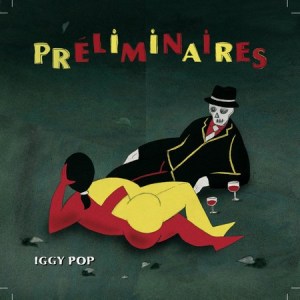
Iggy Pop – “Preliminaires”

IggyPop-02-big

By Joel Francis

Purists of all stripes can relax: Iggy Pop’s much ballyhooed 15 studio album, “Preliminaires,” is not the jazz album Pop talked up before its release.

That said, the album’s lone foray into the genre is actually one of its best songs. Borrowing enough of Louis Armstrong’s New Orleans hot jazz sound and arrangements to earn Satchmo a partial songwriting credit, “I Want to Go to the Beach” is surprising triumph that should throw a nice curveball into dinner party playlists.

The rest of “Preliminaries,” however, is more French café than bebop bistro. Pop opens and closes the album with two spoken word pieces in French and provides two versions of “She’s the Business” – both with and without French narration – that are straight from the Serge Gainsbourg model.

Other tracks find Pop channeling late-period Leonard Cohen for “I Want to Go to the Beach,” dropping in some acoustic Delta blues for “He’s Dead/She’s Alive” and delivering another spoken word piece about how dogs are the ultimate companion based on the Michel Houellebecq novel “The Possibility of an Island.” On the gentle yet foreboding “Spanish Coast,” Pop croons in a deep baritone on what could be a lost Marianne Faithful song. There’s also a cover of Antonio Carlos Jobim’s “How Insensative.”

Try as he might, Pop can’t repress his rock side for the entire album. “Nice To Be Dead” is a solid rocker that is one of the album’s best tracks and very much what one would expect from Pop. The electronic “Party Time” is to cocktail parties what “Night Clubbing” was to nights on the town.

While “Preliminaires” is a departure, it doesn’t arrive out of the blue. Pop first dabbled in jazz on a 1990 duet with Debbie Harry on Cole Porter’s “Well, Did You Evah!” He also did an entire album of jazz-tinged spoken word pieces. And although that album, “Avenue B,” was a disaster, “Preliminaires” succeeds in large part because Pop delivers each track with authority and authenticity.

While Pop’s genre hopping could be a bizarre recipe for disaster, he turns this into a strength, weaving the diverse threads together for a cohesive listen.  The resulting variance in mood and texture is another element that keeps “Preliminaires” from being as stilted and dreary as “Avenue B.” “Preliminaires” greatest strength, though, might simply be that Pop knows when to quit. Most songs hover between two and three minutes and the 12-track affair is over in a brief 36 minutes.

“Preliminaries” will not bump “Lust for Life” or “The Passenger” off the pedestal atop Pop’s catalog and likely won’t even stand as a major entry in his canon, but curious fans interested in what the Wild One can do when stripped of his raw power should find something to like.

Review: Sly and Robbie

(Above: Sly and Robbie drop heavy riddim at Red Rocks in 2008.)

By Joel Francis
The Kansas City Star

If Robbie Shakespeare’s job as a musician fizzles, he could probably make a living bringing down buildings. Alongside rhythm partner Sly Dunbar, Shakespeare’s bass rattled the foundations of the Folly Theater for nearly two hours Saturday night.

Backed by the four-piece Taxi Gang, Sly and Robbie delivered their signature reggae sound, which has appeared on literally tens of thousands of records, encompassing everyone from Bob Dylan to Peter Tosh.

The night started with an instrumental that exceeded 20 minutes in which the musicians passed solos like a jazz combo. As the trombone and saxophone bridged the gap between Afro-beat and ska, the keyboards and guitar subliminally sparkled underneath. When the guitarist popped to the forefront he delivered solos that recalled Carlos Santana, displayed Eddie Van Halen’s two-finger tapping and went Jacques Cousteau on his wah peddle for a solo that sounded like it was played underwater.

Though they politely shared the spotlight, Sly and Robbie were never far from the forefront. Robbie’s bass was so loud it drowned out most of the vocals and probably registered on the Richter scale. Sly’s drums sat neatly on top, crisp, precise and articulate. Their playing wasn’t flashy, but their grooves spoke volumes.

The Folly was half-full at best, but the band worked the room like it was packed. Putting down his horn, the trombone player paced the stage leading the crowd in call and response. He delivered a great cover of LeRoy Smart’s “Ballistic Affair,” which featured Sly and Robbie on the original 1976 recording, and drew the biggest applause of the night with a reading of Bob Marley’s “Rastaman Chant.” The sextet slowed that number ever so slightly, accentuating the song’s gospel elements.

Though their playing was engaging, the music did get a little samey after about an hour. The echo-laden drums and behind-the-beat accompaniment typical of deep dub only hold so much room for exploration. Fortunately, a surprise appearance from singer Peter Gayle rescued the set.

Acting as if there were a secret ordinance against standing still, Gayle was constantly kicking his feet along with the beat, twirling his long dreadlocks or suggestively swinging his hips. His G-rated cover of Webbie’s “I Miss You” excited the crowd and the energy stayed high after he was gone.

The concert was part of the “Cyprus Avenue Live at the Folly” series, and came just one night after the ensemble’s performance at the Wakarusa Music Festival in its new home at Ozark, Ark.

The band opened their encore set with a cover of Tex Ritter’s Oscar winning ““High Noon (Do Not Forsake Me).” Robbie said this was their first time performing the number and the arrangement was little more than his vocals and Sly pounding out the Bo Diddley beat on his bass drum. They closed with “Welcome to Jamrock,” which after several minutes somehow morphed into a gentle jazz saxophone solo. After saying good night, half the ensemble left the stage. Seemingly oblivious, the saxophone and keyboard players and guitarist played on, lost in the rhythm.

Traveling Wilburys – “Inside Out”

(Above: The Traveling Wilburys turn “Inside Out.”)

By Joel Francis
The Daily Record

Their meeting was almost too serendipitous. Fresh off the success of “Cloud 9,” George Harrison and producer Jeff Lynne decided to record a b-side with Roy Orbison. When the entourage reached Tom Petty’s house to retrieve Harrison’s guitar, Petty insisted on accompanying the trio to their destination: Bob Dylan’s studio. Dylan was home, of course, and the quintet became the greatest supergroup ever: the Traveling Wilburys.

When the group reconvened two years later in 1990, a lot of the magic was gone. Orbison had died and the remaining members no longer had the element of surprise on their side. Indeed, expectations were set so high not even the century’s greatest songwriter, a former Beatle and a pair of hit-making disciples of both could live up to the standard.

Much of the Wilburys’ sequel, “Volume 3,” sounds forced and lacks the laidback organic vibe that made the first album such a delight. But they got it right in a couple places and “Inside Out” is a lost gem of the era.

Both the second song on “Volume 3” and second single released from the album, “Inside Out” is a transparent look at the Wilburys’ songwriting process and joy that manages to be greater than the sum of its considerable parts.

After opening with a chord progression that sounds like something off Petty’s then-recent “Full Moon Fever” album, Dylan delivers a verse that almost makes “Wiggle Wiggle” look like “Desolation Row.” But the lyrics aren’t that important. The song’s charm lies in the way Dylan’s verse slides into Lynne’s slick multi-tracked bridge that prefaces Petty’s catchy chorus. Oh, and just for good measure Harrison contributes a middle eight that rivals anything his ex-Beatle bandmates ever wrote.  All the ingredients are wrapped in Lynne’s signature production and over in three and a half minutes.

Like a jewelry store exhibit, everything is on open display yet just out of reach. “She’s My Baby” may have been the biggest single and “Wilbury Twist” the most memorable song, but nearly 20 years later, “Inside Out” still sparkles the brightest.