Review: Wilco returns to the Crossroads (2009)

(Above: Wilco deliver a “Shot in the Arm.”)

By Joel Francis

Wilco had been onstage for nearly two hours Tuesday night when they headed back out for their second encore. Despite a long night and a chilly temperature somewhere in the 40s, they unloaded both barrels with the energetic one-two of “Monday” and “Outtasite (Outta Mind).”

For those few moments, the show touched the same stratosphere the band maintained throughout their for-the-ages performance almost two years ago to the day at Crossroads in 2007. The force and power bubbling under the surface for most of the night finally emerged and everyone – band and sold-out crowd alike – soaked it in.

The band announced its presence with “Wilco (The Song)” which found guitarist Nels Cline violently thrashing his guitar in front of his speaker to induce feedback. Although each song in the return engagement to Crossroads was solid, they all hit the same emotional plane without generating much drama. The main set was very, very good, but very reliable, without any peaks or valleys.

Wilco was at its best when it stretched out, as on “Bull Black Nova,” “Handshake Drugs” and “I’m the Man Who Loves You.” “At Least That’s What You Said,” opened gently on Pat Sansone’s piano before the harsh stomp of Jeff Tweedy’s guitar took over. The band inverted the loud-quiet-loud formula for “Misunderstood,” which thundered between verses before dropping back to Tweedy’s voice and guitar.

Because the band’s latest release, “Wilco (The Album),” is a summation record, the new material fit well alongside old favorites. Although it tipped toward the fresh, the setlist was democratic, ignoring the first album and drawing equally from the rest.

As the songwriter and frontman, Tweedy gets the spotlight, but the entire ensemble deserves credit. Bass player John Stirrat contributed gorgeous harmony vocals to several songs. Cline delivered several jaw-dropping solos, but the most amazing one came during “Impossible Germany,” where he made the guitar neck seem three times as long.

The evening’s secret weapon, though, was Sansone, who added an organ texture reminiscent of The Band’s Garth Hudson to “Kingpin” and seemed to chipping in a tasty guitar or keyboard line every time I looked his way.

There were a few pleasant surprises, like the “Summerteeth” nugget of joy “I’m Always in Love,” a loose and funky “Hoodoo Voodoo” that found Sansone and Cline trading guitar solos, and “Radio Cure,” which sounded like a voyage inside Tom Waits’ piano.

Always affable, Tweedy was in good spirits, suggesting the throng shouting requests elect a president and present their wishes in writing. After blowing his nose during “Hate It Here,” he pretended to toss the handkerchief into the audience.

Nearly two and a half hours after saying hello, Wilco closed out the night with a barnstorming version of “I’m A Wheel.” After teasing the embers they lit a sonic pyre on a cold night that will burn brightly until their next visit.

Setlist: Wilco (The Song); I Am Trying To Break Your Heart; Bull Black Nova; You Are My Face; One Wing; A Shot In The Arm; Radio Cure; Impossible Germany; At Least That’s What You Said; One By One; I’ll Fight; Handshake Drugs; Sonny Feeling; Hate It Here; Can’t Stand It; Jesus, Etc; Walken; I’m the Man Who Loves You. (Encore 1:) Misunderstood; I’m Always In Love; You Never Know (with Liam Finn); California Stars (with Liam Finn, Eliza Jane Barnes). (Encore 2:) Kingpin; The Late Great; Monday > Outtasite (Outta Mind) > Hoodoo Voodoo; I’m A Wheel.

Keep reading:

Wilco Wows at Crossroads (2007)

Review: Wilco at Wakarusa (2005)

Jay Bennett, Always In Love

(below: Jeff Tweedy at Crossroads, Oct. 6, 2009.)
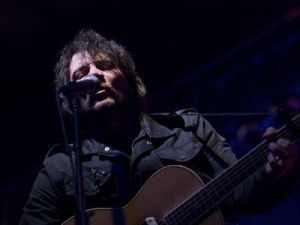
tweedy

Johnny Cash – “Flesh and Blood”

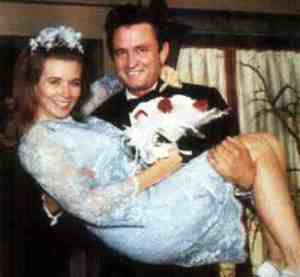
june_carter_johnny_cash-wedding
Johnny Cash – “Flesh and Blood,” Pop #54, Country #1

By Joel Francis

Johnny and June had only been married for three years when Cash penned this love song for his wife. In that time, Cash had rejuvenated his career with two hugely successful live albums recorded in prisons and earned his own weekly television show.

Although these endeavors burnished under the name “Johnny Cash,” June Carter was no less responsible for their success. With a smoldering strength, she challenged and sustained as her man finally kicked the drug addiction that had plagued him for the better part of a decade and proudly supported him through his rejuvenation – personally, artistically, commercially and otherwise.

The list of adjectives used to describe the Man in Black is a million miles long, but “devoted” has to rank near the top. In “Flesh and Blood,” Cash celebrates his love for his wife and slips in some sideways admiration for his savior.

Bolstered by his omnipresent boom-chicka rhythm section, Cash rhapsodizes about afternoons spent outdoors and nature’s beauty. The majesty of Mother Nature is a feast for the mind and spirit, Cash sings, but “flesh and blood needs flesh and blood, and you’re the one I need.”

Cash grows philosophical on the bridge, for as great as the day had been, he knew it was all temporary. “Love is all that will remain,” Cash intones. In the New Testament, Jesus talks of three types of love: agape, eros and philia. For most of the song, Cash has been singing about eros, or romantic love. But in the bridge, he shifts to singing about agape, or godly love, and philia, love between friends. Eros will fade, he implies, but agape and philia will sustain. This clever turn not only subtly sows a bit of gospel, but universalizes Cash’s eros love for his wife into the broader forms, expanding the palate to a love everyone can understand.

In the 1969 documentary “The Man, His World, His Music,” there is a scene of Cash rehearsing the song at home for his wife. The song was sweetened with strings in the studio, but its soul was intact there on the sofa as Cash found a way to say what every woman wants to hear: All this other stuff is nice, but as long as I’ve got you, I’ll forever be happy.

Bobby Taylor – “Does Your Mama Know About Me”

mama know
Bobby Taylor – “Does Your Mama Know About Me,” Pop # 29, R&B # 5

By Joel Francis

North Carolina native Bobby Taylor was working with a trio of Canadian musicians performing Motown numbers in Vancouver when the group caught the attention of Supremes Mary Wilson and Florence Ballard. The pair excitedly contacted Berry Gordy after hearing Bobby Taylor and the Shades in concert, and Gordy signed the group to his Gordy Records subsidiary.

Unfortunately, the excitement over Taylor’s stage shows failed to translate over records to a wider audience, and the group broke up in 1969 after one album and a handful of lukewarm singles. “Does Your Mama Know About Me” was the group’s biggest hit, peaking at No. 29 on the Pop chart.

Although Taylor’s Motown footprint is shallow, he had a hand in scouting and nurturing several well-known performers. While he was never a member of the Shades – later rechristened the Vancouvers by Gordy – Taylor recalled that Seattle guitarist Jimi Hendrix played with the group on several occasions. Shades drummer Floyd Sneed went on to join Three Dog Night. After booking a local band to open for them in Chicago, Taylor recommended Gordy sign the Jackson 5. He went on to produce the majority of the band’s debut album.

The Vancouver to go onto greatest acclaim, though, was the band’s guitarist. The half-Chinese, Scots-Irish born Thomas Chong co-wrote “Does Your Mama Know About Me” and performed on two more Vancouvers singles before being fired for missing a gig – he was applying for a green card – and becoming a superstar as half of the comedy duo Cheech and Chong.

With its sweeping strings and lush orchestration, “Does Your Mama Know About Me” feels more like a Philly soul number than a Motown production. This type of arrangement was used to great effect by Kenny Gamble and Leon Huff on early ‘70s soul hits like “Me and Mrs. Jones” and “If You Don’t Know Me By Now.” Although Gamble and Huff developed their sound independently – though they were no doubt keeping an ear trained on Motown – “Mama” illustrates how Motown continued to be at the vanguard of soul music beyond the departure of Holland-Dozier-Holland and its production-line sound.

A forgotten footnote, the only noteworthy cover of “Does Your Mama Know About Me” was performed by Diana Ross and the Supremes and included on their 1968 album “Love Child.”

Rita Wright – “I Can’t Give Back the Love I Feel For You”

syreeta
Rita Wright – “I Can’t Give Back the Love I Feel For You,” did not chart

By Joel Francis

Rita Wright is best known by her 1970s stage name, Syreeta. Before she collaborated with – and briefly married – Stevie Wonder, and scored a handful of Adult Contemporary hits with Billy Preston, Wright was a Pittsburgh transplant working as a secretary for Motown. Wright managed to catch the ear of Brian Holland, who signed her to the label. Holland collaborated with Ashford and Simpson – the songwriting team ironically brought in to replace the defected Holland, his brother Brian and their partner Lamont Dozier – on her 1968 debut, “I Can’t Give Back the Love I Feel For You.”

The song opens with a jarringly dissonant horn line before settling upon Wright’s soft voice. Although her performance is strong, the arrangement betrays the track’s origin as an abandoned Diana Ross and the Supremes cut. Although Ross eventually cut the song as a solo track for her 1971 album “Surrender,” Wright’s version could easily be confused for a lost Supremes track.

Although “I Can’t Give Back” didn’t chart, Wright had a successful recording career. She co-wrote “Signed, Sealed, Delivered” with Wonder and the Spinners’ hit “It’s A Shame.” Her first two LPs, 1972’s “Syreeta” and 1974’s “Stevie Wonder Presents: Syreeta” are hidden soul gems.

Ross’ version of “I Can’t Give Back” came in the middle of a sort of renaissance for the number. Dusty Springfield covered it in 1970 during the sessions to her follow up to “Dusty In Memphis,” the Philly soul masterpiece “A Brand New Me.” The final lineup of the Jeff Beck Group, featuring vocalist Bobby Tench, put their stamp on the song in 1972.

Review – Booker T.

(Above: Booker T. Jones performs “Time Is Tight” in Dublin earlier this year.)

By Joel Francis

Soul legend Booker T. Jones’ concert Sunday night at Knucklehead’s was the tale of two shows. The first half of Jones’ two-hour set was solid, if unspectacular and marred by sound and equipment issues. After a 20-minute recess to fix the technical problems, the band returned rejuvenated and tore through powerful readings from the MGs catalog.

Jones’ organ playing has always been more powerful than his singing voice, but both his instruments were drowned out by Troy Gonyea’s guitar. The quartet started off fine with the opening trio of songs from this year’s “Potato Hole” album, but it was difficult to hear Jones’ between-song banter and his singing on “Born Under A Bad Sign” was inaudible.

That song earned a few scowls toward the soundboard and a staff member hurriedly setting up a second mic at the organ. Jones took a mulligan on that one and ran it through again with somewhat improved results. The sound problems followed Jones across the stage when he strapped on a black Stratocaster to pay tributes to his friends and fellow Stax legends Isaac Hayes and Otis Redding.

Hayes and David Porter’s “Hold On, I’m Comin’” was marred by feedback that made “Sittin’ on the Dock of the Bay” unlistenable. After the sound crew proved unable to fix what Jones identified as “440 or 360 frequency” hum, the band took a technical break.

With the sound fixed, the band emerged a new beast. Jones’ organ was crisp and each instrument was more distinct. The band seemed happier, too, and made up for the false start. New song “Native New Yorker” sounded like a lost Allman Brothers track and Drummer Darian Gray updated a couple MGs tracks, including “Hip Hug Her” and “Hang ‘Em High” with freestyle rap vocals. “Melting Pot” built slowly over Gonyea’s chicken-scratch guitar before exploding at the gospel chorus. The 10-minute reading gave the band plenty of time to stretch out and play off each other.

The main set ended with a thunderous “Time is Tight” that opened with organ and bass before the rest of the band kicked down the door. The band scattered after that song, leaving Jones on his organ bench talking to fans and posing for pictures. The musicians reappeared for a spontaneous, powerful roll through Jones’ wonderful, upbeat arrangement of Outkast’s “Hey Ya.”

Knucklehead’s was about three-quarters full of appreciative fans who didn’t hesitate to jump to their feet and crowd the dance floor. “Green Onions” drew a big crowd in front of the stage early, and nearly everyone was on their feet for the second half of the show.  It had been a long time since Jones last played Kansas City, and everyone in the house – musicians included – were graciously patient and willing to make sure the evening turned out all right. The ultimately spectacular evening was well worth the wait.

Setlist: Pound It Out, She Breaks, Warped Sister, Green Onions, Born Under A Bad Sign, Hold On, I’m Comin’, Sittin’ on the Dock of the Bay, Potato Hole, Hip Hug Her, New York Native, Melting Pot, Hang ‘Em High, Time Is Tight, (encore) Hey Ya

Review: Robert Randolph and the Family Band (2009)

(Above: Robert Randolph and the Family Band examine the “Man in the Mirror.”)

By Joel Francis
The Kasnas City Star

As the temperature dipped into the low 60s Saturday night at Crossroads, Robert Randolph and his family band mounted a two-front war: against the elements and against early onset hibernation in the crowd.

Pedal steel virtuoso Randolph and his six-piece band immediately conquered the weather. Opening with the buoyant “Good Times (3 Stroke),” Randolph frequently jumped out from behind his instrument to hop around like his own hype man. That proved more than enough to get the blood flowing.

For whatever reason, the band had more trouble winning over the audience. The third-full venue was populated with people who would rather converse and take their pictures on cell phones than dance and listen. The only times the crowd was engaged was when Randolph gave them something to do, like clap or sing. Everything else was background music.

When the night’s first Michael Jackson tribute – “Man in the Mirror,” delivered gospel-style by Randolph’s sister Lenesha Randolph – failed to rouse the crowd, Randolph segued into a John Lee Hooker boogie. Inviting dozens of ladies onstage to shake their hips did the trick during the number, but once the song was over it seemed everyone wanted to talk about what or who they saw onstage.

“Nobody” offered plenty of participation during the chorus and several encouraged call-and-responses.  For a moment it seemed like everything would gel, but mic problems capsized “Gilligan,” scat-vocal number about the Minnow’s castaways played on a square Bo Diddley guitar, and the crowd grew restless with the ensuing jam.

Finally, after 75 minutes onstage, Randolph got the crowd on board. “I Don’t Know What You Come To Do” had plenty of cues to clap and stomp along and the audience joyously obliged. That bled into “Ain’t Nothing Wrong With That,” which teased the riff to “Whole Lotta Love” and featured an organ sound straight out of “96 Tears.”

The second Jackson tribute went over better than the first. Sliding into the melody of “Rock With You” after a brief encore break, Randolph, who has been playing MJ songs long before the King of Pop’s passing, gave the crowd a forum to both sing and dance. The night ended with “Roll Up,” an unreleased number similar to what Randolph had been serving all night. This time everyone was up for it.

Randolph’s upbeat music rocks the middle ground between gospel and funk, and his songs are basically vamps and choruses. His band can ride a groove into the sunset, but when the organ player leaned into his B3 with some gospel chords the performance kicked up another level.

Wearing a silk do-rag, pink tie, dress shirt, black vest, plaid shorts and knee-high black nylon socks, Randolph looked like a cross between LL Cool J and a middle infielder.  If he was frustrated by the distracted crowd, Randolph didn’t show it. He grinned from ear to ear all night, dancing in his seat under the pedal steel or two-stepping across the stage behind a six-string.

When the parade of ladies left the stage after “Shake Your Hips” several of them planted a kiss on Randolph’s cheek. Lost in his playing, Randolph never looked up or acknowledged the gesture. He was wise to ignore the adulation from a crowd that gave little more than lip service for most of the night.

Setlist: Good Times (3 Stroke), Deliver Me, Man in the Mirror, Shake Your Hips, Black Betty, Nobody, Das EFX, Gilligan, I Don’t Know What You Come To Do, Ain’t Nothing Wrong With That, (Encore) Rock With You, Roll Up

(Below: Paper setlists are so passe. Photo by Joe Hutchison.)

RR-setlist2009-09-26

Keep Reading:
Robert Randolph and the Family Band at Voodoo Lounge, 2008

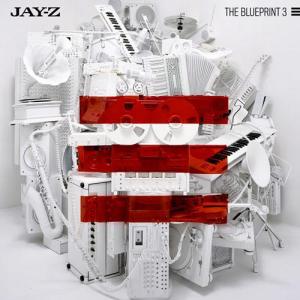
Jay-Z – “The Blueprint 3”

Blueprint_3
By Joel Francis

“The Blueprint 3” is not just the third installment in Jay-Z’s “Blueprint” saga. It’s also the third album since Jay “retired” in 2004. “The Blueprint 3” manages to split the differences in both of these lineages. It falls between the pared-down masterpiece of the first “Blueprint” and its guest- and lard-laden sequel. Similarly, it splits the difference between Hova’s uninspired comeback “Kingdom Come” and “American Gangster”’s return to form.

Just because “Blueprint 3” isn’t as bland and unfocused as “Kingdom Come” and “Blueprint 2,” doesn’t mean it’s a triumph. The album gets off to a strong start with “What We Talkin’ About,” which continues the hard feel of “American Gangster.”

No ID supplied an excellent track for “D.O.A. (Death of Auto-Tune),” the lead single. “Run this Town,” Jay’s collaboration with Rihanna and Kanye West is another in a long line of classic summer singles. “Empire State of Mind,” Jay’s duet with Alicia Keys, completes the album’s early run through its three consecutive singles. The strongest song on the album, the town fathers can immediately add it to the overflowing Big Apple hymnal.

“Hate,” a chorus-less mic battle between Jay and West, has fire in the belly. Young Jeezy nicks part of “Public Service Announcement” for his opening verse in “Real As It Gets.” Jay responds with one of his most convicted performances on the album.

Remove the EP’s worth of solid cuts, though, and Jay’s post-retirement secret emerges: he’s having problem finding new things to say. There’s nothing as fun and clever as “Brooklyn Go Hard,” his contribution to this year’s “Notorious” soundtrack. That song contains one of the best verses in Jay’s cannon:

“I father, I Brooklyn Dodger them,
I Jack, I Rob, I sin,
Ah man, I’m Jackie Robinson
‘Cept when I run base, I dodge the pen,
Lucky me, Luckily they didn’t get me,
Now when I bring the Nets I’m the black Branch Ricky,
From Brooklyn corners, burnin’ branches of sticky.”

Instead, Jay drops a dated Mac/PC comparison and gives us this in “Venus vs. Mars:”

“Shorty like Pepsi, me I’m the coke man,
Body like a coke bottle, I crush it like a Coke can,

Started at the window, then the bedroom wall,
the Ying to my Yang, I skeet skeet off,
I hits it from the back, Shorty like the front,
the Bonnie to my Clyde,
both riding shotgun,
both covered in gold like C3PO,
James and Florida Evans let the good times roll.”

Using this strained metaphor, Jay is able to reference his past as a drug dealer (now nearly 15 years ago), brag about his sexual prowess and remind everyone about his bank roll. Toss in a reference to his estranged father, and this is basically every Jay-cliché in one verse.

There aren’t many points on “Blueprint 3” as hollow as this, but there are enough that it can’t be excused as an isolated incident. Album closing “Young Forever” is intended as an uplifting anthem, but is cornier than an all-occasion greeting card that suffers from the P. Diddy school of sampling. Kanye West gets the production credit here, but all he does here is cue Alphaville’s “Forever Young” – best known for its prominence in the film “Napoleon Dynamite” – and let Jay karaoke.

Despite surrounding himself with A-list producers and guests, Jay lacks much of the fire and creativity that fueled masterpieces like the original “Blueprint.” After three installments, it’s clear Jay needs to go back to the drawing board.

The Temptations – “I Wish It Would Rain”

rain
The Temptations – “I Wish It Would Rain,” Pop # 4, R&B # 1

By Joel Francis

“I Wish It Would Rain” had been out less than two weeks when songwriter Roger Penzaben took his life on New Year’s Eve, 1967. The heartache and melancholy Temptation David Ruffin poured into his singing was Penzaben’s story.

In the spring of 1967, Penzaben caught his wife in an affair. Unable to cope with the pain and betrayal, Penzaben dumped his feelings into the lyrics. Producer Norman Whitfield and Barrett Strong, who had previously teamed on Tempts’ classics EX.

The song opens with a few stately piano chords before Ruffin takes over. Backed only by a tambourine, it’s practically a cappella. Ruffin’s voice drips with so much sorrow that it’s hard to believe just three years prior he had “sunshine on a cloudy day.”

The understated strings and arrangement bear the hallmarks of Motown’s classic Holland-Dozier-Holland productions. It’s hard to believe that in less than a year, Whitfield and the Temps would be on the vanguard of the psychedelic soul movement.

It’s also hard to believe that “Rain” was Ruffin’s next-to-last single as a Temptation. Ruffin’s cocaine addiction and insistence that the group follow Smokey Robinson and Diana Ross’ leads and  be renamed “David Ruffin and the Temptations led to his firing in the summer of 1968. When the Temps again cracked the pop Top 10 with “Cloud Nine,” both Ruffin and Whitfield’s traditional arrangements were long gone.

Shortly before the Tempts debuted their psychedelic sound, Gladys Knight and the Pips took gave “Rain” an encore lap that reached Nos. 41 and 15 on the Pop and R&B charts, respectively. In 1973, Marvin Gaye recorded a funk version that was released as the b-side of his No. 1 hit “Let’s Get It On.” That same year, British slopsters The Faces had a U.K. hit with their interpretation. Aretha Franklin and hair metal band Little Caesar have also recorded versions of this miserable masterpiece.

Review: Biz Markie

(Above: Biz Markie rocks his classic “Just a Friend”  in Sweden on March 28, 2009.)

By Joel Francis

Rapper Biz Markie’s free performance at the Power and Light District Thursday night was less a concert than a warm-up/advertisement for his nightclub set later that night.

Markie was onstage for about 45 minutes. He spent 20 minutes behind turntables, 20 on the mic and five plugging the late show. The set-up was as old school as Markie’s material: two turntables and a microphone (and a laptop). After warming up the sparse crowd – the entire audience could have comfortably fit inside the Record Bar – with a brief DJ set of random favorites, Markie finally emerged from behind the tables.

A celebrated beat boxer before breaking through as an MC, Markie was Rahzel before Rahzel. His skills are no less impressive today. Vocal recreations of “Thriller” and “Beat It” drew big cheers, as Markie placed the mic on top of his head and against his throat to capture new sounds. Think of it as a funky ear-nose-and-throat exam you could dance to.

The dedicated audience took advantage of the ample dance space. Pockets of break dancing and circles of swinging bachelorette parties populated the floor close to the stage. The dancers were a nice visual diversion. There was little to see onstage beyond the Markie’s crew, turntables and the oversized, t-shirt and sweat-pant clad MC. The kaleidoscope of twisting colors and twirling ladies definitely added to the evening’s presentation.

Markie didn’t perform many songs, but he made the handful he did count. “Vapors” and “Nobody Beats the Biz” are old school staples that had everyone singing and bobbing along. Markie teased “Just A Friend,” his Top 10 hit from 1989, with the signature piano sample and backbeat urging everyone to sing along and throwing his weight behind every “oh baby.” The biggest of his songs, it was also the most disappointing. Markie only delivered one verse, turning the song into one big crowd participation number with looped chorus.

Frequently and appropriately omitted from the rolls of rap legends, Markie’s charm outstrips his talent. He didn’t shy from playing the clown, wagging his tongue to the crowd when they responded to a record he played and grinning at his modest singing abilities. The best of these moments was when he encouraged the crowd to join in his rendition of the Jackson 5’s “I Want You Back.” Markie’s signing was hilariously out of tune and he free-styled new verses, despite repeatedly telling the audience to sing along if they knew the words.

Although the set was definitely slight, it was also free, which meant all it cost was a little time. That hour was definitely a good time.

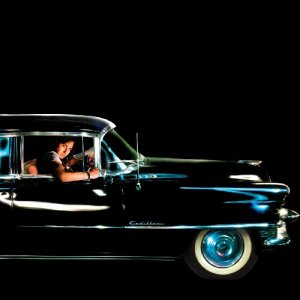
Andrew W.K. – “55 Cadillac”

55

By Joel Francis

From “Brand New Cadillac” to “Little Red Corvette,” no art form has had a love affair with the automobile quite like rock and roll. So while the subject matter for Andrew W.K.’s fourth album, “55 Cadillac,” is well-trod, his approach is surprising and fresh.

W.K. appeared on the scene in 2001 sporting a bloody nose on his album cover and urging hard rock fans to “Party Hard.” In the years since opened a New York night club, penned an advice column that was compiled into a book, produced an album by reggae legend Lee “Scratch” Perry, hosted a show on Cartoon Network and continued to turn out big dumb anthems like “Make Sex.” That said, few could have seen the side of Andrew W.K. he reveals on “55 Cadillac.”

Comprised of eight “spontaneous solo piano improvisations,” the album finds W.K. expressing himself on the 88 keys he started learning at age 4.

“55 Cadillac” opens where Neko Case’s “Middle Cyclone” – which features our heroine on the hood of a 1968 Mercury Cougar  – left off, with the sound of crickets and frogs. Like a drag race, W.K.’s prize auto doesn’t start, but “begin.” Appropriately, we can hear the motor thrust and idle as pistons warm up on the first cut, “Begin the Engine.”

Though the performances are spontaneous, W.K. obviously put a lot of thought into tone and texture. “Seeing the Car” is suitably elegant, while “Night Driver” features an upbeat, galloping melody. The stately ballad “5” is the album’s most tuneful moment and “City Time” is choppy, reflecting urban stop-and-go traffic.

The tracks are joined by the sound of a car racing past and the album works as one long piece. The songs flow well, sustaining the mood without becoming stale, but despite the solid pacing it can easily become background music.

W.K.’s party rock persona doesn’t emerge until the opus’ closing minutes. When the flood of electric guitars enter on “Cadillac,” the closing track,” it sounds like a lost snippet of musical dialogue between Queen’s Brian May and Freddy Mercury.

Co-released on the Sonic Youth guitarist’s Ecstatic Peace! Label, “55 Cadillac” is the rare album that can be enjoyed by both Thurston Moore and Thurston Howell, III.