When Scribner’s Monthly asked for Christmas poem submissions in 1872, Christina Rossette wrote “In the Bleak Midwinter.” For unknown reasons, however, the poem was never sent in and remained unread until it was published after her death in 1904. Two years later, composter Gustav Holst, best known for his symphony “The Planets,” set the words to music.
Rossette’s words paint a picture of the stark, unlikely setting in which Christ was born in which “Earth stood hard as iron, water like a stone.” It’s not difficult to imagine the isolation of a land where “snow had fallen, snow on snow, snow on snow.”
Holst’s melody is subtle. There are no big crescendos or explosive choruses. Instead, the song builds gradually, like the falling snow, settling cozily on the contemplative lyrics.
In the second and third verses, Christ is born in a manger and worshipped by the animals. The final verse is the best-known. It’s lyrics are as touching as they are humble.
What can I give him, Poor as I am? If I were a shepherd I would bring a lamb, If I were a wise man I would do my part, Yet what can I give Him – Give my heart.
“In the Bleak Midwinter” never entered the top-tier Christmas pantheon like “Joy to the World” and “Silent Night.” Unlike those hymns, one can go an entire holiday season without hearing this song. It’s nice to be able to seek refuge in a song as lovely as this rather than having it incessantly pumped through speakers at the mall.
(Above: Paul Desmond and the Modern Jazz Quartet put their spin on “Greensleeves.”)
By Joel Francis
The melody for “Greensleeves” dates to 16th century England. It is been rumored that King Henry VIII for his lover Anne Boyeln – the subject of the recent “The Other Boyeln Girl” novel and film. According to historians, however, the best case scenario is that ol’ Hank just stuck his words on an existing melody.
Double entendres were common in the love songs of the Renaissance. At the time, the color “green” was a charged term. It implied the color that a woman’s clothes would turn if she made love outside. Lady Greensleeves, the subject of the song, was said to be a prostitute, or at least a promiscuous woman.
As with the words, no one knows who wrote the melody. It was likely developed by English minstrels and troubadours as they traveled the countryside. The tune was first published in a 1580 broadside entitled “A New Northern Dittye of the Lady Greene Sleeves.” Four years later, it turned in A Handful of Pleasant Delights as “A New Courtly Sonnet of the Lady Green Sleeves.”
Nearly 300 years later, Englishman William Dix penned new lyrics to the familiar, lilting melody. At age 29, Dix was confined to several months of bed-rest after a nasty bout with a near-fatal illness. Manager of maritime insurance company by day, Dix used the opportunity to write several hymns. The new words became “What Child Is This?” and draw on the nativity story from the Gospel of Luke.
It’s hard to believe such a cherished song grew from such bawdy beginnings. Over the last 60 years, it has been performed by everyone from singers Odetta and Olivia Newton-John to rockers Jethro Tull and Jeff Beck. John Coltrane made it a jazz standard and organist Garth Hudson of The Band played it over the closing credits of Martin Scorsese’s film “The Last Waltz.”
Henry Wadsworth Longfellow penned the poem “Christmas Bells” on Christmas Day, 1864. Christmas had become a bleak occasion for Longfellow. In July, 1861, shortly after the start of the Civil War, Longfellow’s wife, Fanny, decided to preserve a lock of their child’s hair. As she was sealing the hair in wax, a few drops landed on her dress, which caught fire. Panicked, Fanny ran to her husband for help, but he was unable to extinguish the flames in time. Fanny died the next morning. Severely burnt on the face, arms and hands, Longfellow was in no condition to attend the funeral.
Five months later, Longfellow was still in the throes of grief. His Christmas Day journal entry reads “How inexpressibly sad are all holidays.” Exactly one year later he wrote “Perhaps someday God will give me peace.” Christmas Day, 1863 was compounded when Longfellow learned his son had been severely injured fighting for the Union in the Civil War. There was no Dec. 25 journal entry that year. His despair is reflected in the second-to-last verse of “Christmas Bells:”
And in despair I bowed my head; “There is no peace on earth,” I said; “For hate is strong, And mocks the song Of peace on earth, good-will to men!”
Just one year later, Longfellow was starting to emerge from his grief. Lt. Charles Longfellow had survived his injury and lifted his father’s heart. In addition, the re-election of President Abraham Lincoln gave the senior Longfellow hope that the Civil War would end soon. With newfound hope in his heart he wrote of hope and redemption. The poem closes with the realization “old familiar” chorus of the bells are God’s promise to never forget His children.
Then pealed the bells more loud and deep: “God is not dead; nor doth he sleep! The Wrong shall fail, The Right prevail, With peace on earth, good-will to men!”
“Christmas Bells” has been set to several tunes. The first arrangement appeared in 1870, when Longfellow’s poem was renamed “I Heard the Bells on Christmas Day” and his seven verses were trimmed to five. The melody used today was written by Johnny Marks in 1956 – nearly 100 years after Longfellow set his words to paper. Holiday music would not be the same without the songs written Marks. His contributions to the Yuletide cannon include “Jingle Bell Rock,” “Have A Holly Jolly Christmas” and “Rudolph the Red-Nosed Reindeer.”
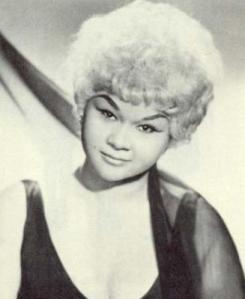
Above: No, it’s not Beyonce. The wonderful Etta James during her Chess period.
By Joel Francis
As the 1960s dawned on Chess Records, label founders Leonard and Phil were at the peak of their powers. Thanks to the proselytizing of the British Invasion bands, Muddy Waters, Howlin Wolf and other blues artists were performing for the largest crowds of their careers. Chuck Berry and Bo Diddley had helped formed rock and roll, and the label had branched into more genres, including R&B, comedy, jazz and gospel.
But Leonard and Phil were still looking for new ways to stay on top of the trends and build their roster. One of their biggest signings of the decade was an immediate success. The other took more than three decades to reach his commercial potential, but stands today as the greatest living link to Chess and Chicago blues.
Etta James was born in Los Angeles to an unwed, 14-year-old mother. She was discovered at age 14 by bandleader Johnny Otis, and recorded with him for Modern Records in the late 1950s. She signed to Chess in 1960 and converted Willie Dixon’s “Spoonful” into an R&B hit. Her breakthrough came the following year with “At Last.” The gorgeous soul ballad was a bit of a departure for the label – guitars and harmonicas were replaced by a lush string orchestra. From the gritty soul of “In the Basement” and “Tell Mama” to the heartache of “I’d Rather Go Blind,” James’ versatile voice found success for the rest of the decade.
Buddy Guy showed up in Chicago in 1957 and quickly fell under the wing of Muddy Waters. Although he was known for his anarchic guitar playing onstage, the Chess brothers reigned him in on record. Primarily a session guitarist, solo singles like “The First Time I Met the Blues” barely hinted at the flamboyant style that influenced Jimi Hendrix and Stevie Ray Vaughan. Guy didn’t find true success until his 1991 comeback album “Damn Right I’ve Got the Blues” on the Silvertone label.
With the exception of Berry, who briefly recorded for Mercury in the mid-’60s before returning to Chess, and Dixon, who took a short-lived job at Vee-Jay, all of Chess’ major artists stayed with the label until its sale. By the end of the ’60s, Leonard and Phil had been looking for a way to get out of the record business and into television. When GRT made an offer of $6.5 million for all of the label’s properties, they accepted. Less than a year after selling their label, Leonard Chess was dead. Just 52 years old, the elder brother had died of a heart attack in his car less than two blocks from the Chess headquarters. He had been on his way to a meeting at WVON.
A little over twenty years after opening the Mocambo Lounge, Leonard and Phil Chess’ dream of striking it rich had come true several times over. With Leonard no longer alive, it was up to Phil and Marshall, Leonard’s son, to appease the worries from their biggest stars that the brothers had made unreasonable profits off their artists.
While many of the Chess stars were also very well off, other artists showed less financial responsibility and had very little to show for their success. In the 1970s, several Chess artists, including Waters, Wolf and Dixon sued for back royalty payments. All the lawsuits were settled confidentially out of court; the issue is still debated today. Bo Diddley was especially bitter about his treatment, telling Rolling Stone in the 1987, “My records are sold all over the world and I ain’t got a f—ing dime.” While we’ll likely never know the truth, cases of labels withholding royalties from artists are still common today. Leonard and Phil probably felt they took good care of their artists, but they also made sure to take great care of themselves at the same time.
Nearly 40 years after its sale, the legacy of Chess Records continues to burn bright. From bloozy biker bars and hole-in-the-wall BBQ juke joints to stadium tours by the Rolling Stones and samples used by rappers Nas and Chuck D, there are few corners of the English-speaking world where the impact of Chess’ artists isn’t felt. In 1977 NASA gave the label celestial influence when they placed a copy Berry’s “Johnny B. Goode” inside the Voyager space probe.
In 1964 the Rolling Stones, hot on their first tour of America, made a pilgrimage to the Chess building at 2120 S. Michigan Ave. in Chicago. Decades later, Dixon’s widow purchased the property, which serves as a Chess museum and headquarters for Willie Dixon’s Blues Heaven Foundation. Each year, tourists and musicians alike visit the building to pay homage to the Chess masters and stand in the space where so many incredible songs were captured.
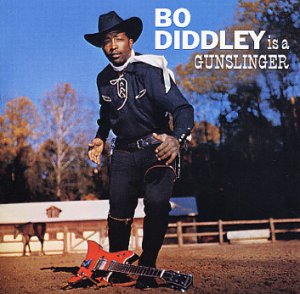
Above: Musical pioneer Bo Diddley was cruelly excluded from the “Cadillac Records” story.
By Joel Francis
With Willie Dixon feeding steady hits to Muddy Waters, Howlin’ Wolf and other Chess artists, the label had become a driving force of popular taste less than a decade after it was founded. While blues were the label’s backbone, the Chess brothers had a hand in nearly every facet of African-American music – from doo-wop groups like the Moonglows and Flamingos and jazz pianists Ahmad Jamal and Ramsey Lewis to the comedy styling of Moms Mabley and sermons by Rev. C.L. Franklin, Aretha Franklin’s father. Starting in 1963, Chess even had its own Chicago radio station, WVON, Voice of the Negro, which is still on the air today.
Chess introduced the world to rock and roll in 1951 when it released Ike Turner and Jackie Brenston’s “Rocket 88.” Four years later, two new Chess artists helped rock and roll grow up in a hurry.
Chuck Berry was discovered by Muddy Waters while on vacation to St. Louis. Berry’s upbeat blues were spiked with country and given a teenage twist. Songs about work became songs about school; his love songs were less dark and more playful. Berry was a poet, capable of packing more syllables per stanza than any other singer. Consider the imagery and complexity in the familiar opening lines Berry’s legendary “Johnny B. Goode:” “Deep down in Louisiana close to New Orleans/Way back up in the woods among the evergreens.” Berry’s guitar was just as active as his mouth. His quick fingers brought the blues at twice the tempo and his athletic solos made him the first guitar hero.
If Chuck Berry’s souped-up songs took the blues to the teen market in the guise of rock and roll, Bo Diddley’s African rhythms gave them a beat everyone could dance to. Diddley was born Ellas Bates in McComb, Miss. but took the last name McDaniel from his mother’s cousin, Gussie McDaniel, with whom he moved to Chicago as a child in 1934. Diddley’s songs were downright primitive compared to Berry’s, but no less powerful or influential. His shave-and-a-haircut beat was the backbone for many of his own hits like “Bo Diddley,” and “Who Do You Love,” and countless imitators like Johnny Otis’ “Willie and the Hand Jive” and Bruce Sprinsteen’s “She’s the One.” Diddley produced strange sounds from homemade guitars, while Jerome Green’s maracas fueled the relentless beat. Diddley and Green’s back-and-forth on “Say Man” is one of the earliest recorded raps.
The 1960s were a boon for Chess. New stars like Etta James kept the label at the top of the charts while Chuck Berry was in jail. Rock and roll may have knocked Muddy Waters and Howlin’ Wolf from their perches at the top of the charts, but their old singles found a huge white audience in England. Teenagers who bought guitars to form skiffle bands were suddenly playing Willie Dixon’s songs and ravenous for Chicago’s blues. Dixon obliged them, organizing several annual American Folk Blues Festival tours of Europe. In return, the British Invasion bands brought Chess music back to America with them, introducing white America to the music its dark-skinned brothers and sisters had been enjoying decades. Waters, Wolf and the rest of the Chess stable were suddenly pulled from the chitlin circuit to colleges, theaters and festivals.
Chess responded to the changing marketplace in several ways. Before then, most Chess releases were 45 rpm singles. Now the brothers started packaging their hits together into LP records. Decade-old Sonny Boy Williamson tracks appeared on a “Real Folk Blues” compilation designed to appeal to the hootenanny crowd. Later, classic Waters and Wolf tunes were given psychedelic updates for the Summer of Love.
Leonard Chess’ motivation for buying the property on South Cottage Grove in Chicago that would become the Macomba Lounge was clear: he thought it would make money.
When his brother Phil got out of the Army in 1946, he went straight to work with his brother at the club. It was located in a rough black neighborhood known for prostitution and drugs, but within four years it was a prime haunt for both musicians and patrons.
The Macomba Lounge burnt to the ground in 1950, but the Chess brothers’ back-up plan was well underway. Shortly after buying the Macomba, the brothers established Aristocrat Records as a way to record the musicians who played the lounge. Instead of having the bands show up on Cottage Grove to play, they would show up at the Aristocrat offices several blocks down the street and record.
It was a far cry from the world the Polish immigrants born Lejzor and Fiszel Czyz left. Their father was a shoemaker and the family of five lived in one large cement-floored room with no electricity, running water or heat. In the winter, the family brought their cow inside for warmth.
The timing for Aristocrat Records’ foray into “race” music couldn’t have been better. Five million African-Americans fled north to escape Jim Crow and the Ku Klux Klan in the second Great Migration. One of the emigrants was a Mississippi sharecropper who had been recorded in 1941 by Alan Lomax for the Library of Congress.
McKinely Morganfield was a hot commodity at the juke joints and house parties around Stovall plantation, but he thirsted for bigger success and escape from the cotton fields. In 1943, he moved to Chicago, but his acoustic guitar and “country” style didn’t play as well. After a couple years driving trucks during the day and playing clubs by night, he was given an electric guitar. Bolstered by his new, amplified instrument, Morganfield, better known as Muddy Waters, married his native Delta blues style with the hard, electric soul of his new hometown.
In 1948, Waters cut two songs for Aristocrat that launched his career and established the Chess brothers as players in the music business. “I Can’t Be Satisfied” and “I Feel Like Going Home” convinced Leonard and Phil the blues were the way to go, and they gradually started letting Waters bring his sidemen and other musicians in to cut sides. By the time the name of the label was changed to Chess Records in 1950, the label’s stable included harmonica king Little Walter, guitarists Robert Nighthawk and Jimmy Rodgers and bass maestro Willie Dixon.
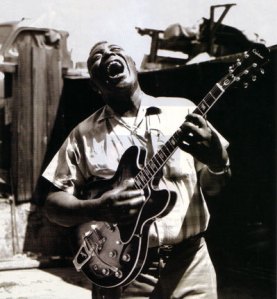
A former boxer, Dixon was another Mississippi transplant and the architect of not only the Chess sound, but the post-World War II blues scene that continues to thrive today. Dixon was the Chess brothers’ right-hand man. While the brothers hovered around the blues scene they could only get so close. Dixon was in the scene, connected to all the major players and all the hot trends. Dixon had an ear to the track, but he forged his own path as well, writing the lion’s share of the genre’s biggest numbers: “Hoochie Coochie Man,” “My Babe,” “Little Red Rooster,” and “Spoonful.” Rare was the Chess release that didn’t feature Dixon’s bass playing, songwriting or production skills – most had all three. When the blues caught on in England in the 1960s, Dixon arranged several annual American Folk Blues Festival tours of Europe that featured many of the day’s biggest stars (many of whom, coincidentally, also recorded for Chess). Dixon once said “I am the blues.” He was not bragging.
While Phil was in Chicago recording Dixon’s songs, Leonard was on the road promoting, meeting with distributors, disc jockeys and learning the business. On one trip to Memphis, Leonard made a contact who put him in touch with Sam Phillips. Phillips hadn’t established Sun Studios yet, but his legendary ear was already glued to the ground. Phillips sent Chess his recording of Ike Turner’s song “Rocket 88” recorded by Turner with singer Jackie Brenston and some songs by Chester Burnett.
The 300-pound Burnett was better known by his stage name, Howlin’ Wolf. Yet another Mississippi escapee, Wolf moved to Memphis after his military discharge following World War II and had a radio show in West Memphis, Ark. His company on the airways included Rufus Thomas and B.B. King. Like King, Wolf cut some albums for the Bihari brothers and Modern Records, but after Phillips slipped Chess a copy of “How Many More Years” a bidding war erupted for Wolf’s music. Chess won the battle and Wolf moved to Chicago to cut records with Dixon and compete with Waters on the legendary Maxwell Street blues scene.
(Above: Bill Shapiro appeared on television in Kansas City in 2008 to celebrate 30 years of his radio show, “Cypress Avenue.”)
By Joel Francis
The Examiner
Late at night, the house is silent.
Everyone is asleep, or so it seems. In a bedroom, a dim light shines through the blankets peaked around a small figure sitting up under the covers. The sound of tinny music can barely be heard.
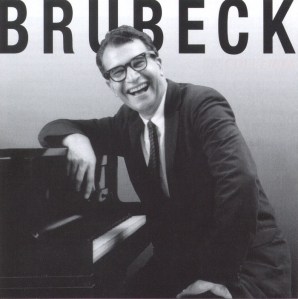
The boy beneath the sheets is still, but his heart is racing. His hands tremble as he fine-tunes the radio under the covers with him. He thought it was lost forever, but he has found it: the jazz radio station carrying the songs of Dave Brubeck and Shorty Rogers. It was only late at night he could pick up the phantom AM signals from stations in exotic places like New Orleans. Forget sleep, he had found something far more important.
Fast-forward 50 years.
Today, the city – Kansas City – is alive. Cars zoom past on the interstate, clearly visible from the law office’s window on the 20th floor near Crown Center. Visitors scurry in and out of the renovated Union Station.
A train blows by in the distance. The stress of daily life is lost in this picturesque, birds-eye view.
The scene is quite different, but the boy, now 62 years old, has not changed. The passion for discovering new music still burns within.
Today Bill Shapiro doesn’t hid his love of music; on the contrary, he broadcasts it. Shapiro has hosted the weekly radio show “Cyprus Avenue” for more than 20 years on KUCR 89.3 FM, the University of Missouri-Kansas City, National Public Radio affiliate.
Taking the show’s title from a song on Van Morrison’s “Astral Weeks” album, “Cyprus Avenue” has become one of KCUR’s highest-rated local shows.
Shapiro has found freedom on the airwaves. Unrestricted by playlists generated by demographic studies and corporate interests, Shapiro plays the music that excites him in hopes of engaging his audience.
“He has a lot more information and insight into groups that commercial radio doesn’t know about,” says Robert Moore, KCUR and “Cyprus Avenue” producer and music director. “A show like his would never happen on commercial radio because they don’t break down artists. They just play one format.”
While commercial radio serves a bevy of Bachman-Turner Overdrive and saccharine teen pop, Shapiro slips his sophisticated audience the Velvet Underground, Stevie Wonder and Uncle Tupelo, all linked by a common theme for a given show.
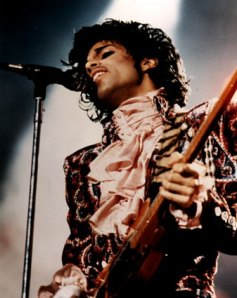
When Beck’s “Midnite Vultures” was released in 1999, no Kansas City radio stations would pick it up, despite heavy play from MTV and VH1. “Cyprus Avenue” not only spotlighted the album, but buttressed it with Prince’s “Rave Un2 the Joy Fantastic,” forming a fitting tribute to both.
Shapiro sprinkles his shows with information from box sets, liner notes and magazine interviews, but for the most part he lets the music do the talking.
His inspiration may come from a television special or an album passed onto him by a friend.
More often than not, Corky Carrol, co-owner of Village Records in Overland Park, Kan., points Shapiro to a quality release. The two usually talk once a week about scheduled new releases.
“It’s strange to think that this is the only place to hear Elvis Costello or Nick Drake on the radio,” Carrol says. “You know at least for two hours you are going to get a solid effort, not a couple of good songs then Celine Dion.”
Says Moore, “He turns the public on to new groups they won’t hear anywhere else. Unfortunately, it won’t have any impact on commercial radio because it is run by corporations. It’s expected that this is what non-commercial radio does.”
“Cyprus Avenue” may be popular, but Shapiro has yet to reach the notoriety of Murray the K. Sure, he gets calls at the office from fans and fan mail isn’t unexpected, but for the most part Shapiro is anonymous. That’s fine by him.
“Other than family I don’t think I could tell you a specific person who might claim to be my biggest fan or a longtime listener,” Shapiro says.
Carrol has supplied Shapiro with music for more than 25 years and is a regular “Cyprus Avenue” listener. Carrol says he has bought “thousands and thousands” of albums for Shapiro.
“It’s hard to get one past him, but there are a few records he’s missed,” Carrol says. “His purchases are all over the board. I think the only thing I haven’t sold him is a classical record.”
A hit all over the country
The diverse playlists on “Cyprus Avenue” have made the show successful not only in Kansas City, but all over the country. During much of the 1980s, “Cyprus Avenue” was distributed on NPR’s satellite uplink system.
“In those days you could buy an hour of stereo time for $40,” Shapiro says. “I thought it was worth a shot and was willing to invest a couple thousand dollars.”
Several stations picked up “Cyprus Avenue” and it became a hit in Minneapolis and a dozen other smaller markets, but when satellite costs rose, Shapiro pulled his show.
“I knew it wasn’t going to grow because it didn’t fit the NPR format,” Shapiro says. “People think public radio should be country and jazz or folk for the adventurous.”
But Shapiro wasn’t content with confining the show to his hometown. He decided to give the satellite one more try, this time with a national sponsor. “Cyprus Avenue” proved to be popular, running in more than 40 markets, including Detroit, San Francisco and Jacksonville, Fla. Unable to find a sponsor, expenses were mounting and Shapiro was faced with a decision.
“I decided I could either earn a living as an attorney, or I could get in my car and drive across the country and build ‘Cyprus Avenue’ into a radio show,” Shapiro says.
For the second time, “Cyprus Avenue” was pulled from the uplink
“We just weren’t penetrating the major markets,” Shapiro says. “Today radio is a secondary medium. People don’t care about shows, they care about stations and that’s why radio is as homogenous as it is. Advertisers just want a demographic to sell their product to. I don’t fit that mold. I knew I’d never get the audience I wanted.”
Compromising the show to build a bigger audience would be counteractive to everything Shapiro was trying to do – share the music he loves with his friends. And if his only contact with these friends is through the radio, so be it.
“A lot of people use the TV as a companion. My stereo is my companion,” Shaprio says. “I alwasy have 30 to 50 unopened CDs at home. They come to me faster than I can listen to them. There is always part of my head saying, ‘Is this something you want to take further and put on the radio?’”
When Shapiro listens to music at home, he makes sure it gets the audio treatment it deserves. At age 12, Shapiro built his own Hi-Fi system from a Heath kit. That system has been upgraded and replaced many times since.
“I’m a sound freak,” Shapiro says. “I have more money tied up in sound equipment than most people have in a home. I wasn’t to hear it as well as I can hear it. I buy all the gold CDs and audiophile stuff.
“To me, music is as important as oxygen and food,” Shapiro continues. “When I’m home, I have music on 24 hours a day. In the car, music is on the whole time.”
Hooked by a phonograph
Shapiro got hooked on music in 1942 when an uncle gave him a phonograph player for his fifth birthday. A family friend in the jukebox business kept Shapiro supplied with records once they were too scratched for commercial play. At age 12, he discovered Brubeck, Paul Desmond and West Coast jazz.
Shapiro tried music lessons – he tackled the piano, vibraphone and banjo – but his musical aptitude was mental, not physical. He spent his time amassing records and building playback systems.
“Whatever money I made went into getting more records and improving what I had,” Shapiro says.
Shapiro migrated across Missouri and graduated pre-med from Washington University in St. Louis in 1958 with the intent of becoming a doctor.
Still an avid jazz fan, Shapiro would often get together with friends and play records. Then he saw Elvis Presley’s first appearance on the Tommy and Jimmy Dorsey show. Shapiro was hooked on rock and roll and spreading the gospel of Elvis.
“I didn’t know who or what it was, but it had the same impact on me as hearing JFK was shot,” Shapiro says. “I can still visualize that room and the TV set and here we are 50 years later.”
To a generation of buzz-cut, starched-collar squares, Elvis represented the rebellious, darker side of 1950s adolescence.
“Presley was a lightning rod from my generation, a button-down generation,” Shapiro says. “There was a whole side of our lives – smoking cigarettes, sipping beers, getting lad – that was never talked about, and here it was in our living room. I immediately became a hard-core rock and roll fan.”
By the time Shapiro graduated, he had abandoned the idea of being a doctor. He headed north to the University of Michigan and enrolled in law school. With his law degree in hand in 1961, Shapiro decided he wanted to be a tax attorney. He heard that New York University had a graduate tax law program, so he went to the Big Apple. One show on Manhattan Public Radio planted the germ that would become “Cyprus Avenue.”
“It was a thematic program,” Shapiro says. “They’d take someone like big-band arranger Fletcher Henderson and play arrangements done by different bands. They might play a combo version next to a big band version. I listened to that show religiously. In later years, I got thinking that there was so much richness and social impact in pop music as in jazz and I could do the same thing.”
Shapiro had finally found his calling, but after three universities and seven years of higher education, a career shift was not going to happen.
“By this time my family and I had spent a lot on higher education,” Shapiro says. “If I’d know then what I knew no, I would have been in the music business. It just wasn’t in the cards.”
The jump from disc jockey to tax law may seem extreme, but Shapiro says his work is extremely satisfying.
“Tax law is not what most people think it is,” Shapiro says. “It is the most creative part of the law, because what we do is planning. You might want to buy your partner out. If you do it one way, Uncle Sam takes a hunk. If you do it differently, you save money.”
Shapiro left New York in 1962 and returned to Kansas City to work and start a family. As his family grew and Shapiro flourished professionally, he became involved with broadcasting, but it was television that proved to be Shapiro’s stepping-stone to radio.
Deeply involved with public television’s early on-air auctions and fund-rasiers, Shapiro’s good deeds did not go unnoticed. A high school friend working at KCUR called Shapiro and asked if she could take him to lunch and discuss fund-raising methods. At the end of the meal, she asked if there was anything she could do for him. Shapiro asked for an audition to do a public radio rock show.
The dream was starting to materialize. Shapiro arrived at the studio with a stack of records for the show and hoped that the manager liked it.
“My first show was called ‘Ballads by Rockers.’ It was all ballad material done by people thought of as screamers,” Shapiro says. “He (the manager) says, if you can do that every week, you’re on.”
Sonic spelunking
As Cyprus Avenue entered its second decade on the air, Shapiro realized new music and artists – particularly rap and alternative – were not striking the same chord with him.
“I’ve known for a long time I’m the generation these people want to rebel against,” Shapiro says. “I respect the fact that the music says this to the previous generation,” he says, emphatically holding up his middle finger. “There is a need to shake up the status quo.”
Shapiro doesn’t mind the envelope pushing done by newer artists, he just doesn’t get it musically. The Talking Heads and Beck are about as modern as Shapiro gets with “Cypuss Avenue.”
But Shapiro’s show doesn’t need Moby and Soundgarden to be effective. “Cyprus Avenue” is a discovery process – for both Shapiro and for listeners – of influential artists and the impact they’ve had on music.
By showing listeners the roots of music, Shapiro leaves the listener naturally curious of the modern amplification and integration of this process.
“Cyprus Avenue” isn’t a forum for Shapiro to amaze everyone with his knowledge. It’s a platform for him to share his love of music and enlighten listeners who don’t fit commercial radio demographics.
Jackie Nixon, NPR director of strategic planning and audience research, says that shows like “Cyprus Avenue” are what NPR is all about.
“We treat our listeners with respect and intelligence and try to produce programming that makes people think as well as entertain,” Nixon says.
For Shapiro, those sleepless nights in the early 1940s were a discovery process.
“It was like going into a cave with a flashlight and all of a sudden – bang, something is shining back at you,” he says.
Shapiro has not forgotten that feeling and tries to instill the same feeling of excitement in his listeners.
“I think I broaden the awareness of the intelligence and importance of popular music,” Shapiro says. “I lift it out of the aural wallpaper and let people know it can be a powerful element. That it shapes opinions and tells a lot about where we are and where we are going.”


 When Beck’s “Midnite Vultures” was released in 1999, no Kansas City radio stations would pick it up, despite heavy play from MTV and VH1. “Cyprus Avenue” not only spotlighted the album, but buttressed it with Prince’s “Rave Un2 the Joy Fantastic,” forming a fitting tribute to both.
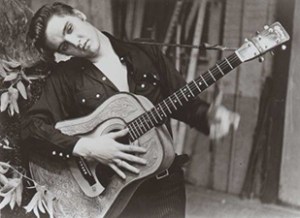 records. Then he saw Elvis Presley’s first appearance on the Tommy and Jimmy Dorsey show. Shapiro was hooked on rock and roll and spreading the gospel of Elvis.
 Shapiro gets with “Cypuss Avenue.”
 joelfrancis.com