Royals Legends Reflect on Team’s Heyday


Above: Darrell Porter is tagged out at home by Philadelphia Phillies catcher Bob Boone in the 1980 World Series as Frank White and George Brett look on.

By Joel Francis
The Examiner

When the Kansas City Royals opened finished their first year of baseball in 1969, the city was on the cusp of change. The Chiefs were about to win the Super Bowl. There were plans for a new airport and Crown Center was under development. Plans for a new sports complex for both professional teams were under way.

Within a few years the Royals were competing for post-season and World Series play. Many members of the Royals Hall of Fame — Frank White, Amos Otis, George Brett, Freddie Patek — were the offensive nucleus of that team. The Hall of Fame pitching rotation included Steve Busby and Larry Gura and Blue Springs residents Paul Splittorff and Dennis Leonard.

Leonard, the only three-time 20-game winner for the Royals, holds the club record for complete games and shutouts. Between 1975 and 1981, he won more games than any other right-handed pitcher in the majors.

Southpaw Paul Splittorff was Leonard’s foil. He was the team’s first 20-game winner in 1973 and holds club records for career wins, starts and innings pitched.

When Splittorff joined the Royals in 1970, home games were played at Municipal Stadium.

“That was a great old park. The field was immaculate, but the stands were kind of rough,” Splittorff said. “It was a great pitcher’s ballpark. Left field was 408 feet, then 369 down the line so it was a great park for a lefty.”

Fans had a chance to mingle with both clubs at the old park. The visiting team had to leave the dugout and walk up a ramp in the stands to get to their clubhouse.

“The bullpen bathroom was the same one the fans used in general admission,” Splittorff said.

The teams weren’t great in those opening years, but they held promise.

“Everything was on hold then, but we knew things were about to change,” Splittorff said. “We had a good bunch of guys.”

Veteran players like Hoyt Wilhelm and Bob Johnson were acquired, then traded for young promising players like John Mayberry, Hal McRae and Amos Otis.

“The whole thing was about trying to get young players on the verge. Cookie Rojas was the one veteran to come in and stay,” Splittorff said. “It seemed like most of them were really good trades.”

The early years

In 1973, the Royals opened their new home, Royals Stadium. The artificial turf of Royals Stadium replaced the grass at Municipal, making Royals Stadium the first park in the American League to have turf. Splittorff was on the hill for the Royals on April 10 in that first game against the Texas Rangers.

“It was a really cold night. We opened in Anaheim, and it was snowing when we landed. Our Monday workout was snowed out,” Splittorff said. “We had never worked out on turf. Everybody was so pumped.”

It was a new scene for everyone, but for Splittorff it was business as usual.

“I didn’t look around much Ð I did that the day before,” Splittorff said. “The first hitter was Davy Nelson. He hit the ball back to me, but because it was on turf it seemed to get on me real quick.”

Splittorff and the Royals ended up with a 12-1 victory that night. Amos Otis got the first hit and John Mayberry was the first to homer in the new park.

“All the significant firsts were ours that night,” Splittorff said.

That first year, 1973, was also the year Splittorff notched 20 wins, making him the first Royals pitcher to do so.

“I won 20 games early,” he said. “My best years were ’77, ’78, ’79 and ’80 as far as being a Major League pitcher with the combination of experience and not getting up in years.”

But while Splittorff was the team’s first big winner, he was working a winter job in the off-season.

“When I first came up most guys worked in the off-season,” Splittorff said. “I worked at Foremost Dairies as a salesman, did that for two or three years, then got a real estate license and got into that.”

During his first winter, Splittorff was a club promoter for the Royals.

“We had two guys assigned to Kansas and Missouri,” Splittorff remembered. “I was out of town every other week with a front office guy. We’d hit towns all over Kansas, Oklahoma and Nebraska Ð ticket outlets, small towns or radio affiliates.

“It was fine. It helped establish me and the ball club. People were still learning about us.”

In the days before free agency, off-season employment was a regular listing in baseball media guides, Splittorff said. For most of Splittorff’s career agents were rare. Instead an adviser or counselor might meet with players once a year.

“The hopes were to get to the big leagues, play five years, have a good year your first or second year, run your salary up, make $50,000 a year, buy a house and buy a business when you get out of the game,” Splittorff said. “Free agency changed all that.”

Splittorff was also one of the last pitchers in the American League and one of the few Royals pitchers to hit before the designated hitter rule was instated in 1973.

“I missed it for the first year or so because I did OK,” Splittorff said. “I could bunt and liked taking chances to help our team better than my mound opponent.

“I was disappointed they took that away from me, but I knew if we were losing in the fourth or fifth inning, I wouldn’t get replaced by a pinch-hitter.”

By the time Dennis Leonard joined the team late in 1974 winter jobs and batting pitchers were a thing of the past. Leonard came up in a fertile crop of rookies that included Frank White, George Brett and Al Cowens.

“I never played with any of them in the minors,” Leonard said. “I was drafted in ’72, George was drafted in ’71 and Frank came up through the academy, so we were never on a team together in the minors, but we all basically got here at the same time.”

Leonard went 0-4 in 1974 and was the last player cut in spring training the next year. He rejoined the Royals part-way through the 1975 season.

“In ’75, that was when (manager) Whitey (Herzog) came here and we stared putting things together more,” Leonard said. “Everybody started expanding. We had a good mix of veteran players who had been through it before and younger guys to see what they were doing.”

Leonard was brought up around the same time Steve Busby, the Royals’ ace, was hurt.

“As soon as he went down Leonard got here,” Splittorff said. “We never missed a beat because Leo was that good Ð we had another 20-game winner.”

While Busby was never the presence on the mound he once was, he was still an important member of the team.

“When Busby got hurt, not knowing hitters like him, he helped me figure out their weaknesses,” Leonard said. “I’d always go to him.”

The playoff years

In 1976 the Royals reached the playoffs for the first time and faced the New York Yankees in what would become a fall tradition.

“The first year we got in we were so happy to get there. The Angels beat the A’s to get us in,” Leonard remembered. “We were happy as a lark to get into the playoffs. Boy, when you get in the playoffs people start coming out of the woodwork. That first year was a real learning experience in the pressure that came out of post-season play.”

Splittorff had been on the disabled list for the last part of the 76 season.

“We had won a tough division, but they had done that,” Splittorff said. “I was concerned. Did this team grow up without me? At least they had been through a stretch drive.”

Splittorff had a chance to prove himself in game two when he relieved Leonard in the second inning. Splittorff threw several scoreless innings and recorded his first post-season win with a 7-3 victory. However, the Royals fell to the Yankees in five games.

The next fall the two teams met again. Splittorff threw the first game, a 7-2 win in New York.

“I always felt the first game at the other guy’s park was the most important,” Splittorff said, “and we won that one.”

Leonard pitched a complete victory game three and relieved Splittorff in the fifth game.

“I came out in the ninth inning, gave up a bloop single to Paul Blair and walked another. That’s when Whitey came out,” Leonard said. “I came out like, wow, this is my third year in the big leagues and I’m starting in the ninth. The way the fans reacted, I thought, OK I’ve got this game won. Being out there was such a high.”

Leonard never recovered from his mistakes though, and the Yankees won the game 5-3, taking the series.

“I think that was the highest high and the lowest low in my career, back to back,” Leonard said.

Some believe that the 1977 Royals, which went 102-60 for the season, was their best team ever.

“I think that year we had the best team in baseball,” Leonard said.

Splittorff dreams of what could have been that year.

“Where they got us was late in the game. If Quiz (reliever Dan Quisenberry) had come up earlier and Busby hadn’t got hurt, I don’t know that anyone could have touched us,” Splittorff said. “Gosh, that was bad break for us (when Busby got hurt), because if we’d had Busby and Leonard and the other guys, I don’t think another team could have stayed up.”

After falling to the Yankees in 1978, in 1980 it was the Royals and Yankees again in October. This time the Royals were armed with George Brett, who hit .390 during the regular season, reliever Dan Quisen berry and Leonard, who had capped his third 20-win season.

“That was kind of a magical year,” Leonard said. “Finally we had a reliever who was pretty dependable. In the playoffs we swept the Yankees. After three years of frustration, all of us who had come up together, finally got to go to the World Series.”

It was Splittorff’s final playoff appearance.

“You can do whatever you want in the regular season, but where your career comes down is what you do in the post-season,” Splittorff said. “That’s where you make your name and reputation and what the people remember.”

The Royals gave the Philadelphia Phillies their only World Championship to date in the 1980 World Series, losing in six games.

“We had finally gotten the monkey off our back,” Leonard said. “Remember all those guys I said came out of nowhere in the playoffs? That ain’t nothing compared to what comes with a World Series.”

During that era Splittorff developed a reputation as a Yankee killer.

“Howard Cosell started that,” Splittorff said. “He was the kind of guy when he’d cover things it’d be an event. When he spoke people listened.

“I hadn’t heard the term ‘Yankee killer’ before he called me that,” Splittorff continued. “It was because the Yankees were so good for so long, anyone with a good year was a Yankee killer.”

Both pitchers said team chemistry played a big role in developing those championship teams.

“I drove to the park with Split every day for eight years,” Leonard said. “Our wives would be so ticked off because we’d sit around the clubhouse and gossip, go over the game as a team.”

The nucleus of those teams had stayed together for a long time and had grown up together.

“We had gotten to know each other and our families had gotten to know each other,” Splittorff said. “Most of us were the same age and our kids were close to the same age so we had that in common, too.”

The end

Mid-way through the 1984 season, Splittorff decided to retire from baseball.

“I was 37 and the pitching staff included Vida Blue and Gaylord Perry,” Splittorff said. “The Royals were at a point where they were re-tooling their pitching staff. The next year (Bret) Saberhagen, (Charlie) Liebrant and (Danny) Jackson all made the team.”

Having lost Amos Otis to the Pirates and Fred Patek to the Angles, the Royals looked to save some face and offered to guarantee the rest of Splittorff’s contract if he retired.

“They gave me the opportunity to go into the radio booth,” Splittorff said. “Fred White has been important to me in those regards.”

The Royals were also without Dennis Leonard in 1984, having lost him to a severe knee injury the season before.

“When I blew out my knee I had no idea what was in store,” Leonard said. “I had never been injured like that before.”

Surgery would have worked if Leonard had retired, but he wanted to compete. After four surgeries and two rehabilitation stints, Leonard made a few tentative relief appearances in 1985.

“It was kind of a hard deal,” Leonard said. “I was starting to throw a little bit, but I knew it wasn’t right to be put on the post-season roster.”

Leonard was in Florida for rehab when the team flew to St. Louis in the World Series.

“The day they won it I was sitting in an oyster bar, eating oysters and having a beer,” Leonard said. “I was like, you’ve got to be kiddin’ me. I was part of the organization and played with those guys and did everything they did that year. I felt a part of it but not a part of it.

“The one thing I treasure, though, is that World Series ring they gave me.”

Splittorff said he has no regrets in retiring the season before the world championship win.

“I was fine with it,” he said. “I had my group of guys from ’76 to ’84 and we were in a lot of post-season games, and were in it until it came right down to the last inning, the last out. The organization needed a break.”

Splittorff has been a full-time television analyst for the Royals since 1988.

Leonard made his triumphant return in 1986 when Danny Jackson was injured in spring training.

“I never expected that,” Leonard said. “I stepped in here at the K (Kauffman Stadium, then Royals Stadium), on national TV, having the opportunity to win a game. It was almost like my World Series.”

Leonard pitched a three-hit shutout, beating Toronto 1-0.

“Wow, I didn’t miss a beat,” Leonard said. “I lot of guys in the stands and in the dugout were pulling for me that day. I knew they were pulling just as hard for me as I was. They wanted to win the game just as much for me as I wanted to for them.

“It would have been nice to get a few more runs, though.”

By the end of the season, though, Leonard knew he was through. He noticed his arm wasn’t lasting as long and wasn’t bouncing back as quickly. He retired at the end of the season. Since baseball he has opened two Hallmark stores, which his wife runs, and helped coach the Raytown High School baseball team.

“I figured once I was done, I could fish, hunt and have fun,” Leonard said. “Other than the two stores, I can’t say I’ve worked. I can’t say I’ve worked a day in my life. Everything I did was play a game.”

When the Chiefs Ruled the World

Above: Chiefs owner Lamar Hunt and head coach Hank Stram pose with the AFL Championship trophy that took them to the Super Bowl.

By Joel Francis
The Examiner

When Fred Arbanas’ plane landed at the Dallas airport in 1961 he was greeted by Dallas Texans owner Lamar Hunt and his father, H. L. Hunt. Arbanas and Jim Tyrer, his new teammate who accompanied him on the flight, picked up their bags to walk to the car. The entourage passed BMWs, Lincolns and several other nice cars before stopping in front of a 1953 Hudson.

“It was parked in the back where you didn’t have to pay,” Arbanas recalled.

Hunt went to open the trunk and found it had rusted shut.

“Tyrer went back there and had to yank on it,” Arbanas said. “He got it open, but we thought it was going to come off.

“I remember standing there thinking, ‘Holy cow, what have I gotten myself into?'”

Welcome to the American Football League.

In 1961, Arbanas’ rookie year, the AFL was only one year old. Hunt had founded the league the year before as a response to the NFL denying him an expansion franchise in Dallas.

“It was a real mix in ages. A lot of guys were rejects of the NFL and the Canadian League and then there were us young guys fresh out of school,” Arbanas said. “It was really different coming from Michigan State where there were 76 or 77,000 at games to playing in front of 20,000 people. It was almost like going back to high school.”

Nobody cared about the AFL. Few of the games were televised and many of the players were unknown. The NFL was about the Green Bay Packers and the Chicago Bears. No one knew, much less cared, about the Los Angeles Chargers or Boston Patriots.

“We knew we were just as good,” Arbanas said. “We knew we would get in the mix where we would play those teams and beat them. After 1964 or ’65 we felt like we could compete.”

Arbanas didn’t get to play his position of tight end in 1961 because three discs in his back were ruptured during a preseason game. After missing all of the ’61 season, Arbanas suited up in 1962 for his second rookie year. Also new on the squad that year was an old NFL bench warmer from Pittsburgh named Len Dawson.

“Lenny was a little rusty, but he was better than any other quarterback I had ever played with, including Cotton Davidson,” Arbanas said. “He was just one of the guys, but there were times during those early games where you knew he knew how to fire that ball.”

The 1962 season was capped with a championship over the two-time defending AFL champion Houston Oilers, who were also the cross-state rival. The game went into two overtimes, but the Dallas Texans won 20-17. It was the first of three league titles the franchise would capture that decade.

“That was the longest game at that time. We could hardly talk, could hardly move, we were so tired,” Arbanas said. “I can remember the locker room after that ’62 championship game. We were so tired, but still happy. We celebrated quite a bit.”

The game also gave the Texans national exposure.

“It was a big thrill, because people around the country and back in Michigan could see us play,” Arbanas said.

It turned out to be the only championship the Dallas Texans would ever win. Following the 1962 season, Hunt, tired of battling with the NFL’s Dallas Cowboys, announced he was moving the team to Kansas City.

“We didn’t get booted out,” Arbanas said. “The Cowboys were there but they were drawing the same 20,000 fans per game we were.

“We liked Dallas but when we came to Kansas City we got acclimated real quick to the community. I fell in love with the Kansas City area,” added Arbanas, who currently serves as a Jackson County legislator for the third district, at-large and lives in Lee’s Summit.

The Texans picked up some key acquisitions before kicking off the 1963 season as the Kansas City Chiefs. Outside linebacker Bobby Bell played college ball at the University of Minnesota and was drafted by the Minnesota Vikings but surprised many people by signing with the Texans.

“I got a better deal with the Chiefs, although my first contract still said the Texans,” Bell said. “The people who I knew that knew Lamar said this was the better deal.”

Along with Bell, much of what would be the core of the Chiefs for the rest of the decade also came up that year: Buck Buchanan, Ed Budde and Jerrel Wilson.

“I think we had an attitude that we wanted to play football, but we didn’t care where,” said Bell, who lives in Kansas City. “Buck and I were roommates and we set up the task: I’m gonna make the team. In my mind, I said, ‘I’m gonna make the team.’ The other guys, Buck, said, ‘I’m gonna make the team.’ We went out there and we all made the team. That was the type of attitude we had.”

The new players made an impression on the rest of the team.

“I knew Ed Budde from college. He and Buck were both No. 1 choices,” Arbanas said. “I knew Ed was a great addition but only knew a little about Buck. Jerrel Wilson happened to be the greatest punter in football and also played special teams. He was one of the toughest guys on the team.”

The Chiefs’ new home in Kansas City was Municipal Stadium.

“The thing I liked about that was the fans were so close,” Bell said. “I personally felt like we knew all the fans. They didn’t need a program because we were in the community all the time. They got to know us one-on-one. We’d see the same people all the time. The relationship was unbelievable.”

Arbanas agreed.

“It was so close, when you got near the Wolf Pack you could hear the people breathing,” Arbanas said.

Shortly after moving to Kansas City, Arbanas was assaulted.

“It was 1964 and I was out at 33rd and Troost looking in a store window about 9:30 p.m.,” Arbanas said. “Some guy walked up and sucker punched me. I couple days later I lost sight in that eye. I can see motion up close, but mostly light.”

Three attempted operations on Arbanas right eye were failures, but he was determined to stay on the team.

“Lenny and I started meeting after work in Swope Park,” Arbanas said. “We’d start 5 or 10 feet apart and work back. Then I would go home and my son and I would throw a tennis ball around in the family room.

“With my son and Lenny nursing me along I was able to start tracking the ball again. I was running patterns again in the spring.”

If his eye bothered him, Arbanas didn’t let it show. He was an All-AFL choice in 1964 and ’65 just as he had been in 1962 and ’63.

“It took concentration to be able to find the ball and get it around into my hands,” Arbanas said. “I’d have to get my head around and get my good eye on the ball. I couldn’t have done it without my son, Lenny and the encouragement of (Chiefs coach Hank) Stram.”

After finishing third in 1963 and ’65 and second in 1964, the Chiefs again conquered the AFL in 1966, winning eight of their last nine games, including a 31-7 playoff romp over Buffalo, and not losing since the first week in October.

As champions, the Chiefs were to meet Vince Lombardi’s Green Bay Packers in the first meeting between the AFL and NFL. The game was officially named the AFL-NFL Championship Game, but Hunt called it the Super Bowl. Hunt’s name stuck.

“Being in that game meant a lot more exposure for us at that time,” Arbanas said. “It was a pride deal because we were going to be able to beat the best, who were the Packers. Some of the Packers were guys I had idolized in college. To play against them was a big thrill.”

“We were just excited to be there,” Bell said. “They called us the Mickey Mouse league, but the league didn’t make the player. Those guys put their pants on the same way I did. We had to play our game.”

The Chiefs trailed 14-10 at half-time, but Willie Wood picked off a Dawson-to-Arbanas pass in the third quarter that resulted in a Green Bay touchdown. That proved to be more than the Chiefs could overcome.

“We played them tough for a half, but a game lasts two halves,” Arbanas said. “They beat us but didn’t beat us any worse than anybody else.”

To many sportswriters and sports fans the Chiefs’ 35-10 loss was proof positive that the AFL was an inferior league.

“We were dejected, but we didn’t feel like we were embarrassed,” Arbanas said. “I went into the game with a separated shoulder I got in the game against Buffalo. I got four shots of Novocain in the shoulder before the game and four more at half-time. I wasn’t at my best, but you couldn’t tell me I wasn’t going to play.”

But the Chiefs dispelled that notion before the 1967 season began when the Chicago Bears visited for an exhibition game.

“We beat them like, 66-24,” Arbanas said. “Warpaint (the Chiefs’ equestrian mascot) almost had a heart attack because we scored so many touchdowns and he had to run around the field. It seemed like one of those games where every time Lenny threw the ball up it was a touchdown.”

Bell also played in that game.

“They were clueless,” Bell said of the Bears. “Stram would say let’s see if they can block this, let’s see if they can see this. That’s when they decided for themselves that we were for real.”

The AFL was finally gaining some respect with the NFL.

“When the NFL teams came to town they thought they could step on the field and walk all over us,” Arbanas said. “Then we started poppin’ ’em and they decided, these guys aren’t too bad.”

A slew of injuries kept the Chiefs out of contention for a return to the Super Bowl. In 1967, two future Hall of Famers joined the team: place-kicker Jan Stenerud and middle linebacker Willie Lanier. Lanier’s addition solidified the Chief’s Hall of Fame defense of Buchanan, Lanier and Bell. With safety Johnny Robinson, tackle Curly Culp and cornerback Emmit Thomas, there wasn’t a weak defensive link to be found.

“If I wanted to go to war, I would start picking (defensive back) Jim Kearney, Lanier, Buck, (defensive end Jerry) Mays, Thomas ? those are the guys I want on my side,” Bell said. “When it comes to playing on game day, when we were together, we were going to fight you. It was our bread and butter. You don’t come into our house and knock us around.”

The Chiefs defense was so good that in 1969 when Dawson missed part of the season because of a torn knee ligament suffered at Boston, the offense barely missed a beat with Mike Livingston at the helm.

“We didn’t have Lenny for seven games,” Bell said. “But the defense would say (to the offense), you guys get us 6 or 7 points, that’s enough.”

The Chiefs finished 11-3 in second place and earned a wild card playoff berth.

“We had to go to New York and beat the Jets,” Arbanas remembered. “It was about 5 above zero (degrees). The wind was blowing, it was a bitter cold game.”

Only a year before, Joe Namath and the Jets had upset the Baltimore Colts, claiming the AFL’s first Super Bowl victory, but that day they were defeated by the Chiefs 13-6.

“We were glad to be the wild card. Because we got to play more games, we got to make more money,” Bell said. “While I played I was working at General Motors Fairfax full time. I got through with practice and I went to work. I took my vacation time for training camp. You might only get $5,000 or $6,000 during the season and then $15,000 as a Super Bowl bonus.”

But along the path to the Super Bowl was the Oakland Raiders.

“We pulled up to the stadium and the Raiders had their suitcases. They were going to leave for New Orleans right after the game,” Arbanas said. “We saw that they already had that planned and it inspired us.”

The underdog Chiefs had already lost to the Raiders twice during the season.

“Everybody said you can’t beat Oakland, you already lost twice,” Bell said. “Well they forgot to talk to us. We were too physical. We were too tough. There was no way we’d lose three times.”

There was no love lost between the Chiefs and Raiders. Only a year before, the Raiders thumped the Chiefs 41-6 in the playoffs. The silver and black had won seven of the last eight meetings, including four in a row. It seemed every time the Chiefs and Oakland clashed, first place or a division title was at stake.

“It started around ’64,” Arbanas said. “They had some bandits on their team that would take extra shots. It never failed, one of them would pull some crap and you’d have to put and end to it quickly so a brawl would start.”

“It was a dogfight,” Bell said. “I hated the color, I hated the numbers. Oakland was a team where you’d consider everything goes.”

When the Chiefs played in the Oakland Coliseum, Stram had the players search the locker room for bugs and wires.

“He’d have us search the walls and under the sinks,” Arbanas said. “He was sure (Raiders owner Al) Davis was up to something.”

Few of the players would put it past Davis to try.

“He had us taking out the ceiling tiles because there might be spies,” Bell said. “One time when we went out there, it hadn’t rained in months and the field was soaking.”

The Raiders hoped to take speed away from the quick Chiefs by letting the grass grow and wetting the field.

“Oakland would grow the grass long, but we’d cut it short,” Bell said. “It was all part of the game.”

At Municipal, both benches were on the same side of the field. When Oakland came to town the Chiefs would have one of their personnel disguised as a photographer wander around the Raider bench and eavesdrop, then report to one of the coaches.

“I guess I don’t hate them today like I used to, but I still don’t like them,” Arbanas admitted. “Any time the Chiefs beat the Raiders I feel good ? it makes my whole week. When we lose, I’m not the nicest person to be around for a few days.”

Bell traveled to Oakland for the Chiefs game on Dec. 9.

“We laugh about it now. I went out there (that) weekend, saw a lot of the guys and laughed,” Bell said. “But when the game starts, I went on my side and they went on their side. We hated each other now.”

The Raiders scored the first touchdown in the 1969 AFL Championship game in the opening quarter, but Kansas City’s defense made sure it was the last time Oakland scored. Dawson’s pass to Otis Taylor just before half-time set up a Chiefs touchdown that evened the score. In the third quarter, two more passes to Taylor set up Robert Holmes’ 5-yard touchdown run. A Stenerud field goal in the fourth quarter iced the game. The Chiefs were headed to the Super Bowl to face the Minnesota Vikings.

“There was a lot more hype,” Arbanas said. “That was a big thing a lot of us noticed.”

The teams had less than 20 years of combined existence, but did have a brief history. The Chiefs had narrowly defeated Minnesota 13-10 in a 1968 exhibition road game.

“We had played the Vikings in an exhibition game and beaten them,” Arbanas said. “Back then an exhibition game between the AFL and NFL was an all-out war. The NFL didn’t want to be embarrassed by a raggedy AFL team and the AFL wanted to prove itself.”

This time the Chiefs had something to prove, too.

“It was great to come back and have the opportunity to play in another Super Bowl and win it,” Bell said. “We worked so hard as a playoff team and here we come to win the Super Bowl. They said it couldn’t be done.”

The Vikings were heavily favored.

“Those guys said, ‘You don’t have a chance. You’re 17-point underdogs,'” Bell said. “They forgot to talk to us. Our defense shut ’em down.”

Arbanas also felt confident coming into the game. He felt the Chiefs had dominated their first meeting.

“Physically, we knocked them around,” Arbanas said. “You know when you’d physically knocked a team around you could do it again.”

The Vikings were only allowed in the end zone once. Stenerud alone topped Minnesota’s total with his trio of field goals. The Dawson-Taylor combination again proved too much to handle. One reception set up a 5-yard touchdown run by Mike Garrett and on another 46-yard reception Taylor went in the end zone himself. The Kansas City Chiefs were world champions.

“It was out of sight,” Arbanas said. “There was a big celebration on in New Orleans. Then on the airplane my whole family from Detroit was there. I don’t know how the plane stayed in the air there was so much partying and celebrating going on.”

The festivities continued once the team reached home.

“We landed in Kansas City and there were so many people on the tarmac I don’t know how we landed. Somehow we got into different cars and had a parade from the airport,” Arbanas said. “Then we had a big celebration at the Liberty Memorial. It was a time that stays in your mind forever and ever.”

Bell missed it all.

“I missed all that fun,” Bell said with a regretful smile. “I had to get on a plane and play in the Pro Bowl. The day they flew back to Kansas City, I flew another direction.”

The Chiefs were champions but they had to defend their title the next year. Halfway through the 1970 season Arbanas hurt his knee while playing the Cowboys.

“We were playing at Municipal and I caught a pass, spun around and my cleats got caught in the tough turf,” Arbanas said. “I had a couple operations but knew it wasn’t coming around.”

Arbanas retired after the 1970 season having played in 118 games, been named to the All-AFL squad five times and catching 198 passes for 3,101 yards and 34 touchdowns. In 1972 he was inducted into the Chiefs Hall of Fame and his name was placed on the ring of fame inside Arrowhead Stadium.

“That was super. I was so excited, so thrilled,” Arbanas said. “My parents were here and they came to dinner. It was something I had never dreamt of.

“It’s a thrill. Every time I go into the stadium I say, ‘Holy cow!’ I look at the other guy’s names and say, ‘I’ve got some pretty damn good company.'”

In 1971, the Chiefs came close to returning to the Super Bowl. They lost to the Miami Dolphins 27-24 in a 82-minute, double overtime divisional playoff battle.

“I felt like I played in four games,” Bell said. “The thing I remember, in the locker room after the game I didn’t have the strength to take my uniform off. I just stood in the shower with my uniform on. The game itself was long, then it went into overtime, then it went into it again.”

That game holds the NFL record as the longest game and also marked the Chiefs last game in Municipal Stadium. The team opened the 1972 season in Arrowhead Stadium.

“It took a while going into the new stadium,” Bell said. “It had a funny feel like going to an out-of-town game at first.”

Following the 1974 season, Bell decided to retire. His 168-game career included 26 interceptions, 15 recovered fumbles and nine touchdowns. In 1979, he was named to the Chiefs Hall of Fame and in 1983 he became the first Chiefs player inducted into the Pro Football Hall of Fame.

“It felt great to be in the Hall of Fame, let alone be the first,” Bell said. “I played six-man football in North Carolina and I never dreamed of this, going to school, let alone playing pro football. That’s the top of the pyramid. When you’re gone, your family can go in and say, ‘This guy is one of the first outside linebackers in the hall of fame.'”

Bell’s No. 78 was retired by the team and his name joined Arbanas’ in the ring of fame.

“I played every game the same way every time I went on the field,” Bell said. “If I played against you and you were a rookie or a veteran and didn’t say ‘Bobby Bell was the best guy you played that day,’ I didn’t do my job. We all played the game that same way.”

Good Times in the Old Neighborhood

By Joel Francis
The ExaminerThe Neck may have been razed 30 years ago, but its spirit lives on.

About 125 residents of the Neck, the African-American neighborhood bordered by U.S. 24, Spring, College and McCoy streets, gathered at McCoy Park, site of the old neighborhood, to eat, play games and swap stories.

“The thing about the Neck was that people down here were family — a big continuous family,” said former Neck resident Nancy Harris. “If one had bread, all had bread. This was like a village. We played together and mourned together.”

Over plates piled with barbecue, domino games and the sounds of Fats Domino, the old neighbors were more than happy to share stories of the old days, but no one could recall how the Neck earned its name.

“We think it started as a derogatory term, but we have turned it into a term of endearment,” Pettigrew said. “I guess it has been here as long as Independence has been here.”

Back then segregation was enforced.

“They had areas where blacks could live and this was one of them,” Harris said. “You couldn’t live just anywhere.”

Pettigrew agreed.

“It was a time of segregation. We got the title of ‘Neck niggers,'” Pettigrew said. “We couldn’t go to anything but we didn’t have anything but the Neck. We couldn’t go to shows uptown and we weren’t allowed to eat uptown.”

Adversity just drew the community closer.

“If one person had a problem, everyone jumped in to help,” Harris said. “Everybody had a garden all could help themselves from.”

Parenting was also a community activity.

“If Nancy’s mom told me to do something, I did it,” Pettigrew said. “There was none of this ‘you can’t tell me what to do’ stuff. These were the days before the child abuse hot line,” she added with a laugh.

Barbara Nutter spent much of her life in the Neck.

“Neighbors used to watch over us when mama and daddy went to work,” Nutter said.

“Those days were the best days of my life,” she added with a smile.

Entertainment options were limited to traveling to Kansas City or making your own fun. Since money was often tight, block parties and fish fries were the norm.

“We usually had fish fries as a church fund-raiser,” Pettigrew said. “You could have a piece of fish, cole slaw and a pickle for 35 cents, and we’d sell good old Polly’s Pop. We’d have beer at night and have music and dance all night at the back of the house.”

Dorothy King remembered learning how to dance at a Neck party.

“A woman named Katherine Thomas opened her home and we went there to dance every Sunday,” King said. “She had cakes and homemade ice cream. We had a lot of good times. A lot of us learned to dance there.”

The teen-agers usually separated themselves at fish fries and formed an area called teen town.

“The young ones would be in the front room with the blue light on and be rockin’ and rollin’,” Pettigrew said. “We had to make our own fun. We didn’t know what we were missing. We knew we couldn’t go places, but we didn’t care. We were poor but we were happy.”

The hilly streets of the Neck were perfect for sledding in the winter.

“We would carry water from the well, fill barrels up, set them up on the hill (on Mill Street) and dump ’em out,” said Herbert Sullivan, who’s Neck home is now a tennis court. “They’d freeze and the next day you could sled down the hill.”

Nutter remembers spending many a day sledding up and down Mill Street.

“You could go from the top of one hill, clear up to the top of another hill,” Nutter said. “Then daddy would have to go to work the next day and he would slip and slide the whole way.”

Pettigrew thought about having a reunion when she was working on her book, “Memories of a Neck Child.”

“Writing that book stirred up hopes,” said Pettigrew. “I thought getting together in reunion would be a good thing.”

Life in the Neck wasn’t easy, but ask anyone their memory of the area and it will be the good times that are shared.

“It was fun,” said Al Rucker, who was 10 when his family was forced to move.

“We used to do basically the same things at those parties that we are doing right now,” he said munching on a slice of watermelon while a group danced to the Temptations.

“The Neck never left. That spirit is still in these people,” King said. n the 1970s urban renewal cleared out the Neck at the prompting of Harry Truman.

“Truman didn’t want a black neighborhood near his library,” Pettigrew said.

Roxanne Copridge remembered seeing Truman on his walks.

“Truman used to walk through this neighborhood,” Copridge said, “and he always had two bodyguards with him.”

This action stands as a contrast to the man who desegregated the military while president in 1948.

“Truman’s record of civil rights speaks for itself,” said Scott Rowley, acting director of the Truman Library. “There were lots of factors involved in the decision for urban renewal, including the City of Independence.”

Families were forced from their homes with little compensation, the residents remember.

“They just stole it from us,” said Thelma Copridge, Nutter’s sister. “Every time I think about it, I get so doggone mad.”

Harris remembers that time well.

“It killed off a lot of people,” Harris said. “The city didn’t give them anything for their homes — they wanted to cart us all off to Kansas City.

“We had hard times getting people to sell us a house. We had to canvas the neighborhood to see if they wanted us here.”

Nutter expounds on the deaths during the relocation.

“There were a lot of people who owned their house and were too old to look for a job and a new home,” Nutter said. “They died from heart attacks.”

Pettigrew said she feels it is the community’s loss, not just hers.

“When the bulldozers dug up our houses we lost a part of the history of Independence,” Pettigrew said. “Not black history, but Independence’s history.”

But the good food, music and friends made harboring grudges impossible. And for at least a little while, the Neck was once again the place to be.

“I’m very happy,” Pettigrew said. “I got to renew so many old acquaintances. We’re definitely going to make this an annual affair.”

The Ballad of Paul Henning and The Beverly Hillbillies

(Above: The famous opening of “The Beverly Hillbillies” television show. Independence, Mo. native Paul Henning created the show and wrote its theme song.)

By Joel Francis
The Examiner

A small boy stands in front of the congregation on a Sunday morning in Independence. A hush falls over the group as the boy opens his mouth to sing.

At the end of the solo, the normally restrained worshippers burst into applause. Somewhere in the assemblage the boy’s mother turns red. Applause is never appropriate in church, she thinks. The woman sitting next to her leans over and whispers into her ear, “Do you know who that boy is?” “Never seen him before,” the mother replies.

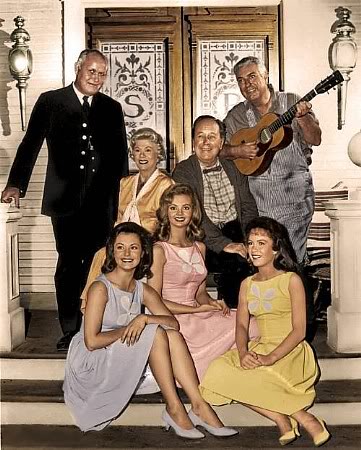
The youngest of 10 surviving children, Paul Henning drew on memories of his mother when he created irascible, lovable Granny on “The Beverly Hillbillies.”

“A lot of her wasy of doing things were old-fashioned,” Henning said from a telephone his North Hollywood home. “Like Granny, mom made lye soap.”

To hear Flatt and Scruggs tell it, the Clampetts’ rags-to-riches story began with Jed “shootin’ at some food, an’ up thru the ground came a bubblin’ crude. Oil, that is ….” In Henning’s memory, however, it started at Scout camp.

“I had gone to Boy Scout camp when I lived in Independence and we went to summer camp in the Ozarks,” he said.  “I fell in love with hillbilly characters. I thought they were independent and had always been a fan of hillbilly humor.”

Henning never forgot those days and drew on them years later when he was cajoled into writing a TV comedy pilot.

By then he had already built a successful career, first in radio, then in television. He wrote gags for George Burns and Gracie Allen and wrote scripts for “The Real McCoys,” “The Dennis Day Show” and “The Bob Cummings Show.”

When Henning was at an age where many start looking back on their careers, he and Jed struck black gold.

“I kept getting calls from (producer) Al Simon, who was at the studio we did ‘Burns and Allen,’” Henning says. “He told me, ‘I’m at a company called Filmways and we’d love to have you write a pilot.’”

Niece Mary Childers of Independence remembers when Henning brought a copy of the pilot back home to premier for the family.

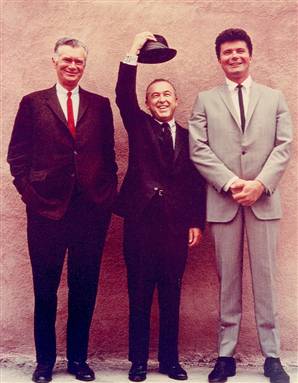
“Beverly Hillbillies” creator Paul Henning (center) appears in this 1963 photo with cast members Buddy Ebsen (left) and Max Baer.

“He had it on 16-millimeter film and we covered the windows and watched it,” she says.

“The Beverly Hillbillies” debuted Sept. 26, 1962, on CBS. Two weeks later it was the No. 1 show in the country.

“That first year was the funniest year,” Childers said. “God, those shows were so funny.”

The show met with the approval of everyone but Henning’s mother, Sophia.

“She never really understood, even when I worked in radio and lived at home,” Henning said. “She never understood what I did.”

When Henning was working at KMBC radio in Kansas City, he would often write the script for the next day’s show when he got home from work in the evening.

“I once had a program with a girl singer I would write every night,” Henning says. “Mother once says to me ‘You know that girl you work with on the program? She’s very good. No matter what you say, she always has a comeback.’

“I told her, mom, that’s what I do every night. I write the script.”

But in Sophia Henning’s mind, script-writing was not a “real job.”

“I don’t think she ever thought he’d make a living, although he did and he provided for her,” Childers said.

Even when Henning got a break in Hollywood writing for Burns and Allen, the Henning matriarch was less than impressed.

“When I got that job I wrote to mom and told her, ‘I’m not writing for Rudy Vallee anymore. I’m writing for George Burns,’” Henning says. “She wrote back, ‘That’s great, but who’s going to write for Gracie?’”

The Path to Hollywood

Henning was born in 1911 outside Independence near Blue Ridge. While he was still a baby, the family moved inside the city limits.

“I was raised in what we might laughingly call the city,” Henning says. “But it was a wonderful place.”

Henning attended the old Ott Elementary School and the old junior high school on the site of what is now the Palmer Building. In 1929, he graduated from William Chrisman High School, which was then on Maple Avenue.

“Independence was growing at that time and Chrisman was a wonderful school,” Henning says. “I enjoyed high school very much. I was editor of the Gleam (yearbook), and I remember belonging to the George S. Bryant literary society.”

An avid reader, Henning used to walk to the library after school. During summers he was a soda jerk at Pendleton’s drug store.

“I liked that job because I could eat all the ice cream,” Henning says with a laugh.

County judge Harry Truman often stopped in after work.

“He used to come in with a group of county employees and match coins on the soda fountain to see who would pay for 5-cent Cokes,” Henning said.

After graduation, Henning took a job working for Ted Malone on KMBC radio as a singer.

“I was there at KMBC for seven years, and I did about everything there was to do,” he says. “Sound effects, announcer – I did anything that needed to be done.”

The big money in radio was in finding sponsors for a program, and Henning successfully courted the Associated Grocers to sponsor “Al and George’s Musical Grocers.”

“We sang about food products,” Henning says. “They said they liked the concept and told me to get busy and write it. I told them I’m a singer, not a writer, and they said if you want to sing it, write it.”

One Sunday a young woman named Ruth Barth came to the station looking for a job from Ted Malone.

“When I went in I saw a boy and three girls clowning around,” Ruth Henning says. “I noticed Paul and was attracted to him right away.”

Malone told Ruth Henning there was no money to hire her, but if she would work for free he would try to hire her eventually. She got her big break when her show “Red Horse Ranch” was sold and the cast went to Chicago to tape the show.

“I saw that bit actors in Chicago were making more money than we were for a whole week’s work,” Ruth Henning says. “I wanted to go to Chicago, but couldn’t convince Paul to come with me.”

“They loaded up the truck”

Still very much in love, Ruth Henning moved to Chicago, but Paul was never far from her mind.

“I left and never came back,” Ruth Henning says. “I found out a writer for ‘Fibber McGee and Molly’ needed help, so I wrote Paul and he wrote a script.”

Paul Henning says writing the script wasn’t difficult.

“I listened to ‘Fibber McGee and Molly’ and got the idea of the show and wrote a whole script on speculation,” Paul Henning says. “I sent the script in and they liked it.”

Paul and Ruth Henning were reunited, but Paul had been seduced by the West Coast on a business trip to California and was dreaming of living there. He relocated once again and quickly found work in Hollywood.

“He got a job with Rudy Vallee and then his agent got him a job with Burns and Allen,” Ruth Henning recalls. After he got settled, Paul asked her to join him.

“I proposed to her on the phone,” he says. “I said this is paradise after the

Henning wrote for “The Burns and Allen Show” for a decade.

rigors of Chicago.”

The Hennings celebrated their 62nd anniversary on Jan. 14.

“We were in love and we still are,” Paul Henning says. “We are more in love than we were the day we were married.”

Paul Henning says his stint with Burns was “the first really good job I got.”

“I joined George Burns in 1942 as a radio writer, and we made the transition from radio to TV in 1950,” he says. “In those days, if you wanted to get any press you had to originate the program in New York, so George and Gracie went to New York and I went with them.”

Henning left “Burns and Allen” in 1952 for “The RCA Victor Show” featuring Dennis Day, which paired him with Stan Shapiro and offered Henning the chance to work as producer.

“I always wanted to be a producer. It was an ideal step up from being a writer,” Paul Henning says. “After a while, Stan went to Universal and said I should get off the treadmill of TV and write movies.”

Shapiro and Henning turned out two successful movies together: 1961’s “Lover Come Back” with Rock Hudson and Doris Day; and 1964’s “Bedtime Story” with Marlon Brando and David Niven, which was remade in 1988 as “Dirty Rotten Scoundrels.”

“Universal was so close to the house I could walk to work,” Paul Henning says. “He (Shapiro) was right – the pace of movies was so relaxed we could take as much time as we needed. It was a pleasure to get out of the glass furnace of TV.”

But television wouldn’t let Henning defect, and a new company called Filmways was pestering Henning for a pilot. The submitted script was “The Beverly Hillbillies.”

“I was more interested in characters than gags,” Paul Henning says. “I stared with Buddy Ebsen in mind as the cornerstone. Once Buddy said he’d do it, I started casting the others.”

America couldn’t get enough of the Clampetts’ weekly adventures, and soon Filmways asked Henning for another show. Henning again drew on the past for inspiration, but this time he used Ruth’s childhood memories, not his own.

“Ruth had been telling me about her grandparents who had a hotel in Eldon, Mo.,” Paul Henning says. “I got the idea of the hotel beside the railroad track and used that for ‘Petticoat Junction.’”

The cast of “Petticoat Junction” starred in adventures based on Ruth Henning’s summers at her grandparents’ Eldon, Mo. hotel.

Ruth Henning spent her summers at the hotel with her five cousins.

“We all grew up as sisters,” she says. “We couldn’t wait to get there.”

“Petticoat Junction” was also a success and Filmways asked for a third show, promising to air it without a pilot. Paul Henning gave them an adaptation of the radio show “Green Acres.”

Every week, folks back home caught the inside jokes and references to Henning’s native soil.

Independence pharmacist Petey Childers was married to Henning’s sister, Drusilla. Petey was often Granny’s unseen medical consultant.

“Granny would call dad to order medicine from back home,” Childers said. “Right after the show people would call dad with ‘Did Granny get her medicine?’ He’d play along.”

References to Sibley, Buckner and Blue Springs would often crop up when Jed or Granny called “back home.”

As popular as Henning’s shows were, they never received critical acclaim. In eight seasons, “The Beverly Hillbillies” never fell out of the Top 20 in the Nielsen ratings – and was No. 1 twice – but it never won an Emmy, and most critics despised it.

“That was hard to take. Some of them were pretty tough,” Paul Henning says. “My job was to entertain the public, and we succeeded in that. The ratings compensated for bad reviews.”

After Beverly

Eddie Albert and Eva Gabor played Oliver and Lisa Douglas on “Green Acres,” which ran from 1965 to 1971 on CBS.

The ax fell in 1971. Under a new presidency, CBS canceled all three of Henning’s shows, despite the fact that the “Hillbillies” was still in the Top 20. Also cancelled were “Mayberry RFD” and all other rural shows. As one critic put it, CBS “canceled every show with a tree in it.”

“It was a letdown, but I’ve had a lot of years of work and it was wonderful to be able to spend time with the family,” Paul Henning says. “I wanted the shows to last for a decade. Having been with Burns and Allen for 10 years, that was the magic number.”

Ruth Henning remembers when the shows were canceled.

“Paul felt bad. He had hope it to go on another year or two,” she says. “Demographics had become very popular. I think CBS made a mistake thinking a lot of the people who lived in the city didn’t like the shows. I don’t think that was true.”

Henning retired, invested himself in his family and friends and help Ruth build her dream house.

“I made a few attempts, but I didn’t want to work that hard again,” Paul Henning says. “I didn’t want to go back to the grind. I had developed high blood pressure and the doctor advised me to slack off if I didn’t want to have a stroke.”

Henning, who never lost his mother’s sense of modesty, doesn’t overplay his shows’ successes. But he can’t ignore the laughter they brought into living rooms all over the world.

“The fact that I transported a rural people to a sophisticated environment seemed to be a universal thing,” he says of the “Hillbillies.”

“It’s been seen in most of the countries of the world. I remember seeing my first episode in Japanese.

“I laughed myself silly.”

Buck O’Neil: Sweet times, sweet sounds at 18th and Vine

Buck O'Neil

Sweet times, sweet sounds at 18th and Vine
An Interview With Buck O’Neil

By Joel Francis

(Note: This 1998 interview was published in 2001 by The Independence Examiner newspaper.)

Q: I’d like to talk about the jazz scene in Kansas City, be cause you talked a little bit about that in your book, and I think that’s an exciting aspect of our town that people may not hear about as much, especially when they think of you. What was Kansas City like in the 1930s and ’40s?

A: Outstanding. See, Kansas City was a wide-open town and all the restaurants would have live music hotels would have live music, bars live music, and so it became easy to get a gig here. So musicians flocked here and played. Kansas City was a town that closed up at 1 o’clock (a.m.), at least the legitimate places. And so the musicians would flock to this area (18th and Vine) and we had a place called the Subway.

All the musicians would come after they got through working and, oh, they would jam all night, have jam sessions, yeah. You wouldn’t be surprised to see Basie there, or Joe Taylor, Georgia Thomas and musicians from all over the country. You would see them down there at this thing jammin’, just having a good time they were having a good time. Or Charlie Parker would drop in, or a blues singer maybe Big Joe Turner, somebody would drop in. All of these things were happening here, just a couple blocks from here; (it was) very alive.

Q: You were obviously a big part of the baseball scene. Why were baseball and jazz so closely linked together?

A: We played the same circuit, man. We’d go to Chicago to play. We’d be playin’ on the South Side and they would visit our ball games and we would go to the jazz joints. It was the same thing, not only there, also in New York City. We would play ball in the afternoon, say Sunday afternoon in New York City, Sunday night go down to Sugar Ray’s, the Apollo we were catchin’ all the acts there or the Baby Grand. All of this live music, it was just jazz. They were playin’ jazz all over. We did this at all of the places we would play. At matinee shows all of the theaters had bands. In Harlem, like I said, we would go to the matinee and maybe we would catch Cab Calloway, see? And we would go from there to Washington, D.C., and the Howard Theater. Maybe Ma Mabley was there and we would catch her, or Duke Ellington, or Fletcher Henderson. Everyplace that we went to play, the jazz people went, too. This was during the days of segregation, so we probably stayed at the same places, and we got to know them and they knew us.

Q: How would you describe the Kansas City style of jazz?

A: Exciting. Different. It was different that New Orleans. And right out of Kansas City, we come up with Charlie Parker, blowin’ notes nobody’d heard before. This is a brand new thing! These were the kind of things you could hear at that Subway. Here come a new dude, come in blowin’ something you hadn’t heard before a different note. Where did this come from? Where did this sound come from? It was a brand new sound.

And the good thing about it was that the musician was telling a story and it was his story to tell. They were playing the same song, but when it was his turn to come up and blow, it was different. And you could see the other musicians listening and coming in, you know. This drummer’s going to change the beat now. He’s got to change that. You could hear it if you’re listening; you could hear the change. This guy’s playin’ “Ain’t Misbehavin'” a little different than the other guy did. He’s puttin’ a little something of him in there. You could listen to a new story. The guy would blow notes, you knew who it was without seeing him, you know what I mean? You knew it was Armstrong. You didn’t have to be in there. You knew it was Ben Webster. You knew all these things. A little jazz. So many things were happening all over the country.

Q: Like what?

A: The music was live and the whole country (was) changing. A top musician would go to, maybe, Paris and when he came back from Paris, this was his style, but he had picked up something else. Or he might go to Egypt Cairo, or something like that. And here was a guy doing something on the bongos that was just different than they were doing in Harlem. You added a little something to what you were doing. You would take a little of this, a little of that.

And the jazz singers (did this with their) different phrasing styles. Like, nobody phrased like Billie Holiday. She could just open her mouth and hey, that’s Billie. You knew because nobody did it like Billie. You could hear the different phrasing and all of it was so clean, so clear.

This is the only thing I have against a lot of the things they play now. It’s hard to understand, because a lot of the words, the way they’re sayin’ them, I don’t get. But they were so clear. Like the tones they were playin’. The tones were so clear, you could hear it, you knew it; you weren’t confused. I like rap. I like to hear rap if the guy is distinct and I can understand what he’s saying. But if he jumbles it all together where I can’t understand it, it ain’t good. This is why music then, anyone who sang it, (sang) a clear note. You could understand it. You like to know what they’re doing and where they’re going from there. They will lead you around through this thing if you listen. Music is a great medium.

Q: What role did Tom Pendergast and his political machine play in the development of jazz in Kansas City?

A: It provided a place for them to play it was a job. It was in that era they had the speakeasy they had everything goin’ on and you had to provide entertainment with it.

Q: So did Pendergast turn a blind eye to it?

A: No. If there was a blind eye, it may have been the government turning a blind eye to Pendergast. There wasn’t anything illegal about jazz, but the things Pendergast was doing could have been illegal.

Q: Did any of Pendergast’s illegal activities help the jazz scene grow?

A: It just may have, because you know you’ve got to entertain the people you’re selling whiskey to, or the people going to gamble. Right now, we’ve got the boats, and gambling is legal. Whereas it wasn’t legal during that day and you had to entertain people. This was good entertainment.

Q: If speakeasies were illegal, how did people know where to go to hear the music?

A: Pendergast was running the city. When you say illegal, if I am the boss of the city and I am running the city this way, it wouldn’t be illegal. What would have been against the law was this: If you were running a club and instead of closing at 1 o’clock, you stayed open ’till 3 o’clock. If you stayed open at 3, you were doing the same things at 3 you were doing at 10, but the law was you had to close at this time. And the places would close, the musicians would come down here and go into that Subway and play and jam. And somebody down there would be doing something illegal, because somebody would be selling some whiskey. A lot of these things were happening before prohibition.

Q: So did Prohibition help the jazz scene?

A: Yeah, sure. Actually it opened it up all over the country. Wherein you had to go just to certain spots before, now you’re (playing) in Manhattan, you’re playing in Times Square. You’re playing now all over the country, even going to universities to play. Before you were playing in speakeasies, but now you’re playing in clubs.

Q: What were some of the hot jazz clubs in Kansas City at that time?

A: The Milton was strictly jazz. They had so many different clubs in Kansas City and … music was everywhere. During that time, just like a band comes to the Starlight and plays now, every weekend it was some band at the Municipal Audi torium. That doesn’t just mean Count Basie or something like that, but Benny Goodman would play; everybody would come. I’ve seen so many wonderful bands down there.

Q: What are some of your favorite bands you’ve seen play there?

A: I like Duke. To really jump I like Lionel Hampton. I was a very good friend of Count Basie; I like Basie. I like Goodman. The Jazz Philharmonic that was the top musicians put together and they traveled all over the country. Oh man, you talk about some music! You’d hear these great artists play. I like Armstrong. They had a girl band called the Sweethearts of Rhythm; they could play. First of all you were going because it was a girl band and you wanted to see them, but they could play.

There was another one called Tiny Davis. She blew that trumpet Louis Armstrong-style; she could play. Bob Burnside played the sax he could play the bell off of that horn! It was the era of the Mills Brothers. They were one of the first singing groups, the Platters and a whole lot of others came behind them.

Q: I couldn’t go too far in this interview without mentioning Satchel Paige.

A: He was an outstanding athlete.

Q: What did Satchel think of the jazz scene?

A: He loved it. He used to play the ukulele. He would play on the bus and we would sing along. Satchel Paige, yeah, we had a lot of fun.

Q: Did Satchel go with you to all the concerts at Municipal?

A: Yes, yes he would go. We all would go as a team. They (jazz musicians) would come out to the ball game in the afternoon and at night we would go down to the jazz concert. That was a couple of musts. If you lived in Kansas City, it was a must on Sunday afternoon to go to the Monarchs and see baseball, and it was a must after that to go to the Municipal Auditorium and hear these bands.

Q: Did they ever bring any of the Monarchs onstage and introduce them as celebrities?

A: Actually they would introduce the teams, because if we were playing the Chicago American Giants here, they would be going too. All of us would be there.

Q: Did both teams sit together?

A: Sometimes.

Q: What did your managers think about the jazz scene?

A: They were there. What do you mean “what did they think,” they were with us! (Laughs).

Q: Did they impose any rules about drinking and things like that?

A: You knew that yourself. You knew you couldn’t drink too much. We were there, but we didn’t drink that much. Everybody drank a little maybe, but you didn’t drink that much because you knew you had to play ball the next day.

Q: I’d like to name off some jazz performers and have you tell me some memories about them. A lot of these we have mentioned already. Let’s start with Bennie Moten.

A: Bennie Moten, that was early. That’s when I first met Count. Count was playin’ with Bennie Moten. A good musician.

Q: Lionel Hampton.

A: I made him first base coach for the Monarchs. It was just for a show. They were playing here that night and I put him in a uniform. His wife said that he kept that uniform and had it on an easel he kept in one room. He would tell everybody about that uniform.

Q: Count Basie.

A: Basie was a Yankee fan, and I’m a Dodger fan, see. And we would bet every year on the Yankees and Dodgers. You know he beat me most of the time, but we had a lot of fun.

Q: Duke Ellington.

A: Duke was sophisticated and clean. Clean music. Like with Lio nel, you wanted to dance, Duke you wanted to listen.

Q: Charlie Parker.

A: Oh, now you got a new step. You could start dancin’ a different way because you got a different beat. Charlie, he used to blow here at that Subway. He’d drop in as a kid, blowin’ that horn, making those new sounds.

Q: How did his death at such a young age affect you?

A: It wasn’t too much of a shock because of the way he was going. You knew the things happening to him, so it wasn’t a shock.

Q: Louis Armstrong.

A: That was music you could listen to, and you could laugh with Louie because Louie had a kind of a laughing horn, you know. When he blew that horn you’d laugh about the different notes he’d play. The thing about it is, you know that handkerchief he had to cover up so nobody was coppin’ those things. Quite a fella. Baseball nut too; he liked baseball.

Q: What was Satchmo’s favorite team?

A: It would be, more or less, the Black Yankees.

Q: What do you think caused the decline in the jazz scene in Kansas City?

A: It’s coming back now, and that’s all over the country. Different listeners are coming and they’re looking for new sounds. This is our last progress in anything and it’s something new, something different.

Q: What does jazz mean to you?

A: It has afforded me a lot of pleasure. I listen to it now and I like all music. There’s something about music. With television, I have to look, but I can do anything I want to do and listen to music. Every once and awhile somebody’s going to hit a note or something and I’m going to stop and listen to what they’re playing. Music can put me to sleep at night or it can wake me up. It’s a soothing thing, but it can be very exciting too.

Down on “Cyprus Avenue”

(Above: Bill Shapiro appeared on television in Kansas City in 2008 to celebrate 30 years of his radio show, “Cypress Avenue.”)

By Joel Francis
The Examiner

Late at night, the house is silent.

Everyone is asleep, or so it seems. In a bedroom, a dim light shines through the blankets peaked around a small figure sitting up under the covers. The sound of tinny music can barely be heard.

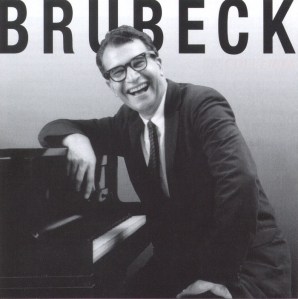
The boy beneath the sheets is still, but his heart is racing. His hands tremble as he fine-tunes the radio under the covers with him. He thought it was lost forever, but he has found it: the jazz radio station carrying the songs of Dave Brubeck and Shorty Rogers. It was only late at night he could pick up the phantom AM signals from stations in exotic places like New Orleans. Forget sleep, he had found something far more important.

Fast-forward 50 years.

Today, the city – Kansas City – is alive. Cars zoom past on the interstate, clearly visible from the law office’s window on the 20th floor near Crown Center. Visitors scurry in and out of the renovated Union Station.

A train blows by in the distance. The stress of daily life is lost in this picturesque, birds-eye view.

The scene is quite different, but the boy, now 62 years old, has not changed. The passion for discovering new music still burns within.

Today Bill Shapiro doesn’t hid his love of music; on the contrary, he broadcasts it. Shapiro has hosted the weekly radio show “Cyprus Avenue” for more than 20 years on KUCR 89.3 FM, the University of Missouri-Kansas City, National Public Radio affiliate.

Taking the show’s title from a song on Van Morrison’s “Astral Weeks” album, “Cyprus Avenue” has become one of KCUR’s highest-rated local shows.

Shapiro has found freedom on the airwaves. Unrestricted by playlists generated by demographic studies and corporate interests, Shapiro plays the music that excites him in hopes of engaging his audience.

“He has a lot more information and insight into groups that commercial radio doesn’t know about,” says Robert Moore, KCUR and “Cyprus Avenue” producer and music director. “A show like his would never happen on commercial radio because they don’t break down artists. They just play one format.”

While commercial radio serves a bevy of Bachman-Turner Overdrive and saccharine teen pop, Shapiro slips his sophisticated audience the Velvet Underground, Stevie Wonder and Uncle Tupelo, all linked by a common theme for a given show.

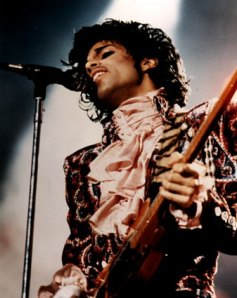
PrinceWhen Beck’s “Midnite Vultures” was released in 1999, no Kansas City radio stations would pick it up, despite heavy play from MTV and VH1. “Cyprus Avenue” not only spotlighted the album, but buttressed it with Prince’s “Rave Un2 the Joy Fantastic,” forming a fitting tribute to both.
Shapiro sprinkles his shows with information from box sets, liner notes and magazine interviews, but for the most part he lets the music do the talking.

His inspiration may come from a television special or an album passed onto him by a friend.

More often than not, Corky Carrol, co-owner of Village Records in Overland Park, Kan., points Shapiro to a quality release. The two usually talk once a week about scheduled new releases.

“It’s strange to think that this is the only place to hear Elvis Costello or Nick Drake on the radio,” Carrol says. “You know at least for two hours you are going to get a solid effort, not a couple of good songs then Celine Dion.”

Says Moore, “He turns the public on to new groups they won’t hear anywhere else. Unfortunately, it won’t have any impact on commercial radio because it is run by corporations. It’s expected that this is what non-commercial radio does.”

“Cyprus Avenue” may be popular, but Shapiro has yet to reach the notoriety of Murray the K. Sure, he gets calls at the office from fans and fan mail isn’t unexpected, but for the most part Shapiro is anonymous. That’s fine by him.

“Other than family I don’t think I could tell you a specific person who might claim to be my biggest fan or a longtime listener,” Shapiro says.

Carrol has supplied Shapiro with music for more than 25 years and is a regular “Cyprus Avenue” listener. Carrol says he has bought “thousands and thousands” of albums for Shapiro.

“It’s hard to get one past him, but there are a few records he’s missed,” Carrol says. “His purchases are all over the board. I think the only thing I haven’t sold him is a classical record.”

A hit all over the country

The diverse playlists on “Cyprus Avenue” have made the show successful not only in Kansas City, but all over the country. During much of the 1980s, “Cyprus Avenue” was distributed on NPR’s satellite uplink system.

“In those days you could buy an hour of stereo time for $40,” Shapiro says. “I thought it was worth a shot and was willing to invest a couple thousand dollars.”

Several stations picked up “Cyprus Avenue” and it became a hit in Minneapolis and a dozen other smaller markets, but when satellite costs rose, Shapiro pulled his show.

“I knew it wasn’t going to grow because it didn’t fit the NPR format,” Shapiro says. “People think public radio should be country and jazz or folk for the adventurous.”

But Shapiro wasn’t content with confining the show to his hometown. He decided to give the satellite one more try, this time with a national sponsor. “Cyprus Avenue” proved to be popular, running in more than 40 markets, including Detroit, San Francisco and Jacksonville, Fla. Unable to find a sponsor, expenses were mounting and Shapiro was faced with a decision.

“I decided I could either earn a living as an attorney, or I could get in my car and drive across the country and build ‘Cyprus Avenue’ into a radio show,” Shapiro says.

For the second time, “Cyprus Avenue” was pulled from the uplink

“We just weren’t penetrating the major markets,” Shapiro says. “Today radio is a secondary medium. People don’t care about shows, they care about stations and that’s why radio is as homogenous as it is. Advertisers just want a demographic to sell their product to. I don’t fit that mold. I knew I’d never get the audience I wanted.”

Compromising the show to build a bigger audience would be counteractive to everything Shapiro was trying to do – share the music he loves with his friends. And if his only contact with these friends is through the radio, so be it.

“A lot of people use the TV as a companion. My stereo is my companion,” Shaprio says. “I alwasy have 30 to 50 unopened CDs at home. They come to me faster than I can listen to them. There is always part of my head saying, ‘Is this something you want to take further and put on the radio?’”

When Shapiro listens to music at home, he makes sure it gets the audio treatment it deserves. At age 12, Shapiro built his own Hi-Fi system from a Heath kit. That system has been upgraded and replaced many times since.

“I’m a sound freak,” Shapiro says. “I have more money tied up in sound equipment than most people have in a home. I wasn’t to hear it as well as I can hear it. I buy all the gold CDs and audiophile stuff.

“To me, music is as important as oxygen and food,” Shapiro continues. “When I’m home, I have music on 24 hours a day. In the car, music is on the whole time.”

Hooked by a phonograph

Shapiro got hooked on music in 1942 when an uncle gave him a phonograph player for his fifth birthday. A family friend in the jukebox business kept Shapiro supplied with records once they were too scratched for commercial play. At age 12, he discovered Brubeck, Paul Desmond and West Coast jazz.

Shapiro tried music lessons – he tackled the piano, vibraphone and banjo – but his musical aptitude was mental, not physical. He spent his time amassing records and building playback systems.

“Whatever money I made went into getting more records and improving what I had,” Shapiro says.

Shapiro migrated across Missouri and graduated pre-med from Washington University in St. Louis in 1958 with the intent of becoming a doctor.

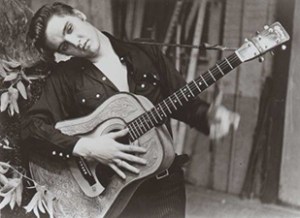
Still an avid jazz fan, Shapiro would often get together with friends and play elvis precords. Then he saw Elvis Presley’s first appearance on the Tommy and Jimmy Dorsey show. Shapiro was hooked on rock and roll and spreading the gospel of Elvis.
“I didn’t know who or what it was, but it had the same impact on me as hearing JFK was shot,” Shapiro says. “I can still visualize that room and the TV set and here we are 50 years later.”

To a generation of buzz-cut, starched-collar squares, Elvis represented the rebellious, darker side of 1950s adolescence.

“Presley was a lightning rod from my generation, a button-down generation,” Shapiro says. “There was a whole side of our lives – smoking cigarettes, sipping beers, getting lad – that was never talked about, and here it was in our living room. I immediately became a hard-core rock and roll fan.”

By the time Shapiro graduated, he had abandoned the idea of being a doctor. He headed north to the University of Michigan and enrolled in law school. With his law degree in hand in 1961, Shapiro decided he wanted to be a tax attorney. He heard that New York University had a graduate tax law program, so he went to the Big Apple. One show on Manhattan Public Radio planted the germ that would become “Cyprus Avenue.”

“It was a thematic program,” Shapiro says. “They’d take someone like big-band arranger Fletcher Henderson and play arrangements done by different bands. They might play a combo version next to a big band version. I listened to that show religiously. In later years, I got thinking that there was so much richness and social impact in pop music as in jazz and I could do the same thing.”

Shapiro had finally found his calling, but after three universities and seven years of higher education, a career shift was not going to happen.

“By this time my family and I had spent a lot on higher education,” Shapiro says. “If I’d know then what I knew no, I would have been in the music business. It just wasn’t in the cards.”

The jump from disc jockey to tax law may seem extreme, but Shapiro says his work is extremely satisfying.

“Tax law is not what most people think it is,” Shapiro says. “It is the most creative part of the law, because what we do is planning. You might want to buy your partner out. If you do it one way, Uncle Sam takes a hunk. If you do it differently, you save money.”

Shapiro left New York in 1962 and returned to Kansas City to work and start a family. As his family grew and Shapiro flourished professionally, he became involved with broadcasting, but it was television that proved to be Shapiro’s stepping-stone to radio.

Deeply involved with public television’s early on-air auctions and fund-rasiers, Shapiro’s good deeds did not go unnoticed. A high school friend working at KCUR called Shapiro and asked if she could take him to lunch and discuss fund-raising methods. At the end of the meal, she asked if there was anything she could do for him. Shapiro asked for an audition to do a public radio rock show.

The dream was starting to materialize. Shapiro arrived at the studio with a stack of records for the show and hoped that the manager liked it.

“My first show was called ‘Ballads by Rockers.’ It was all ballad material done by people thought of as screamers,” Shapiro says. “He (the manager) says, if you can do that every week, you’re on.”

Sonic spelunking

As Cyprus Avenue entered its second decade on the air, Shapiro realized new music and artists – particularly rap and alternative – were not striking the same chord with him.

“I’ve known for a long time I’m the generation these people want to rebel against,” Shapiro says. “I respect the fact that the music says this to the previous generation,” he says, emphatically holding up his middle finger. “There is a need to shake up the status quo.”

Shapiro doesn’t mind the envelope pushing done by newer artists, he just doesn’t get it musically. The Talking Heads and Beck are about as modern asbrubeck Shapiro gets with “Cypuss Avenue.”

But Shapiro’s show doesn’t need Moby and Soundgarden to be effective. “Cyprus Avenue” is a discovery process – for both Shapiro and for listeners – of influential artists and the impact they’ve had on music.

By showing listeners the roots of music, Shapiro leaves the listener naturally curious of the modern amplification and integration of this process.

“Cyprus Avenue” isn’t a forum for Shapiro to amaze everyone with his knowledge. It’s a platform for him to share his love of music and enlighten listeners who don’t fit commercial radio demographics.

Jackie Nixon, NPR director of strategic planning and audience research, says that shows like “Cyprus Avenue” are what NPR is all about.

“We treat our listeners with respect and intelligence and try to produce programming that makes people think as well as entertain,” Nixon says.

For Shapiro, those sleepless nights in the early 1940s were a discovery process.

“It was like going into a cave with a flashlight and all of a sudden – bang, something is shining back at you,” he says.

Shapiro has not forgotten that feeling and tries to instill the same feeling of excitement in his listeners.

“I think I broaden the awareness of the intelligence and importance of popular music,” Shapiro says. “I lift it out of the aural wallpaper and let people know it can be a powerful element. That it shapes opinions and tells a lot about where we are and where we are going.”

Indigo Girls Bring Passion, Activism To Leid Center


By Joel Francis
Kaw Valley Independent (Lawrence, Kan.)

It is impossible for the Indigo Girls to separate their music from their activism. Their 90-minute set at the Lied Center last week not only brought out the fans, but the plight of Leonard Peltier, the American Buffalo and environmental issues.
The Girls opened their set with a moving version of Bob Marley’s “Redemption Song” that featured Emily Saliers on piano and Amy Ray on guitar. After the song the duo yielded the stage to Winona LaDuke, Honor the Earth project director. They returned aided only by accordion and piano player Carol Issacs for an all-acoustic set that included “Get Out the Map,” “Power of Two” and a reworking of “Go” that did not lose any of its electricity despite being unplugged.
The Girls also premiered two new tracks, “Devotion” and “Leaving,” that were released on the new best-of “Retrospective.” The crowd responded enthusiastically and sang along like they were old standards.
“We put two brand new songs on (the collection) because we wanted the fans to have something new,” Saliers said in telephone interview the day before the concert. “Picking the songs for the new album wasn’t nearly as difficult as putting together 1,200 Curfews, our live album. We just picked songs that we liked and we both agreed on it together.”
The set climaxed with “Kid Fears” when supporting act Shawn Mullins and reprised the vocals originally recorded by Michael Stipe. The trio’s voices blended and danced around the room leaving the audience awestruck. Later, on “Galileo,” Ray and Saliers yielded the mic to the crowd, who didn’t miss a beat or a lyric.
The Girls closed a jubilant night on the Honor the Earth Tour on a bill shared with Mullins and the all-Native American blues band Indigenous, each of whom received standing ovations at the end of their sets.
“The Honor the Earth tour is something Amy and I have been doing for almost seven years now,” Saliers said. “It has very specific social, political focuses that have to do with environmental issues on Native lands.”
This year’s issues included the slaughter of buffalos in Yellowstone Park and nuclear waste dumping on Native American land.
“It’s impossible to be an environmentalist and not consider indigenous issues,” Saliers said. “I think Americans need to see what kind of environmental racism is going on in impoverished communities and the responsibility for the nuclear industry to take care of its waste.”
To show their willingness to put their money where their mouths (or hearts) are, the Indigo Girls have released another new track, “Pt. Hope.” The song was recorded live in Atlanta and is available only by download at Indigogirls.com for $3.60.
“Three dollars of that money goes to Honor the Earth,” Saliers said. “It’s a beautiful, beautiful song that Amy wrote that deals with a lot of the issues that we’re covering on the tour.”
The Indigo Girls are not slowing down once the Honor the Earth tour wraps up. Ray will release her first solo record in February. Both Girls will return to the studio in May to record their ninth album. Saliers said the new album would have an intimate sound and return to their acoustic roots.
“We don’t want to belabor over this record,” Saliers said. “We just want to write strong songs and get in there and do it in a way that’s pure and catch the emotion of the songs.”
That emotion was undeniable on Saturday night.
“We’re passionate about these issues. If you’re going to write a song, you have to write about something you’re really thinking about or feeling,” Saliers said. “We’re activists and we come from the question of what can be done to help rectify a bad situation”

At 105, Audrey Retires

By Joel Francis
The Examiner

Things are different in the newsroom.

Sure, everything looks the same. News breaks, stories are written, papers go to press. But underneath it all, something is missing.

For nearly 40 years, proofreader Audrey Stubbart was the grease that kept the wheels of The Examiner newsroom turning smoothly. Her sharp eyes caught misspelled words, misplaced commas, and grammatical errors.

Now, at age 105, Audrey, reluctantly, has retired.

“Her body gave out,” daughter Carol Kroeck said. “Her body is not able to do this.”

Since a fall and short stay in the hospital in late May, Audrey has spent her days at home. She must use a wheelchair to get around and has a part-time nurse stay with her.

“We have a void in the newsroom with her not here,” Examiner executive editor Dale Brendel said. “We miss the inspiration she provided.”

Audrey came to The Examiner in 1961 after mandatory retirement at age 65 from her job as a proofreader at Herald House. She continued to work full time at The Examiner for another 40 years.

Walking into the newsroom, it would be hard to tell Audrey was a guiding force. She sat at her desk quietly and kept to herself while working.

“She was never in a job of real authority, but she had unofficial authority,” said Sheila Davis, Examiner managing editor and Audrey’s co-worker for nearly 20 years. “Everybody knew if you slipped copy by her and it had a mistake in it, she would call you on it.”

Audrey didn’t just correct the mistakes. She made sure to let the offenders know their mistake and teach them the correct way.

“There was no winning an argument with Audrey,” Brendel said. “Some people tried to argue with her, but I never saw any of them win.”

Born Audrey Morford on June 8, 1895, in Newman Grove, Neb., Audrey has been many things Ð Wyoming homesteader, wife, mother, grandmother, proofreader, columnist Ð but she was always a teacher.

“I always wanted to teach,” Audrey said. “Something inside of me motivated me to share.”

Jackson County Legislator Terry Young worked with Audrey from 1989 to 1997 when Young was The Examiner’s police reporter.

“My deadline was in the morning as the cops reporter, so she and I had a special relationship,” Young said. “The other editors would be yelling for my copy, but she always had one last read and something to say. She was usually right, too.”

Examiner reporter Frank Haight remembers when he was an editor and Audrey would find a mistake in his copy.

“When she found something she wanted to question in something I had written, she would come up behind me, put her arms around my shoulders and say ‘Let’s reason this together,’ ” Haight said. “She normally came prepared with an English textbook for reinforcement. She would never say ‘Boss, you’re wrong,’ but she was never wrong.”

Many reporters came to The Examiner as their first job out of school.

“She always took the time to help young writers polish their grammar and sentence structure,” Davis said. “Today people rely on spellcheck too much. Things get by that didn’t get by Audrey.”

Audrey doesn’t work in the newsroom any more, but her thirst for knowledge hasn’t dried up. She sits in her living room at home surrounded by books, magazines and the latest copy of The Examiner.

“Every time I see a book, I think of something I could write,” Audrey said. “I could write a book, but I don’t know when I’d ever get it finished.”

Ask Audrey a question about the past and her eyes will close. She will clasp her hands and go to that place in her mind where her memories are fresh and alive. It takes her longer to get there than it used to, but after patient, painstaking thought, the recollections will emerge.

“I don’t think the newsroom has changed that much since I started,” Audrey said. “You used what you needed, and you needed what you used. It’s always been that way.”

When Audrey started at The Examiner in 1961, stories were written on typewriters, and copy came through on Linotype machines. Today most of the writing and production is done on a computer. Tom Dickson was an Examiner sports editor from 1976 to 1983 and remembers when the first computers were installed in the newsroom.

“When we first got computers in the newsroom, it was suggested that we wouldn’t need a copy editor,” said Dickson, now a professor of journalism at Southwest Missouri State University.

“Well, the first issue came out after that and we found out we needed one. It was a mess,” Dickson said with a chuckle. “Audrey was again asked to read stories.”

For someone born when the horse and buggy was the main form of transportation, computers proved to be more of a foe than an ally for Audrey.

“Some people are smart. They can just hop right up to the computer,” Audrey said. “Some people know their limitations. Maybe I just wasn’t meant to be on computers.”

Cars were another limitation. Audrey never drove to work, instead relying first on a taxi, later on her family for a ride in the morning. Haight drove her home every night for 15 years.

“Those were precious moments for me because Audrey shared a lot of personal things with me,” Haight said.

Always curious, Audrey would often look out the window and find beauty in the most everyday items.

“We could be driving along Noland and she might look to the east and say, ‘Aren’t those beautiful clouds. I wonder if it’s going to rain,'” Haight said. “She loved God and his creation. To her God was everywhere.”

Audrey was fixture at New Walnut Park RLDS Church. She could be counted on to be at every service, prayer meeting and Sunday school class. Bea Mengel has attended church with Audrey for more than 50 years.

“I remember they were going to do away with early morning prayer services on Sundays at 8 a.m.,” Mengel said. “She could not handle that. She said she had to start her day with prayer meeting. She asked if we could keep it together for her. We did, and she’s rarely missed.”

Audrey’s church activities were not confined to worship. She taught the junior high Sunday school class and is active in the senior adult group. She sang in the choir until she was 102.

“She can sing with a falsetto, and you wouldn’t know how old she was,” Mengel said.

Mengel always asked Audrey to share a poem at the monthly senior adult pot lucks.

“She would give a poem and do it from memory,” Mengel said. “It was funny because we were all retired, and she was the only one who had to get back to work and she was the oldest.”

Audrey never considered her time at The Examiner work. While the proofreader’s desk can be one of the most stressful places at deadline, Audrey said: “It’s not stressful; it’s joyful.”

“It wasn’t work, it was pure enjoyment to me,” Audrey said. “Maybe it was because we were so much alike, me and the work.”

Though the intricacies of grammar have escaped many a sharp mind, Audrey never had trouble remembering nearly every nuance of the English language, Associated Press style or proper writing.

“I don’t know that I never knew the rules for grammar and things,” Audrey said. “I just knew that it was so and you didn’t fiddle with it. It just is. It always is.”

Sandy Turner worked in composing at The Examiner for 20 years. She said she believes Audrey’s constant learning was what kept her youthful.

“Audrey would tell me if you don’t learn something every day, then your brain’s at rest,” Turner said. “I believe that’s what kept her going.”

Audrey has often said, “If I couldn’t come to work I’m sure I would have died.”

“Everything one does helps to keep them alive and going strong,” Audrey said. “Now I can’t do it anymore and I’m ready to die. I don’t care how soon it is.”

Audrey misses the newsroom, and the members of the newsroom miss Audrey, but the presses keep on rolling. News stops for no person.

“It was such a pleasure for her to see all the people who came to see her,” Brendel said. “You could see it in their faces, the joy she gave to them. You could see how impressed they were with someone her age working 40 hours every week, showing up on time every day, never wanting to take a day off.”

It was not just the visitors who were impressed.

“Sometimes I think just working with an individual can motivate you to have the same work ethic,” Young said. “She served as a role model to everybody.”

Audrey was 82 when Joel Francis was born. Reach him at 350-6321 or joelf@examiner.net.