Holiday Marketing Can Reveal Bands’ Inner Grinch


By Joel Francis

The Kansas City Star’s Back To Rockville blog

Your favorite band’s opinion of its fans will not be found on the concert stage, but under the Christmas tree.

For years the holiday season has been the dumping ground for record labels. Greatest hits albums from nearly forgotten artists (last year: Sugar Ray, this year: Staind) and reissues with bonus tracks are both designed to cash in on the holiday shopper. While most best-ofs are aimed at the casual buyer, and some can be a great starting place for a uninitiated fan daunted by an artist with a tremendous catalog, reissues take straight aim at the dedicated fan.

Few artists are able to find the balance between old and unreleased material and introduce themselves to new fans without appearing to gouge long-time fans. The Dave Matthews Band finds that balance this year with “The Best of What’s Around, Vol. 1.”

This set gets props for being selected by the band’s fan club and coming with a second disc of unreleased live performances that don’t overlap the material on the first disc. Plus it’s available at a one-disc price. That’s a lot better than most greatest hits with the obligatory two new tracks tacked on to the end.

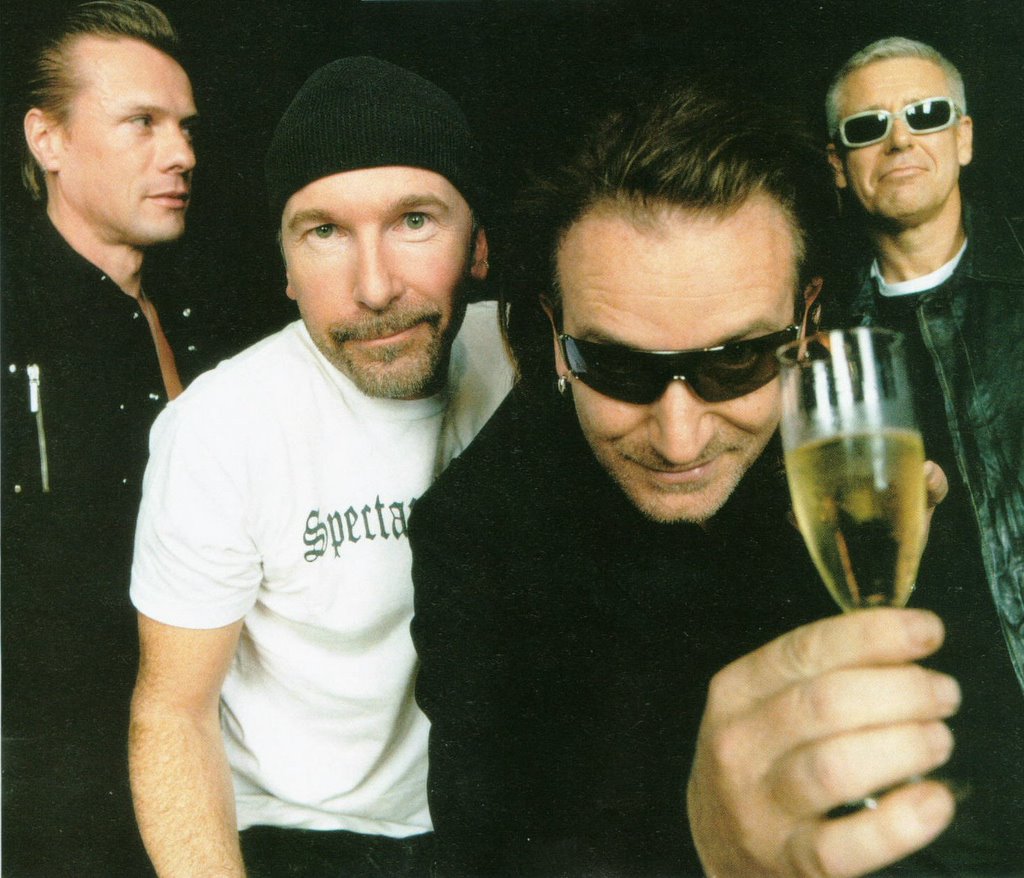
Which is exactly what U2 does on their collection, “18 Singles.” This is the third best-of compilation from the band in the past decade, a figure which matches the number of studio albums they’ve given us in the same span. It is impossible to summarize the band in one disc and here the band doesn’t even try. Eight songs post-date the millennium, leaving 10 tracks to cover the first two decades of the band. Three albums, “Boy,” “October” and “Pop,” are ignored completely. It’s unclear who this is trying to appeal to, but the band’s intentions could be summed up by playing the intro of Pink Floyd’s “Money.”

For all their humanitarian efforts and “everyman” appeal, it is appalling that U2 would stoop to such a low marketing ploy. They manage to make matters worse with a “deluxe edition” of “18 Singles” that includes at 10-song DVD at nearly double the price. This is not a new practice. U2 have been releasing their concerts on DVD in two editions from some time now. The bare-bones disc of the full concert usually runs about $10, while at double the price the “deluxe edition” adds a second disc of content that barely holds up on first viewing. U2 are shamelessly profiting off their hardcore fans — the ones who made the band what it is today — with this tactic.

Unfortunately U2 are not alone. Last spring Bruce Springsteen released the excellent “We Shall Overcome: The Seeger Sessions” album. This fall it is back in the “American Land Edition” with five more songs. Columbia Records, the same label that brings us The Boss, released no fewer than three versions of the Los Lonely Boys debut album in 2004 and 2005. First came the standard issue. Then, when the band started to take off, Columbia pushed an enhanced version with Spanish-language tracks. Finally came a DualDisc version with videos and a surround-sound mix of the album.

When artists and the labels lament over the money lost through downloading, piracy and hard-drive swapping they should remember that it is ploys like this that turn fans away. It’s never profitable in the long run to spit on the fan who bought the album when it was first released and boosted its all-important SoundScan numbers. This is a trick akin to the repairman who keeps finding one more thing to fix, and it is capable of damaging years of devotion and goodwill.

Fortunately some artists are getting this right. Wilco has provided a free EP of exclusive content for fans who bought their last two studio albums. A code in the CD booklet may be keyed in to the band’s Web site to access the downloadable songs and artwork. Those who purchased Wilco frontman Jeff Tweedy’s solo concert DVD this fall can put the disc in their computer to download high-quality audio versions of all the songs in addition to two bonus tracks. Sure, the system isn’t flawless, but it rewards those who buy and acts on good faith.

All bands thank their fans, but what is expected to be put under the tree speaks much louder than concert-concluding platitudes. Like the Grinch, it appears that The Boss and Bono need a visit from Dave and Wilco to have their hearts expanded a few sizes.

Rising beyond stereo

Quartet is cooking up a four-way sound experience.

Kansas City Star

By Joel Francis

Justin Timberlake may be bringing sexy back, but the jam band the Disco Biscuits is retrieving a relic of the ’70s.

“Quadrophonic sound hasn’t been popular in many years, but we’re going to bring it back,” said Biscuits singer, guitarist and songwriter Jon Gutwillig. “Roger Waters came through town, and he did it, because he’s from the ’70s. Our keyboard player went to the show and said, ‘Why don’t we?’ It turns out it’s not that hard.”

But the antique-cum-cutting-edge sound system won’t be debuted until the Biscuits’ New Year’s Eve show in Philadelphia. Fans who show up on Friday to hear the band play the Granada in Lawrence will have to settle for two-channel, stereo sound.

“We keep getting bigger, and I don’t understand it. Every time we go back to your town, we’re bigger than the last time we were there,” Gutwillig said. “It makes us feel like we’re moving in the right direction.”

One reason for the unexpected success might be the following the quartet has built and the availability of most of their shows, bootlegged or otherwise.

“We were playing in Pittsburgh the other night, and I looked at the crowd and thought to myself, ‘I’ve never seen these people in my life,’ ” Gutwillig said. “But it was very real. They knew our music, knew the band members and knew our style. They learned about us the old-fashioned way: They got bootlegs from their older brother, the same way I did.”

If brother can’t provide, the band certainly can. Many of the band’s performances are recorded and available for sale on their Web site, http://www.discobiscuits.com. With no label, pressing, packaging and distribution costs involved, the Biscuits — made up of Gutwillig, bass player Marc Brownstein, drummer Allen Aucoin and keyboard player Aron Magner — are able to reinvest the majority of the earnings.

“The downloading has been incredibly successful. It’s afforded us the opportunity to spend money to improve the quality considerably,” Gutwillig said.

Online shows used to come from a DAT machine on the soundboard. Now the shows are picked up by microphones onstage, in the audience and on the board.

“The sound is as good as show boots have ever sounded. We can produce a high-quality concert recording in less than two hours,” Gutwillig said. “We try to have a show on the Net as quickly as possible without it sounding bad.”

Since the Biscuits keep all of their songs in their performance repertoire, the archives give fans instant access to the entire catalog.

“When I was a kid into Phish, I’d hear this song, (and) I had no idea what it was. It would take me a month to find out,” Gutwillig said. “Now I could learn how to play that song from tape 10 hours after I heard it. Everything is quick and hard-core now. You’re not waiting for something to come in the mail.”

A lot of the Disco Biscuit’s universe has accelerated since the band’s inception on the University of Pennsylvania campus in the mid-’90s.

“I used to walk around a public school singing songs into a voice recorder. I got a lot of great songs that way,” Gutwillig said.

“Making time now to write music is definitely an issue. Now I write faster, but there’s less time. I used to have all the time in the world, nothing going on. Now it seems I have to leave the country for a few months to get anything done, which I’m thinking about doing.”

Hail Death Cab

Expect a ‘faster and louder’ show at the Bleeding Kansas Festival.
Cover story, August 03, 2006

By Joel Francis
The Kanas City Star

Elvis Costello, Atlantic Records, Franz Ferdinand and Lollapalooza have at least one thing in common: Death Cab for Cutie.
The Seattle band had been building a loyal fan base since 1998 when last year it signed to Atlantic Records and released the album “Plans.” The fans rejoiced when the big label association didn’t alter the music. In fact, the band wasn’t done pushing its core conceptions.
“We knew full well when we signed (with Atlantic) that we didn’t have to,” said keyboard player, guitarist and producer Chris Walla. “If they didn’t give us what we wanted, they wouldn’t get us. What we wanted was to be able to do exactly what we were doing but with more resources and access to people.”
Walla and the rest of the band — singer, guitarist and chief songwriter Ben Gibbard, bassist Nick Harmer and drummer Jason McGerr — are headlining the Bleeding Kansas Arts & Music Festival at Burcham Park in Lawrence on Saturday. The steamy outdoor setting isn’t ideal for “Plans,” an album best suited for rainy afternoons indoors.
“We’re not performancy performers. There are no rock-star moves or laser shows,” Walla said. “Festivals are difficult for us because there are so many ‘X’ factors. We just turn it up and play faster and louder than we would otherwise.”
The more popular Death Cab gets, however, the more it plays in places that serve thousands of fans than it does intimate clubs. In June, Death Cab played Bonnaroo; Friday the band plays Lollapalooza in Chicago. In both places, Walla said, the band will adjust.
“It’s a different mind-set,” he said. “The whole performance from the stage keeps having to get bigger and bigger to reach the back of the places we’re playing.”
That’s not the only adjustment fans have had to make. It recently toured with Franz Ferdinand, whose frenetic disco rock is the complete opposite of Death Cab’s introspective, mellow sound.
“It was an exercise in counterpoint,” Walla said. “Franz could go out with American Hi-Fi or the Arctic Monkeys, but how much of one thing do you need?”
The bands were already mutual fans and quickly embraced the idea, alternating opening and closing nights.
“If we were the first band up that night, we’d start big, but if Franz would open then we’d start out super quiet,” Walla said. “We bring it back as far as we could. To highlight and contrast (the two bands) just seemed to be the thing to do.”
Death Cab recently performed with Elvis Costello for VH1’s televised “Legends” concert.
“It was especially exciting for me because Elvis Costello, Talking Heads and the first few XTC albums are my bread and butter,” Walla said. “It was difficult to find a song that made sense to us and that we could play (with Costello). It would be completely inappropriate for us to play anything from ‘This Year’s Model.’ I wanted to play ‘Peace in Our Time,’ but it didn’t work out.”
In the end, “Accidents Will Happen” and “Kinder Murder” won out.
So what are the consequences of all this mingling with strange bedfellows and playing huge festivals?
“Our musical direction right now is pretty static,” he said. “We’re just playing shows. There are no new songs or decisions about the next record.”
For a band that has been as adventurous as Death Cab has been lately, static is a new direction.

Ever Fallen For The Buzzcocks?


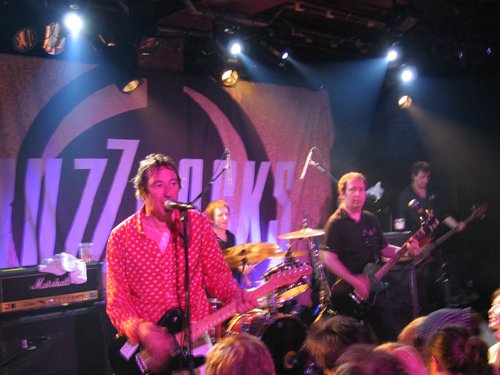
Buzzcocks 2006First-gen Brit punk band is an inspiration to groups that follow.

Kansas City Star

By Joel Francis

It’s hard to keep a band together for 30 years.
It’s even harder to stay relevant for that long. But to achieve both and outlast contemporaries like the Sex Pistols, The Clash and the Damned – the original families of the British punk movement – is a rock ‘n’ roll hat trick.
“It’s strange to think that we’re the last gang in town. Funny how that works,” Steve Diggle, the Buzzcocks’ guitarist and singer. “Our inspiration is still to write good songs, and it’s still possible for us to do that. People – the younger people now, which surprises me a bit – still want to see us and that’s what keeps us going.”
The band’s durability has not gone unnoticed.
“We just got Mojo magazine’s Inspiration Award,” Diggle said. “I’m not big into awards but I think this one sums it up, rather than saying ‘lifetime achievement’ or something.”
Diggle may not be big into awards because, as he later revealed, this was the first one the band has received.
“We’ve never won an award in our life, but this is a good one to have,” Diggle said. “It was hard to accept without freaking out a bit because Elton John was there saying ‘I love the Buzzcocks.’”
John, who was being inducted into Mojo’s Hall of Fame, also said he’s had a ball performing the Buzzcock’s classic “Ever Fallen in Love.”
The Buzzcocks formed in Manchester in 1975. Singer/guitarist Pete Shelley, the other longest-tenured member of the band, met Diggle at a Sex Pistols show and asked him to be the band’s bass player.
“In Britain at that time music was stale all around us. It was all progressive rock bands, but there was no music for our generation,” Diggle said. “We made the most uncommercial music possible, with rough guitars and weird mixes.”
After a series of artistically successfully/commercially dismal singles and albums the band broke up. Foreshadowing the current reunion trend by nearly a generation, the classic Buzzcocks lineup regrouped in 1989.
“It was supposed to be a two-week tour of America, because there was no farewell tour before,” Diggle said, explaining why the band regrouped. “From my point of view, me and Pete were getting on and things were cooking between us.”
Shelley and Diggle permanently returned the Buzzcocks to the music scene in 1990, when bass player and producer Tony Barber and drummer Phil Barker were hired. The quartet has played twice as long as the original incarnation.
“You know on the first day if it’s a good decision” to reunite, Diggle said. “You have to have your head on straight, be realistic and analyze it. Is it as good?
If a band can’t perform as good, if not better, than it did before, there’s no point in getting back together, Diggle said.
Music had changed a lot in the Buzzcocks’ absence. Punk had given way to a new wave on the carts and hardcore in the underground.
“In some ways everyone is a punk rocker now. (Punk) is a long way from what we started,” Diggle said. “These new bands have taken the works of Shakespeare and put on a play. What they’ve done is make it entertainment.”
Far from being bitter, Diggle is happy to headline the Warped Festival and share the bill with so many younger bands.
“I’m not knocking them completely,” Diggle continued, “but they’re a few yards, or maybe 200 miles, away from what we do.”

Concert Review: Wakarusa Music Festival (2006)

flaming-lips.jpg

The Kansas City Star’s Back To Rockville blog

By Joel Francis

Flaming Lips
Bubbles, confetti, lights, super heroes, Santa Claus, space aliens, streamers, balloons and smoke.
We’re only halfway through the Flaming Lips first song and it already feels like the greatest party ever thrown.
The Lips closed down the main stages at Wakarusa on Saturday night by bombarding their audience with happiness for 90 minutes. The props might have seemed like a gimmick if the songs and their performances weren’t equally incredible. Thankfully, they were.
Lips singer Wayne Coyne played the role of merry prankster, shooting confetti, singing with puppets, asking to be pelted with glo-light sticks and rolling over the crowd in a giant bubble.
The heat of the day was gone and a cool breeze had settled in from a storm that was still a few hours off. Maybe Coyne himself put it best: “I don’t want to exaggerate, but this might be the most perfect moment of the whole festival.”

Setlist: Race For the Prize, Bohemian Rhapsody, Free Radicals, Yoshimi Battles the Pink Robots (part one), Yoshimi Battles the Pink Robots (part two), Vein of Stars, The Yeah Yeah Yeah Song, The W.A.N.D. , She Don’t Use Jelly, Do You Realize, (encore:) A Spoonful Weighs a Ton

Les Claypool
The undeniable highlight of Les Claypool’s 80 minute set was when heavy metal guitarist Buckethead and funk keyboard legend Bernie Worrell jumped onstage about an hour into the set.
If that pairing sounds eclectic, consider that Claypool’s five-piece band comprised a xylophone, sitar, saxophone, bass and drums. Under the leadership of Claypool’s dexterous bass playing the ensemble was a simultaneous homage to Ravi Shankar, Ornette Coleman and the Violent Femmes’ Brian Ritchie.
The songs averaged 10 minutes in length and there were several head-scratching moments, including a brief sitar/xylophone duet, but most seemed to work.
Other high points included “David Makalster,” “One Better” and the bluegrass inflected “Iowan Gal,” which Claypool performed alone on a bass affixed to a banjo head.

Bernie Worrell and the Woo Warriors
Bernie Worrell is the consummate sideman. A major architect of George Clinton’s P-Funk sound and hired gun in the Talking Heads’ live masterpiece “Stop Making Sense,” he somehow managed to sound like a sideman in his own band.
From behind his elevated rack of six keyboards at extreme stage right, Worrell pounded out everything from Atari noises to “London Bridge Is Falling Down” while his lead guitarist sang the majority of songs and worked the crowd. The six-piece band laid the funk on heavy for just over an hour and even managed to make “She’ll Be Comin’ ‘Round the Mountain” sound cool.
P-Funk was only represented sonically, while the Talking Heads “Burning Down the House” closed the set.

Cracker
Twenty minutes after dismissing Camper Van Beethoven, David Lowery was back onstage with a new outfit and guitarist, keyboard player and fresh catalog.
Cracker is heavier and wants to be played on the radio more than CVB, but it also hasn’t changed its sound much in the past 14 years. Earlier gems like “Eurotrash Girl” and “Low” sounded great alongside later works like “One Fine Day,” “Brides of Neptune” and even material debuted from Cracker’s just-released seventh studio.
The oppressive mid-day heat thinned out some of the crowd, but for every person who left, another one, intrigued by the sounds from afar, took his or her place.

Keep Reading:

Wakarusa Music Festival (2008)

Wakarusa Music Festival (2007)

Wakarusa Music Festival (2005)

You Want Moe Jams, You’ve Got Moe Jams

May 3rd, 2006

Fans appreciate band making its music assessable to them.

Kansas City Star

By Joel Francis

Jam band.
The words evoke images of tie dyed clothing, long hair, VW vans and the aroma of perspiration and smoke.
Yet despite its improvisational and organic nature, the genre is diverse and its fans are committed.
Take Moe, the upstate New York quintet.
“One thing I’ve discovered is that people don’t come to our shows by accident,” guitarist Al Schnier said. “If you show up, you’ve meant to be there. Either you’re a fan, or a friend goaded you into coming, or you heard our music.”
Some of those conscientious first-timers are likely to be surprised by what they hear. The twin-guitar attack of Schnier and Chuck Garvey owes just as much to Eddie Van Halen as it does Duane Allman.
“The thing about the jam band scene is that there’s a wide spectrum of music,” Schnier said. “The Yonder Mountain String Band are essentially a bluegrass band, but they put on a long show that stretches out and is definitely not the traditional bluegrass structure. Then there’s the Disco Biscuits, who incorporate progressive rock, classical and electronica into their shows and music. And yet both are jam bands.”
Keeping fans in the fold is vital to a band that tours hard and makes records sparingly. Moe hasn’t yet released a follow-up to 2003’s “Wormwood.”
“Going into the studio is still something we struggle with,” Schnier said. “I’m not sure it makes sense financially. After 15 years, we’ll get some … radio play, but I don’t expect us to cross over into the mainstream. We can’t afford to pay radio enough to play our records.”
So on its Web site, the band states that “audience taping is highly recommended at all times.” Those live recordings give fans some new material to listen to, but even Schnier admits: “My favorite things to listen to are not live albums but studio recordings: ‘OK Computer’ or Abbey Road’.”
Moe returned to the studio not once, but twice this year. Early recording sessions resulted in “vague, lifeless versions” of songs the band first presented long ago in concert. So the band returned, “deconstructed the songs and exploited the studio,” Schnier said.
With one studio album in the can and a live DVD planned for fall release, new songs are floating around.
“We’re geared up to do a studio album of new material, which we can take out and premier live like a traditional band does,” Schnier said,. “We constantly have material. It’s a matter of scheduling it in. The other side of being in a jam band is that you’re always on tour.”
Fans will support what the radio won’t, provided they always have an outlet to tap into.
“You have to hit as many markets as possible with frequency,” Schnier said. “Make shows as reasonably close together as possible so people can come two nights in a row if they want.”
But if fans are encouraged to follow the band, they need variety.
“The same show every night doesn’t work. People won’t come,” Schnier said. “So you have to be willing to take chances onstage. And it follows suit that you’d better have a semi-decent grasp on an instrument to pull it off.”
Just as important is the relationship between band and fans, he said. Before there was Myspace or even the Internet, Moe gave away its music.
“If people came with a blank tape, we would give them a copy of a prerecorded show,” Schnier said. “The (record) industry doesn’t get it. If you make yourselves available, fans will build a lifelong relationship.”

Concert Review: Dinosaur Jr April 13 at Liberty Hall

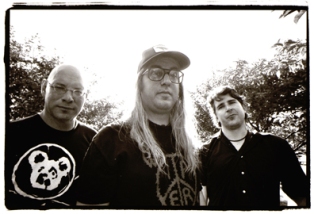
Dinosaur Jr

By Joel Francis
The Kansas City Star

There’s just no pleasing some people.
Faced with the opportunity to see the original lineup of Dinosaur Jr perform for the first time in 18 years, some morons would rather throw trash onstage and heckle the band.
Fifty minutes into the band’s set and partway into the song “Sludgefeast,” singer and guitarist J Mascis angrily knocked his mic stand over and threw his guitar to the ground while he walked offstage. The rest of the band – bass player Lou Barlow and drummer Murph – followed, leaving the audience to piece together what happened: someone hit Mascis’ mic stand while he was singing, and the microphone hit him in the mouth.
Mascis confirmed that when the trio returned a few minutes later.
“Sorry about that. I just didn’t want to lose my teeth,” he said as the band assaulted the song “Kracked,” which led into “Freak Scene,” which merged into “Chunks.”
The trio had been playing well before impromptu break in the show; when they returned to the stage, they played even louder, more aggressively and, well, better.
They soon left again. Most of the fans used this time to coax them back out for an encore; but someone started throwing trash onstage. He was escorted out.
After two rushed numbers, including a cover of “Just Like Heaven,” Dinosar Jr left for good. They had been onstage for 75 minutes.
The evening started more promisingly. After nearly two decades of fighting and bitterness, all seemed forgiven and forgotten when Barlow and Mascis traded stanzas on the opening number, “Gargoyle.”_The band and its material, which drew almost exclusively from its first three albums, sounded astonishingly fresh, especially when they stretched out on “Forget the Swan” and “Bulbs of Passion.”
The unlikelihood of this reunion was not lost on the crowd, many of whom were too young to have seen the band the first time around. The show wasn’t sold out, but almost everyone seemed delighted and appreciative of anything played for them – almost everyone. It’s a shame a couple jerks had to interrupt the evening for everyone.

Setlist: Gargoyle, Tarpit, No Bones, the Wagon, Forget the Swan, Bulbs of Passion, the Lung, Little Furry Things, Lose, In A Jar, Sludgefeast (aborted), Kracked, Freak Scene, Chunks. Encore: Just Like Heaven (The Cure cover), Mountain Man

Keep Reading:

Out of the Tar Pit Back Onto the Stage

Dinosaur Jr Sets High Bar For Reunion Albums

Out of the Tar Pit Back Onto the Stage

Dinosaur Jr

By Joel Francis
The Kansas City Star

Anybody can do a reunion tour these days.
Dead or unwilling bandmates are no longer an obstacle; just ask the Doors, INXS, Queen or the New Cars.
Two years ago the Pixies destroyed expectations by burying the hatchet and reuniting. Now Dinosaur Jr has gone one further: Not only is the band’s founding lineup touring together for the first time since the ’80s, but they also are recording new material.
“We’re not really rushing ourselves or pushing hard,” bass player Lou Barlow said of his work with guitarist and songwriter J Mascis and drummer Murph. “We’re not working long days, but slowly it’s kind of taking shape. It reminds me of the Fog stuff J’s done.”
Recording the new Dinosaur Jr material at J’s house has been a homecoming on more than one level, Barlow said.
“When we’re done working there, I go back and stay with my parents because all this is out in Massachusetts, and I live in California,” Barlow said. “We’re doing things that are familiar but much mellower. It’s like going home. It’s unique and it’s Dinosaur but without the drama.”
Drama was one of the hallmarks of the initial tours, where tensions often ran high.
“We were never at each other’s throats,” Barlow said. “There was nothing outward; it was all very repressed. Any warfare was done covertly. It was a war of attrition. Everyone would consciously or unconsciously try to wear each other down. It wasn’t fun.”
The more things change, the more they stay the same — sort of.
“It’s like that now but way softer,” Barlow said with a laugh. “There’s a sense we can enjoy ourselves now.”
From 1984 to 1989, Dinosaur Jr single-handedly brought the guitar solo back to post-punk underground rock, helping pave the way for Nirvana and the ’90s grunge movement.
“It was stunning to realize how loud he plays guitar,” Barlow said. “After I was kicked out I never played in a band as loud as Dinosaur Jr.”
In the interceding years, Barlow sued his former band over royalties and wrote angry songs about Mascis. But in the last few years their paths began to cross onstage again.
“J and I played onstage a couple of times,” he said. “There was a Stooges thing with the Asheton brothers and Mike Watt where I did a guest vocal. Then we did a benefit show in western Massachusetts where J played a solo with Sebadoh.”
Those shows planted the seed that resulted in a reunion show at last year’s Lollapalooza in Chicago. From there a larger tour was booked.
“The agenda is clear: J wants to make a ton of money, and Murph and I were hired to help him do that,” Barlow said. “But we’ve all been enjoying the shows.”
So far the material has drawn from the only three albums Dinosaur Jr recorded as a trio, “Dinosaur,” “You’re Living All Over Me” and “Bug,” and the song “The Wagon.”
“ ‘The Wagon’ is the first thing they recorded after kicking me out,” Barlow said. “I remember I bought the single, listened to it and liked it. Me playing on a Dinosaur Jr song is like me claiming it because my style is so different. Stylistically this is a pretty close fit to me.”
Barlow was fired shortly after “Bug” was completed. Murph lasted a few more albums but had much less of a presence in the studio. By the early ’90s Dinosaur Jr was basically a glorified J Mascis solo outfit.
“I’m glad I was kicked out because the path I took couldn’t have happened otherwise,” said Barlow, whose post-Dinosaur bands include Sebadoh and Folk Implosion. “Maybe someway by touring we’re reclaiming the influence we did have, and I’m reclaiming what I gave to the band Dinosaur that went on to big things after I was gone.”
Until then Dinosaur Jr is accomplishing something it rarely achieved in the ’80s: fun.
“Every night there’s a moment where we’ll be playing a song, and I’ll think, ‘Maybe this is the best I’ve ever played this song,’ ” Barlow said. “That’s cool.”

Keep reading:

Concert Review: Dinosaur Jr April 13 at Liberty Hall

Dinosaur Jr Sets High Bar For Reunion Albums

Top 10 albums of 2005

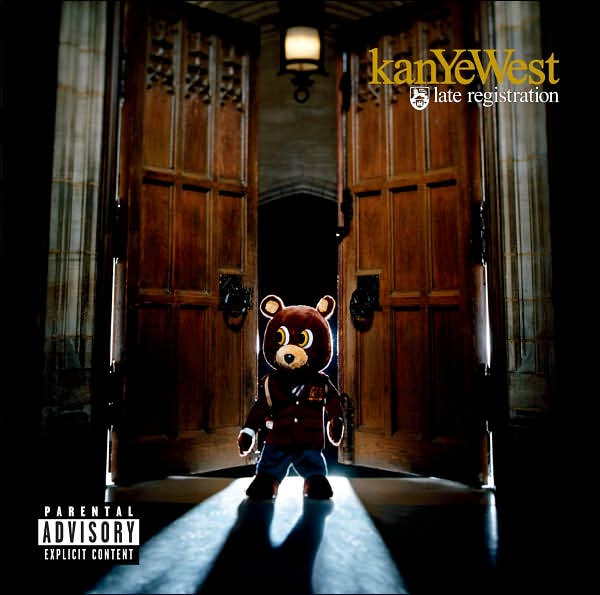
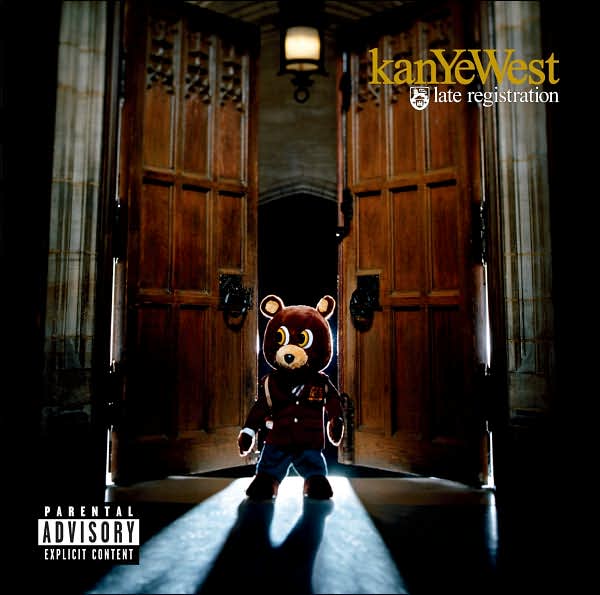
Kanye West, “Late Registration”
Sigur Ros, “Takk…”
Common, “Be”
Clap Your Hands Say Yeah, “Clap Your Hands Say Yeah”
Bettye LaVette, “I’ve Got My Own Hell To Raise”
Matisyahu, “Live at Stubb’s BBQ”
Beck, “Guero”
Eels, “Blinking Lights and Other Revelations”
White Stripes, “Get Behind Me Satan”
Robert Plant and the Strange Sensation, “Mighty Rearranger”

Review: Son Volt with the North Mississippi All-Stars and Split Lip Rayfield

Oct. 8 in Westport

Kansas City Star

By Joel Francis

Four months ago, Son Volt took the main stage at the Wakarusa Music Festival at Clinton Lake early on Friday afternoon. The sun was hot and the oversized crowd seemed more interested in talking to each other than paying attention to the music.
Saturday night’s show in the parking lot across the street from the Beaumont Club in Westport couldn’t have been more different. The sun was down and the temperature hovered around 40 degrees. The crowd of more than 1,500 people hung on every word of lead singer and songwriter Jay Farrar.
The Wakarusa show was one of the revamped Son Volt’s first shows together (only Farrar remains from the band’s original ’90s incarnation).
The band’s album “Okemah and the Melody of Riot” has also been on store shelves for a couple months now, giving the fans a chance to become familiar with the new material. Some in the crowd were even requesting the newer songs, which is always a good sign.
Farrar and his four-piece band played 10 of the album’s 12 songs, half of those coming as the show’s opening five numbers. But after that fifth song, Farrar announced “something from a long time ago.” The band launched into “Medicine Hat,” knowingly nodding at the material the most people came to hear. From there it was a sprinkling of more “Okemah” material alongside classic Son Volt songs from “Trace,” “Straightaways” and “Wide Swing Tremolo.”
If “Medicine Hat” hinted at the band’s best era, the new song “Medication” was the fulcrum on which the show’s momentum rest.
“Medication,” a Indian-influenced drone and one of “Okemah”’s stand-out cuts, ended with Farrar ferociously banging his fists against the body of his guitar as the rest of the band jammed. The song abruptly collided with “Route” from “Trace” and was the best one-two punch of the 90 minute set.
The steadily dropping temperature thinned the crowd considerably as the evening progressed. By the end of the night, the crowd’s brave remainders were either toasted or frosty, but all were rewarded.