Stevie Wonder – “Fingertips (Part Two),” Pop #1, R&B #1
Little Stevie Wonder’s first single joins Pink Floyd’s “Another Brick in the Wall (Part Two)” as the only “part twos” to hit No. 1 on the U.S. chart. Another notable “part two” is Gary Glitter’s “Rock and Roll (Part Two),” which was a No. 7 U.S. hit.
Not only did Wonder not write this song, he didn’t even need the whole number to sell his charisma and talent. “Fingertips (Part Two)” is less a song than a vamp that Wonder builds up with his harmonica playing and joyous singing. Even if there aren’t any real lyrics, it’s impossible not to smile and sing along.
It took Wonder nearly two years to land on the charts with this song and nearly as long to find a follow-up hit, 1965’s “Uptight (Everything Is Alright).” The complete 6-minute performance of “Fingertips” opens Wonder’s 1963 live album, “Recorded Live, The 12 Year Old Genuis.” — By Joel Francis
The bouncy piano that opens and propels this track may be pure Chicago blues and Gaye’s singing more jazz than soul, but the backing vocals are pure Motown.
Supported by Martha and the Vandellas, Gaye reunited with Norman Whitfield and Mickey Stevenson for this jaunty ode to label boss Barry Gordy’s sister, Anna. This songwriting trio may have misfired on “Beechwood 4-5789,” but everything works here. Not only was the song Gaye’s first Top 10 hit, but Anna Gordy went on to marry Gaye. — By Joel Francis
(Above: the video for “Most of the Time” off the “Oh Mercy” album.)
The second installment in this series comes from McKay Stangler, public relations writer for the University of Kansas Medical Center. For more of McKay’s writing, check out his great blog.
I wish I had a great Dylan story.
I wish I could say that some foggy memory lay buried in the deep recesses of memory, a brief excerpt from the halcyon days of youth in which I first discovered Robert Zimmerman. A day when I heard those first notes of “Sara” or “Oh Sister” and was set on an irreversible path toward musical enlightenment.
I wish the 15-year-old me had pulled a dust-covered copy of Blonde on Blonde from a bookshelf in my parents’ basement and become instantly captivated with its sounds. Or perhaps that some tune hummed by the corner vagabond would have remained lodged in my mind’s musical echo chamber, quickly crowding out the assorted noise of the mid-90s, pushing into oblivion the Collective Souls and Blink 182s of the time.
Alas, the truth is much more boring. Although my parents did have Blonde on Blonde, I was first exposed to Dylan through the local oldies radio station. This fixture of the family autos and our kitchen was where I first heard the (overplayed) classics such as “Like a Rolling Stone” and “Knockin’ on Heaven’s Door.” I liked them but mostly because they became family sing-alongs by the second verse. Hell, I had the same feelings for “Hang on, Sloopy” and “Daydream Believer” – still do, in fact.
My Dylan knowledge expanded exponentially in college, when I lived for two years with an avowed Dylan-ophile. Tom collected bootlegs and basement tapes with a fervent fixation bordering on obsession – and it was great. He exposed me to the Dylan pop culture often forgets, the wandering, brooding, haunted man who produced some of his best work when the industry was busy forgetting his genius. I heard enough to know I wanted to hear more.
In August 2001, I saw Dylan live for the first time, at the Missouri State Fair in Sedalia with my roommate and another college friend. It was a forgettable venue: we sat in the grandstand of the racetrack while much of the man’s sound was lost in the open summer air. Much of our attention was immediately seized, though, by the charming rural couple seated behind us. They were from Smithville, Mo., and were named, somewhat improbably, Jim and Jane Smith. They’d had a few beers already – the only option at the concert was the gargantuan 24 oz. cup – and said they’d buy us a beer if we correctly predicted what Dylan’s opening song would be.
We thought we were golden. After all, we had my roommate Tom, the Dylan savant! He went with “Roving Gambler,” which had been the opening song at a few recent concerts he had attended. Tom was wrong, but thanks to Jim’s video poker windfall we were clutching beers anyway. Despite being underage, Jim was happy to buy us a round. And then another. And then another. And then about five more.
The end of the concert found us a drunken and boisterous crew, with us promising to visit the munificent couple in Smithville. Dylan’s spotlight had been improbably stolen by the generous, corruptive strangers. Our groups diverged in the main concourse when Jim insisted on throwing money at sideshows. The three of us wandered around for a bit but eventually set a course for the parking lot.
Then we saw Jane. She was wandering alone, drunk and confused. When we asked about her mate, she told us he was lost. L-O-S-T gone. Our offers to help find him were mixed with poorly suppressed laughter at the inanity of the situation. We had Jim paged over the Fair loudspeaker, then flagged down a Missouri Highway Patrol golf cart to help look.
And this was how our night ended. The three of us plus a deeply intoxicated Jane Smith, riding around the Fair with Officer Friendly, finally locating Jim behind a row of public toilets. He was passed out cold, but upon rousing was mighty glad to see Jane and, oddly, us. We rode with them back to their campsite. The magnitude of the night’s misadventures was too much for three drunken students to comprehend.
And this, I suppose, is what Dylan means to me: memories of friendship. Hearing his songs makes me think of college, of sitting around with Tom, futilely trying to stump him with Dylan trivia. Of meeting a couple who would change the course of our night and give us a story to tell for the rest of our lives. Of insisting that the friendly officer take his picture with the five of us, right before Jim passed out again, all of us grinning broadly around the golf cart amid the sparkling bonfires of the campsites. Of listening to Oh Mercy on the way home, none of us speaking a word about the evening until we pulled into a late-night eatery. Of the three of us laughing hysterically, even months or years later, as we recounted the tale for friends.
(Above: “Rainy Day Women #12 and 35” from Woodstock ’94.)
This is the first installment of what will hopefully be an ongoing feature. I asked a lot of my friends to write about their introduction or experiences with Bob Dylan’s music. The goal is to show that Dylan belongs to the ages, not just the Baby Boomers, but the effect is a series of testimonies.
Brad S., a recent transplant to Los Angeles, kicks off the series.
Dylan’s one of those guys like Elvis Costello, Tom Waits, and Nick Cave: old songwriting warhorses that mostly fly under the radar of popular culture but are revered by nearly everyone who is into music. These musicians have been creating for so long, their bodies of work so varied, yet their number of “hits” are so slight, that each new listener is likely to come away with a completely different set of songs that they deem best. I think I first got hip to Dylan after really getting into the Beatles. Learning that they were contemporaries and that Dylan had an influence on them made me think “Okay, clearly he’s worth checking out.” So I picked up a cassette of “Blonde on Blonde” and … Hated it. Except for “Rainy Day Women,” a sentiment that any high school boy can get behind. But the rest of it was so different than the ‘60’s pop that I was just getting into. My musical appreciation still had some developing to do. And I did keep the cassette, maybe anticipating this. And by the time I was a sophomore in college and got a CD player (that is so weird to actually type out), I got Dylan’s Greatest Hits 1 and 2 and I would gradually immerse myself more and more into his music. Weirdly enough, the element that most people hate about Dylan is one of my favorite elements: his voice. Given that I’m also a Tom Waits fan, I clearly have a tolerance for voices that aren’t “pretty.” I think these gravelly/nasally/whatever voices underscore a rootsy, naturalistic, non-refined, unpretentious core with which their subject matter often explores.
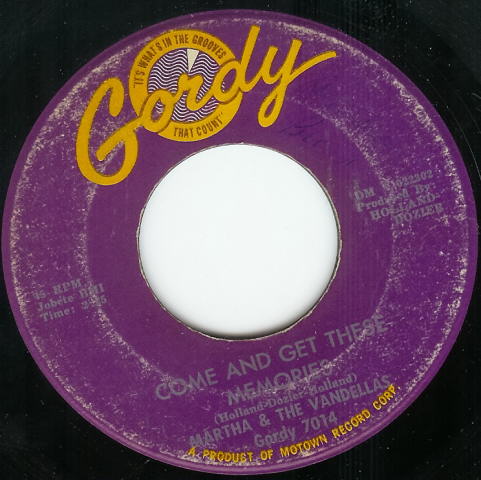
Martha and the Vandellas – “Come and Get These Memories,” Pop #29, R&B #6
“Come and Get These Memories” would be less memorable were it not the Motown debut of both singer Martha Reeves and the songwriting team of Brain Holland, Lamont Dozier and Eddie Holland.
Though Holland-Dozier-Holland would dominate both the charts and the Motown landscape during the mid-‘60s, they got off to an inauspicious start here. Reeves is confident in her delivery, but the songwriting and arrangement is tepid. Before the first minute is over we’ve heard the chorus three times and two verses. The piece sounds more like a jingle than a song at this point. The horns bop back and forth without swinging and the backing vocals of “come and get ‘em” are too peppy to convey any sense of heartbreak.
The song fares better in its second half. The horn break at the halfway mark is like flipping a light switch. The brass arrangement grows more aggressive and supportive and Martha, the Vandellas and the Motown musicians really swing through the bridge (“because of these memories/I never think of anybody but you”) that fades into the outro. It’s as if the cast has finally been given direction.
According to legend, Tom Petty and the Heartbreakers were in the studio working out the arrangement to “Breakdown,” when someone walking by in the hall recommended they move the guitar lick from the outro to the beginning. It’s a shame that no one offered similar advice here. Instead the public would have to wait five months for Martha and Holland-Dozier-Holland’s follow-up effort, “Heatwave.” They had mastered the learning curve by then. — by Joel Francis
Above: Chris Hillman and Herb Pederson perform “Turn Turn Turn.”
By Joel Francis
The Kansas City Star
Chris Hillman is not a household name, but the influence of the bands he has been a part of has emanated from home stereos for nearly two generations. As a member of the Byrds, the Flying Burrito Brothers and Manassas, Hillman helped blur the lines between rock, country and folk.
He visited all parts of his career during his free 100-minute concert Friday night at Olathe’s Frontier Park. His time with Gram Parson’s Burrito Brothers was represented by “Wheels,” which featured accompanist Herb Pederson on lead vocals. Two songs off the first Manassas album (with Stephen Stills) were also performed, but it was, of course, the Byrds numbers that drew the most applause.
“Turn Turn Turn” appeared early in the set and “Eight Miles High” closed it. In between, Hillman and Pederson performed several songs from their time in the Desert Rose Band: staples like “Together Again,” which was dedicated to Buck Owens, “Good Time Charlie’s Got the Blues” and “The Water Is Wide.” Former Bonner Springs resident and fellow Byrd Gene Clark got a shout-out before a reading of his “Tried So Hard to Please Her.”
Hillman prefaced “Mr. Tambourine Man” with a story about joining the Byrds and how the group didn’t like the song the first time they heard it. Crediting Roger McGuinn with the guitar arrangement, Hillman proceeded to play it in a style closer to Bob Dylan’s original version.
With Pederson anchoring on six-string acoustic guitar and Hillman switching between mandolin and guitar, the vibe was more Greenwich Village than Monteray Pop. While the performances were well-executed, the limited instrumentation and style started to wear thin about halfway through.
The set picked up when Sam Bush joined the duo for three songs on the violin. Bush’s fleet-fingered fiddle playing drew big cheers on the Grateful Dead’s “Box of Rain,” but “The Old Cross Roads” was the highlight. The blend of Hillman and Pederson’s vocals recalled the Louvin Brothers, while Bush’s violin accentuated the country-gospel arrangement.
Hillman complained throughout the night about the humidity. It may have killed the tuning on his mandolin, but it also provided a platform for Hillman to tell stories about his influences and songwriting while tuning between songs. Although the humidity may have been miserable to a Southern California native like Hillman, a Midwesterner couldn’t have asked for a prettier mid-July evening.
About 500 people spread over the outfield for the show. Seated in camping chairs or on blankets, they brought their kids, dogs and magazines. With conversation at more than a murmur throughout, it was clear the music was just a reason to be outside, not the focus.
That was too bad, because while Peterman wasn’t McGuinn or David Crosby, his vocals complemented Hillman’s nicely. Both artists have been honing their craft for a long time, and they played off each other with a musicianship that is skillful, but not showy.
Bush concluded the evening with a set of his own. Leading his quintet on mandolin, Bush married traditional bluegrass with a rock backbeat on songs like Randy Newman’s “Mr. President (Have Pity on the Working Man).”
Underground artist Girl Talk has generated some buzz with his second album, which layers Public Enemy over Heart, mashes M.I.A. with the Cranberries and mixes “C’mon N Ride It (The Train)” into “99 Tears.”
What Girl Talk does on his laptop, the Roots did live on stage for two hours on Thursday in the sold-out Harrah’s Voodoo Lounge. Whether it was bass player Owen Biddle quoting the melody for Duke Ellington’s “Caravan,” MC Black Thought leading the way through Curtis Mayfield’s “Move On Up” or between-song riffs on “Iko Iko” or “Ding Dong! The Witch Is Dead,” the septet touched on nearly every facet of recorded music.
The Roots’ biggest hit, “You Got Me,” was also the most transformed. The song somehow morphed from neo soul ballad into “My Favorite Things,” a bass solo/metal jam and Led Zeppelin’s “Immigrant Song” before wrapping up.
The evening started quietly, with guitarist Kirk Douglas alone onstage, noodling away. With a tip of the hat to the Talking Heads, the other band members slowly joined him and picked up their instruments. By the time everyone was assembled MC Black Thought ripped into “I Can’t Help It.” They wouldn’t let up for the next hour.
Prowling the stage like panthers, the super-tight ensemble dropped volume and tempo on a dime, majestically flowing each song into the next regardless of style or arrangement — the ultimate mixtape.
There were no down moments or low points. Each song fed off the previous number’s energy and all were spectacular. Of particular note was a reading of “Quills” taken at Ramones speed that showcased Black Thought’s amazing breath control and stamina.
When most bands want more low end they turn the bass up. The Roots hired a tuba player. Damon Bryson, a.k.a. Tuba Gooding Jr., leapt joyously about the stage despite his heavy instrument, blasting away “All in the Music” and buoying the typically horn-heavy “Jungle Boogie.” Longtime Roots collaborator James Poyser sat in for missing keyboard player Kamal Gray and added a Dr. Dre synth line to “I Will Not Apologize.”
The centerpiece of the evening was a 15-minute rendition of Bob Dylan’s “Masters of War.” Performed by the trio of drummer Questlove, Tuba and Douglas, the song was previously played at the band’s rapturous performance in Kansas City at Harrah’s last year. Questlove said they were going to keep doing it until the war in Iraq was over. The song bobbed and weaved its way through the “Star Spangled Banner,” “Taps,” a military drum cadence, a Black Sabbath send-up and a drum solo. Owing more to Jimi Hendrix’ “Machine Gun” than Woody Guthrie, the song ended with Douglas and Tuba working their way through the crowd, soloing furiously. It was an eerie prelude to Independence Day.
For people who need classifications, the Roots are typically filed under hip hop. For everyone else, they are everything that’s right with music today.
Setlist: I Can’t Help It, Rising Up, Please Don’t Go, In the Music, Star, Quills, Step Into the Realm, Proceed, Long Time, Mellow My Man, Act Too (The Love of My Life), Criminal, Masters of War, I Will Not Apologize, You Got Me, Get Busy, Jungle Boogie/Don’t Feel Right, The Next Movement (encore:) The Seed 2.0, Men at Work
Below: The first third of “Masters of War” from Montreal last May.
The Miracles – “You’ve Really Got A Hold On Me” Pop #8, R&B #1
Another stone classic from the pen of Smokey Robinson. Counting his songs for Mary Wells, this is Robinson’s fourth No. 1 hit (his first song with Wells stalled at No. 2 on the R&B charts). The song was famously covered by the Beatles It continues to be popular today. Cyndi Lauper covered it in 2003 and it popped up earlier this year on actress Zooey Deschanel’s delightful album with M. Ward, “She and Him.”
It’s no surprise so many artists have been drawn to this song. The melody and backing vocal lines are strong and supportive enough that the lead singer doesn’t need a great voice to pull it off (check out Cher’s version with then-husband Gregg Allman for proof). On the other hand, good vocalists have plenty to make their own. British invasion bands loved it for the snakey guitar line that could cover missing piano and horn parts.
The Miracles have the whole package, though: Robinson’s great singing, the full complement of Motown’s Funk Brothers musician’s stable and Barry Gordy’s impeccable production. The crescendo peaks with Robinson playing off the Miracles and pleading with his woman to “hold me (please)/hold me (squeeze)/hoooold me.” This certainly wasn’t the first time backing vocalists had been used so effectively, but it is a great demonstration of the subtle creativity Robinson employed in arranging the song. It’s no wonder the Beatles were so anxious to pay tribute to their idol when they finally reached American shores a little over a year after this song was released. — By Joel Francis
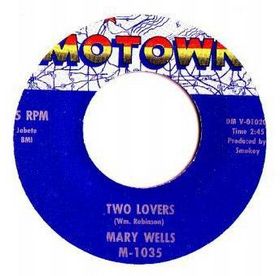
Mary Wells’ follow up to “You Beat Me to the Punch” found her back with Smokey Robinson with the same results: a No. 1 R&B hit.
This song tends to get lost in the wake of the runaway success “My Guy,” but is the most complete musical Wells/Robinson collaboration. Here the sophistication of “The One Who Really Loves You” is improved – without being overshadowed – by a great chorus. What sounds scandalous at first blush, a early ‘60s black women singing openly about having more than one lover, takes a great turn in the final verse. (I’ll leave it to you to listen to the twist for yourself.)
By this point Wells had really stepped into her own as a singer. Her double-tracked vocals are both confident and confiding, as if she’s sharing a seductive secret. Wells sounds like a woman who could not pull off having two men at once, but enjoy it. And yet, there’s some hesitation and vulnerability present as well. Wells isn’t just boasting about her love, she’s working it out in her head at the same time.
This song, along with Wells’ two other No. 1 hits, demonstrates why Wells was Motown’s first true diva and remains one of its best female vocalists. — By Joel Francis
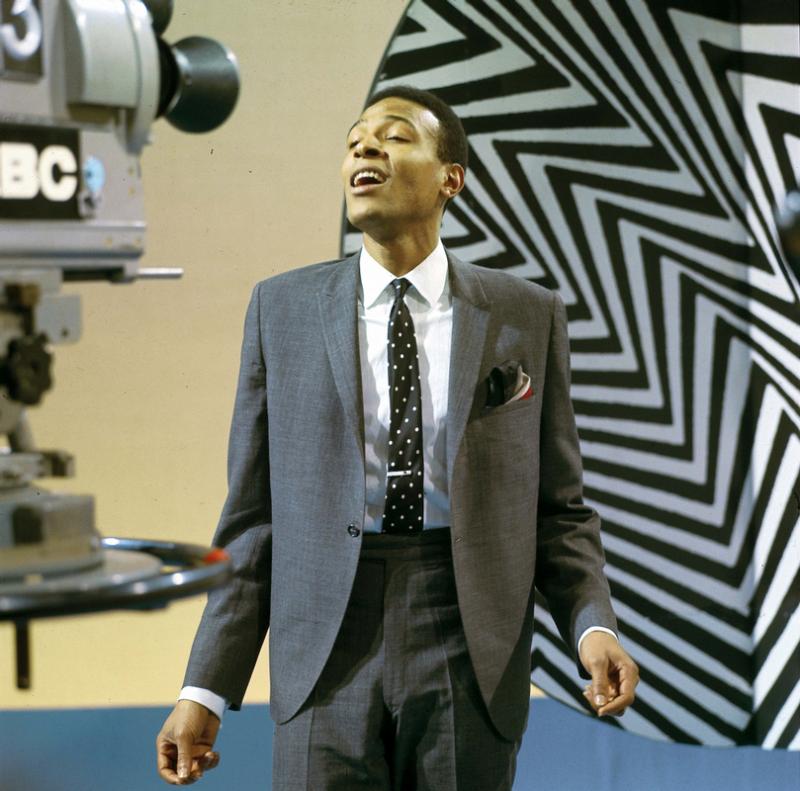
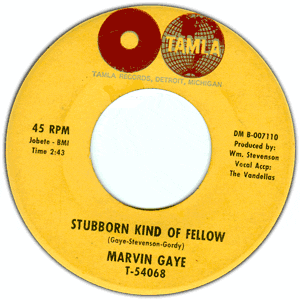
Marvin Gaye – “Stubborn Kind of Fellow,” Pop #46, R&B #8
Aside from Smokey Robinson, no one completely dominates Motown’s landscape like Marvin Gaye. Gaye’s debut album was the second record released by the label – right behind the Miracles first platter. Gaye and Robinson’s songwriting credits littered the charts until the Holland, Dozier, Holland and Whitfield, Strong teams took over. Gaye was famously married to Barry Gordy’s sister, Anna, while Robinson named his first son in honor of the label’s founder. The impact and legacy of these two men is intertwined and it is impossible to imagine the Motown empire with them.
Gaye’s initially fancied himself a Frank Sinatra-styled singer. His vocals were always smooth, but the lounge vocals have moved out front to the sidewalk. The opening drum roll and “say yeah, yeah, yeah” vocal hook immediately draw in the listener. It’s a great opening, not only for Gaye’s first major Motown solo hit, but for his amazing catalog. — By Joel Francis



 joelfrancis.com