Green Ribbon Haikus

feedtheanimals_news
By Joel Francis

Before we bid farewell to 2008, let’s have some more haiku fun and revisit five albums that may not have made The Daily Record’s year-end, best-of list but still merit a listen.

Girl Talk – “Feed The Animals”
Is it art? Question
eclipses legalities.
WTF? Dance! Dance!

The Hold Steady – “Stay Positive”
Great songwriting, strong
performances. Forget Bruce,
Craig Finn holds his own.

Rachel Yamagata – “Elephants…Teeth Sinking into Heart”
Aching ballads and
torrid rockers on two discs.
Schizophrenic’s OK. 

Sigur Ros – “Med Sud I Eyrum Vid Spilum Endalaust”
Don’t speak Icelandic?
Who does? Same great songwriting,
new stripped-down approach.

The Roots – “Rising Down”
For once, band doesn’t
reinvent themselves. Solid,
if similar; guests thrive.

Mongol Beach Party will get its groove on with a weekend reunion

mbp
By Joel Francis

The Kansas City Star

The Mongol Beach Party reunion was already booked when Mark Southerland found out about it.

“I think what happened was (drummer) Bill (Belzer) booked the show, called (guitarist) Jeff (Freeling), and everyone else found out through third parties,” said Southerland, who plays saxophone in the band.

Although the idea had been floated casually in conversation before, this time no one said no. Seventeen years apart seemed like the right time to hook back up.

“When we started this band, none of us had been in bands before,” singer Christian Hankel said. “Now we’ve spent our lives since then in bands and music.”

Today Hankel and trombonist Kyle Dahlquist are part of Alacartoona; Belzer is in the New Amsterdams with Get Up Kid Matt Pryor; and Southerland is involved in several projects, including the Malachy Papers and Snuff Jazz. Bass player Scott Easterday fronts the reconvened Expassionates; and Freeling, the lone Mongol based outside of Kansas City, plays guitar with Chicago’s Blue Man Group.

“The fact that we’ve all continued on as musicians and none of us have set down our instruments has helped us reapproach the Mongol songs again,” Freeling said. “It’s not as if we’re reliving our glory days.”

Fans who show up at the RecordBar Friday and Saturday are guaranteed the same good-time, quirky dance-rock songs they heard nearly 20 years ago at the Shadow, Harling’s Upstairs and the Hurricane.

“I get the big sense that this isn’t just our reunion,” Hankel said. “People are using us as a way of getting together with their circle of friends from that time.”

Kansas City in the late ’80s was a different scene. There were fewer places to play, fewer outlets for exposure and fewer bands.

“Back then if you wanted to be known it was expensive and difficult,” Hankel said. “You couldn’t set up a MySpace page or Web site because those didn’t exist. You could make a CD, but that was worthless unless you could get somebody to play it.”

Instead the Mongols took whatever gigs they could get, even when it meant they were packaged with completely different bands like the Sin City Disciples.

“Bands were country or blues or whatever and had their own music scene that would go with them,” Easterday said. “We were different because we cut across the sub-scenes.”

Record producer Tom Mardikes was introduced to Mongols by his aerobics instructor, Freeling’s mother.

“Tom believed in a ‘Kansas City sound’ unique to our town,” Hankel said. “He took us to City Spark Studios, offered us unfettered access to the studio to record a full CD and promotion to college radio.”

“Toast,” the Mongols’ only album, was recorded in 1991. Long out of print, it was remastered and reissued this month.

“We included a few new additions to this version,” Easterday said. “There are our three demos cut at City Spark and a couple songs from a limited-edition cassette we made.”

Mongol Beach Party formed out of the Rockhurst High School friendships of Belzer, Freeling and Hankel and the musical partnerships forged at the University of Missouri-Kansas City. After five years of living together in a house at 43rd and Harrison, and a single-minded focus on the band, the group unraveled when Belzer joined Uncle Tupelo.

“Jeff Tweedy would come drunkenly into Cicero’s (a St. Louis club the Mongols sometimes played),” Belzer said. “I loved his band, and when I was talking to him one time the idea came up for me to tour Europe with them.”

Belzer couldn’t be blamed for taking advantage of the opportunity to play for bigger crowds and share the bill with Bob Mould, Michelle Shocked and bluesman Taj Mahal. He wasn’t the only Mongol looking to expand his horizons.

“Bill did not break up the band,” Hankel said. “Because we were so close emotionally, but starting to branch out artistically, there was enormous pressure within the group. Side projects were not part of the culture at that time.”

Today the only musical trend hipper than a side project is a full-blown reunion.

“I’ll be honest, I’m looking forward to the rehearsals more than the shows,” Hankel said last week. “Jeff and I were best friends before Mongol Beach Party, and we lost touch for a long time. I’m excited about reconnecting with these guys.”


mongol farewells
The Mongol Beach Party shows are Friday and Saturday at the RecordBar. The Friday show starts at 9 p.m. with opening act the Afterparty. The Saturday show starts at 9 p.m. with the Last Call Girls. Tickets for either show cost $10 in advance, $15 at the door. Advance tickets are available at the RecordBar or through groovetickets.com.

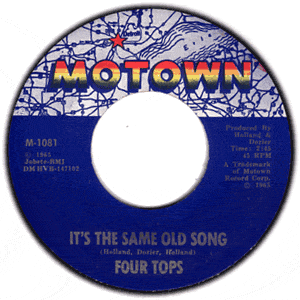
Four Tops – “It’s the Same Old Song”

341862
Four Tops – “It’s the Same Old Song,” Pop #5, R&B #2

By Joel Francis

There’s a good reason why “It’s the Same Old Song” sounds so much like the Four Tops’ previous hit, “I Can’t Help Myself:” both songs are built on the same chords, only in reverse order.

When “I Can’t Help Myself” hit No. 1 in June, 1965, the Tops’ old label, Columbia, tried to cash in by re-releasing a five-year-old Tops single. An upset Berry Gordy countered that Motown needed to quash that single with one of their own – in just 24 hours.

At 3 p.m. Holland-Dozier-Holland sat down to write. Just two hours later, the Tops had finished recording the number and the tune was ready to mix. By 3 p.m. the next day, 1,500 copies of “It’s the Same Old Song” had been pressed and sent to DJs across the country. The icing on this astounding feat of production came in the coming weeks, as the song eventually rose to No. 5 on the charts.

Like “I Can’t Help Myself,” the song is propelled by Funk Brother Jack Ashford’s vibe’s and Richard “Pistol” Allen’s drumming. The bubbly string arrangement also echoes “I Can’t Help Myself.” Unsurprisingly, the end result is a second helping of a joyous melody masking a melancholy lyric. If it ain’t broke….

In the late ’70s two groups proved it was anything but “The Same Old Song” with two very different covers. KC and the Sunshine Band turned in a disco version and Delroy Wilson gave a reggae reading. Neither translation made the charts.

Happy Clash-mas Eve

Above: Elvis Costello, Bruce Springsteen, Dave Grohl and Little Steven Van Zant do “London Calling” at the Grammys for Joe Strummer.

By Joel Francis

I remember getting the call from my brother-in-law like it happened yesterday. I was sitting in my apartment, it was the night before Christmas Eve, 2002 His words slowly trickled out: “Joe Strummer is dead.” The next day I loaded my CD changer with nothing but Clash and Mescelaros music and played it on shuffle for the entire day. Every Christmas Eve since then has been Clash-mas Eve, with at least a couple hours devoted to celebrating the art of Joe Strummer. To borrow a line from The Hold Steady’s “Constructive Summer,” let’s “raise a toast to St. Joe Strummer” and revisit five of his greatest moments.

“Letsagetabitarockin'” by the 101ers, from “Elgin Avenue Breakdown Revisited”
The 101ers drew more on the bluesy rock of the Rolling Stones and classic American rock and roll than they did on the jagged precursors of punk rock. Formed in 1974, Joe Strummer knew his band was done in 1976 after hearing just five seconds of the Sex Pistols. When the 101ers lone single, “Keys to Your Heart” came out later that year, the group was already over. Having seen the light, Strummer jumped ship to join the Clash, but the 101ers remained a curious footnote of Strummer’s pre-punk powers. In 1981, the group’s few studio and live recordings were cobbled together for release.
“Letsagetabitarockin'” kicks off that album with a shot high-octane rockabilly recorded in 1975 that would become the Stray Cats stock in trade several years later. Stylistically, it’s not much of a leap from this to the music Strummer was making in the Clash. The change in attitude and approach, however, is huge.

“1977” by the Clash, from “Super Black Market Clash”
Strummer eviscerates his former life as a pub rocker and skewers rock’s sacred cows with his cry of “no Elvis, Beatles or the Rolling Stones” on the chorus of “1977.” An early calling card for the band, it appeared on the b-side of their first single and helped establish them as the new guard of rock and roll.
Written by Strummer and Clash guitarist Mick Jones, the two packed a lot into their 99 seconds. In addition to denouncing the previous generation’s music, they draw on the Rastafarian prediction of July 7, 1977 bringing chaos and tip a hat to George Orwell’s novel “1984” by counting up to that year before ending abruptly.

“Brand New Cadillac” by the Clash, from “London Calling”
“Letsagetabitarockin'” and “Brand New Cadillac” are both rockabilly songs, but the similarity pretty much ends there. Strummer not only changed his surrounding musicians, his voice has transformed. His singing has the edge of a switchblade knife and you can hear his sneer as he angrily spits likes like “Jesus Christ, where’d you get that Cadillac?”
That line wasn’t in the 1958 version of “Brand New Cadillac” written and recorded by Vince Taylor and his Playboys. Taylor’s version was menacing in its own right back then, but he sounds less inclined to track his woman down. Strummer, on the other hand, is ready to do more than slash her tires.

“Magnificent Seven” by the Clash, from “Sandinista!”
Rap music wasn’t much older than punk when the Clash cut this track in 1981. Strummer throws stream-of-conscious lyrics over a bass loop composed not by Clash bass player Paul Simonon, but Norman Watt-Roy from the Blockheads. The arrangement over the loop is strongly influenced by reggae and dub, two of the cornerstones of the Clash’s sound.
The result, though, was unlike anything recorded up to that time. Preceding Blondie’s “Rapture” by six months, this was white rock’s first attempt to write a rap song.
Strummer delivers his story about a good working boy with his typical swagger, but throws a curveball in the third verse – the work isn’t to make ends meet, but to buy all the junk he sees advertised on TV. Emboldened by his anti-consumerist diatribe, Strummer tosses Ghandi, Karl Marx and Richard Nixon into the final verse before musing who’s better known, Plato the Greek or Rin Tin Tin.

“Straight To Hell (live)” by the Clash, from “From Here To Eternity: Live”
Recorded live at The Orpheum in Boston on the Combat Rock tour, the band stretches this reading of “Straight To Hell” more than three minutes longer than its LP run time. Given more space, the song becomes even more moody. Strummer wallows in the beat as he damns those who mistreat immigrants by closing steel mills or burning their communities.
The deliberately slow tempo shows how much the Clash have grown since their rapid-fire debut just five years earlier. The arrangement again echoes strongly of reggae and dub elements and was borrowed by M.I.A. for her hit “Paper Planes.”
The defining moment comes at the end when Strummer yells at the crowd to “sing in tune, you bastards.” For a man who always wore his emotions on his sleeve, it doesn’t get more heartfelt than this.

Classic Christmas Carol: “In the Bleak Midwinter”

By Joel Francis

When Scribner’s Monthly asked for Christmas poem submissions in 1872, Christina Rossette wrote “In the Bleak Midwinter.” For unknown reasons, however, the poem was never sent in and remained unread until it was published after her death in 1904. Two years later, composter Gustav Holst, best known for his symphony “The Planets,” set the words to music.

Rossette’s words paint a picture of the stark, unlikely setting in which Christ was born in which “Earth stood hard as iron, water like a stone.” It’s not difficult to imagine the isolation of a land where “snow had fallen, snow on snow, snow on snow.”

Holst’s melody is subtle. There are no big crescendos or explosive choruses. Instead, the song builds gradually, like the falling snow, settling cozily on the contemplative lyrics.

In the second and third verses, Christ is born in a manger and worshipped by the animals. The final verse is the best-known. It’s lyrics are as touching as they are humble.

What can I give him,
Poor as I am?
If I were a shepherd
I would bring a lamb,
If I were a wise man
I would do my part,
Yet what can I give Him –
Give my heart.

“In the Bleak Midwinter” never entered the top-tier Christmas pantheon like “Joy to the World” and “Silent Night.” Unlike those hymns, one can go an entire holiday season without hearing this song. It’s nice to be able to seek refuge in a song as lovely as this rather than having it incessantly pumped through speakers at the mall.

Classic Christmas Carol: “Greensleeves”

(Above: Paul Desmond and the Modern Jazz Quartet put their spin on “Greensleeves.”)

By Joel Francis

The melody for “Greensleeves” dates to 16th century England. It is been rumored that King Henry VIII for his lover Anne Boyeln – the subject of the recent “The Other Boyeln Girl” novel and film. According to historians, however, the best case scenario is that ol’ Hank just stuck his words on an existing melody.

Double entendres were common in the love songs of the Renaissance. At the time, the color “green” was a charged term. It implied the color that a woman’s clothes would turn if she made love outside. Lady Greensleeves, the subject of the song, was said to be a prostitute, or at least a promiscuous woman.

As with the words, no one knows who wrote the melody. It was likely developed by English minstrels and troubadours as they traveled the countryside. The tune was first published in a 1580 broadside entitled “A New Northern Dittye of the Lady Greene Sleeves.” Four years later, it turned in A Handful of Pleasant Delights as “A New Courtly Sonnet of the Lady Green Sleeves.”

Nearly 300 years later, Englishman William Dix penned new lyrics to the familiar, lilting melody. At age 29, Dix was confined to several months of bed-rest after a nasty bout with a near-fatal illness. Manager of maritime insurance company by day, Dix used the opportunity to write several hymns. The new words became “What Child Is This?” and draw on the nativity story from the Gospel of Luke.

It’s hard to believe such a cherished song grew from such bawdy beginnings. Over the last 60 years, it has been performed by everyone from singers Odetta and Olivia Newton-John to rockers Jethro Tull and Jeff Beck. John Coltrane made it a jazz standard and organist Garth Hudson of The Band played it over the closing credits of Martin Scorsese’s film “The Last Waltz.”

Classic Christmas Carol: “I Heard the Bells on Christmas Day”

(Above: Pedro the Lion hear The Bells.)

By Joel Francis

Henry Wadsworth Longfellow penned the poem “Christmas Bells” on Christmas Day, 1864. Christmas had become a bleak occasion for Longfellow. In July, 1861, shortly after the start of the Civil War, Longfellow’s wife, Fanny, decided to preserve a lock of their child’s hair. As she was sealing the hair in wax, a few drops landed on her dress, which caught fire. Panicked, Fanny ran to her husband for help, but he was unable to extinguish the flames in time. Fanny died the next morning. Severely burnt on the face, arms and hands, Longfellow was in no condition to attend the funeral.

Five months later, Longfellow was still in the throes of grief. His Christmas Day journal entry reads “How inexpressibly sad are all holidays.” Exactly one year later he wrote “Perhaps someday God will give me peace.” Christmas Day, 1863 was compounded when Longfellow learned his son had been severely injured fighting for the Union in the Civil War. There was no Dec. 25 journal entry that year. His despair is reflected in the second-to-last verse of “Christmas Bells:”

And in despair I bowed my head;
“There is no peace on earth,” I said;
“For hate is strong,
And mocks the song
Of peace on earth, good-will to men!”

Just one year later, Longfellow was starting to emerge from his grief. Lt. Charles Longfellow had survived his injury and lifted his father’s heart. In addition, the re-election of President Abraham Lincoln gave the senior Longfellow hope that the Civil War would end soon. With newfound hope in his heart he wrote of hope and redemption. The poem closes with the realization “old familiar” chorus of the bells are God’s promise to never forget His children.

Then pealed the bells more loud and deep:
“God is not dead; nor doth he sleep!
The Wrong shall fail,
The Right prevail,
With peace on earth, good-will to men!”

“Christmas Bells” has been set to several tunes. The first arrangement appeared in 1870, when Longfellow’s poem was renamed “I Heard the Bells on Christmas Day” and his seven verses were trimmed to five. The melody used today was written by Johnny Marks in 1956 – nearly 100 years after Longfellow set his words to paper. Holiday music would not be the same without the songs written Marks. His contributions to the Yuletide cannon include “Jingle Bell Rock,” “Have A Holly Jolly Christmas” and “Rudolph the Red-Nosed Reindeer.”

Review: Neil Diamond

(Above: Neil Diamond delivers the excellent “Pretty Amazing Grace.”)

By Joel Francis
The Kansas City Star

For nearly two hours on Monday night, Neil Diamond and his beautiful noise turned an arctic December evening to a hot August night.

After opening with high-energy performances of “Holly Holy” and “Beautiful Noise,” Diamond slowed down for “Love on the Rocks.” Strolling the perimeter of the stage, the applause swelled every time Diamond approached a new seating section. Although the Sprint Center wasn’t full – the end sections were curtained off up top – Diamond worked the crowd like he was playing a massive living room.

Diamond revisited the first side of his classic live album “Hot August Nights” with the one-two of “Crunchy Granola Suite” and “Done Too Soon.” He followed that up with a different, but equally moving pairing. Prefacing the autobiographical “Brooklyn Roads” with a story about growing up in the borough, Diamond performed the song as childhood photos floated by on the screens above the stage. It was followed by another song about New York, “I Am… I Said.”

The old songs were the highlights, but the new songs got the best performances. “Home Before Dark,” found Diamond seated on a stool at stage left, fingerpicking an acoustic guitar. “Pretty Amazing Grace” started with a stripped-down arrangement that worked its way into a calypso groove. It was on these numbers and the main-set closers of “Man of God” and “Hell Yeah” that Diamond’s singing was at its most heartfelt and expressive.

Forgoing special effects, Diamond’s stage was decorated with his 13-piece band on a series of six risers that slid back and forth across the stage. As expected for such a large ensemble, the arrangements were epic and cinematic, recreating orchestras for “Play Me” and Cinemascope arrangements for “Crunchy Granola Suite.” The only time the band failed him was on a slowed-down reading of “Solitary Man.” Diamond’s new tempo made the song even lonelier, but the intrusion of the backup singers on the chorus broke the spell every time.

Despite working a notoriously audiophobic room with so many instruments, the sound was great. The mix was so precise individual instruments could be singled out without harming the overall sound.

The houselights came on for “Forever in Blue Jeans” and they stayed up for “Sweet Caroline.” That one had everyone on their feet and singing along like it was Fenway Park. Diamond was so pleased he gave the number a victory lap. Even though he has performed the song a million times and even though he had just performed it, Diamond sang with conviction, drawing out the last night as if he didn’t want it to end.

The night ended with the sure-fire crowd pleasers of “Cracklin’ Rosie,” “America” and Brother Love’s Traveling Salvation Show” that had everyone on their feet, singing along.

Setlist: Holly Holy/Beautiful Noise/Love on the Rocks/Play Me/Cherry Cherry/Home Before Dark/Don’t Go There/Pretty Amazing Grace/Crunchy Granola Suite/Done Too Soon/Brooklyn Roads/I Am…I Said/Solitary Man/Forever in Blue Jeans/Sweet Caroline/Sweet Caroline (reprise)/You Don’t Bring Me Flowers/I’m a Believer/Man of God/Hell Yeah//encores: Cracklin’ Rosie/America/Brother Love’s Traveling Salvation Show

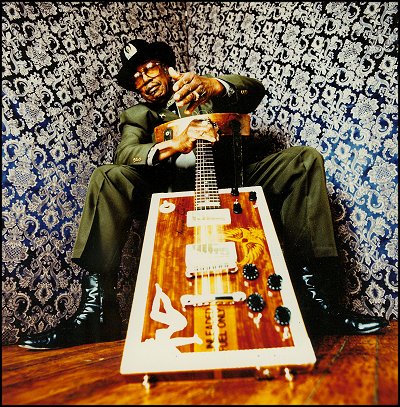
Bo Knows Hollywood

bo-diddley

By Joel Francis

After last week’s three-part history of Chess Records, several readers wrote in expressing disgust that Bo Diddley was ignored in the film “Cadillac Records.”

It appears Diddley may be having the last laugh. The New York Post reported yesterday that a deal is underway with Apostle Pictures for a documentary on the late rock and roll godfather.

Margo Lewis of Talent Source, Diddley’s management company, gave the money quote:

“It’s no secret that Bo had real issues with the Chess brothers and their ‘creative accounting practices.’ It was Bo’s recollection that every time he or another performer would go into the Chess offices to ask for their royalties, they were given the keys to a new Cadillac instead. So, in that regard, at least they got the title of the movie right. Regardless, we are completely shocked that the producers would omit such a seminal figure as Bo.”

After watching other Chess stars like Chuck Berry deservedly reap the rewards for their musical innovations, it will be nice when Diddley finally gets his overdue props. Here’s hoping the new film is as good as “The Howlin’ Wolf Story.”

Top 10 Albums of 2008 (haiku remix)

raphael_saadiq_-_the_way_i_see_it

By Joel Francis

Raphael Saadiq – The Way I See It
Classic soul throwback.
Avoids tribute clichés by
keeping spirit true.

TV on the Radio – Dear Science
Great band gets better.
Bowie-meets-doo-wop epics.
Tunes for brain and feet.

Wynton Marsalis and Willie Nelson – Two Men with the Blues
Disparate worlds?
Not so fast. Legends say no.
Smiles all around.

David Byrne/Brian Eno – Everything That Happens…
Restless souls rejoin.
Straight-ahead compared to last album
Twenty-three years ago.

Randy Newman – Harps and Angels
Not Pixar film score.
Track 4 tears Dub-ya new one.
Mark Twain of music.

Justin Townes Earle – The Good Life
Old country played right.
More Hank Williams than Junior.
Dad Steve should be proud.

Erykah Badu – New Amerykah, Pt. 1
Esoteric beats
and furious politics
make for dark album.

Portishead – Third
More dark atmospheres,
Dormant band surprises all;
Not trip-hop retread.

She and Him – Vol. 1
Vanity project?
Hell no. Zooey is for real.
M. Ward is great foil.

Q-Tip – The Renaissance
Ten years not Tip’s fault,
stupid labels shelve three tries.
Glad to have you back.